
Co-parenting with a difficult ex gets manageable when you stop trying to build a partnership and start running two separate, predictable households that never collide. Keep every exchange in writing, brief and about the child. Document the pattern, not the argument. Bring in a mediator or a family-law attorney when the pattern refuses to change on its own.
Here is the part almost nobody says out loud: you are allowed to stop trying to be friends. Your child does not need the two of you to like each other. They need two adults who keep the details straight.
What follows is practical rather than legal. Rules about parenting plans, custody and contact differ in every state and country, so treat this as education and check with a licensed family-law attorney about anything that will end up in front of a judge.
Table of Contents
- What You Need
- Step-by-Step
- Set a child-centered parenting plan
- Choose one reliable communication channel
- Separate essential messages from personal conflict
- Create predictable handoffs and routines
- Set boundaries without threats
- Use a problem-solving process for disagreements
- Keep a calm written record
- Have a backup plan for missed communication
- When to involve a mediator, counselor, or lawyer
- Common Mistakes
- Frequently Asked Questions
- How should I communicate with a difficult ex about our child?
- How do I set boundaries with a co-parent who keeps insulting me?
- What should I do if my ex repeatedly ignores messages or misses handoffs?
- How can I handle parenting disagreements without involving the child?
- How should we document child expenses and important school information?
- When should a co-parenting mediator or lawyer become necessary?
- Conclusion
What You Need
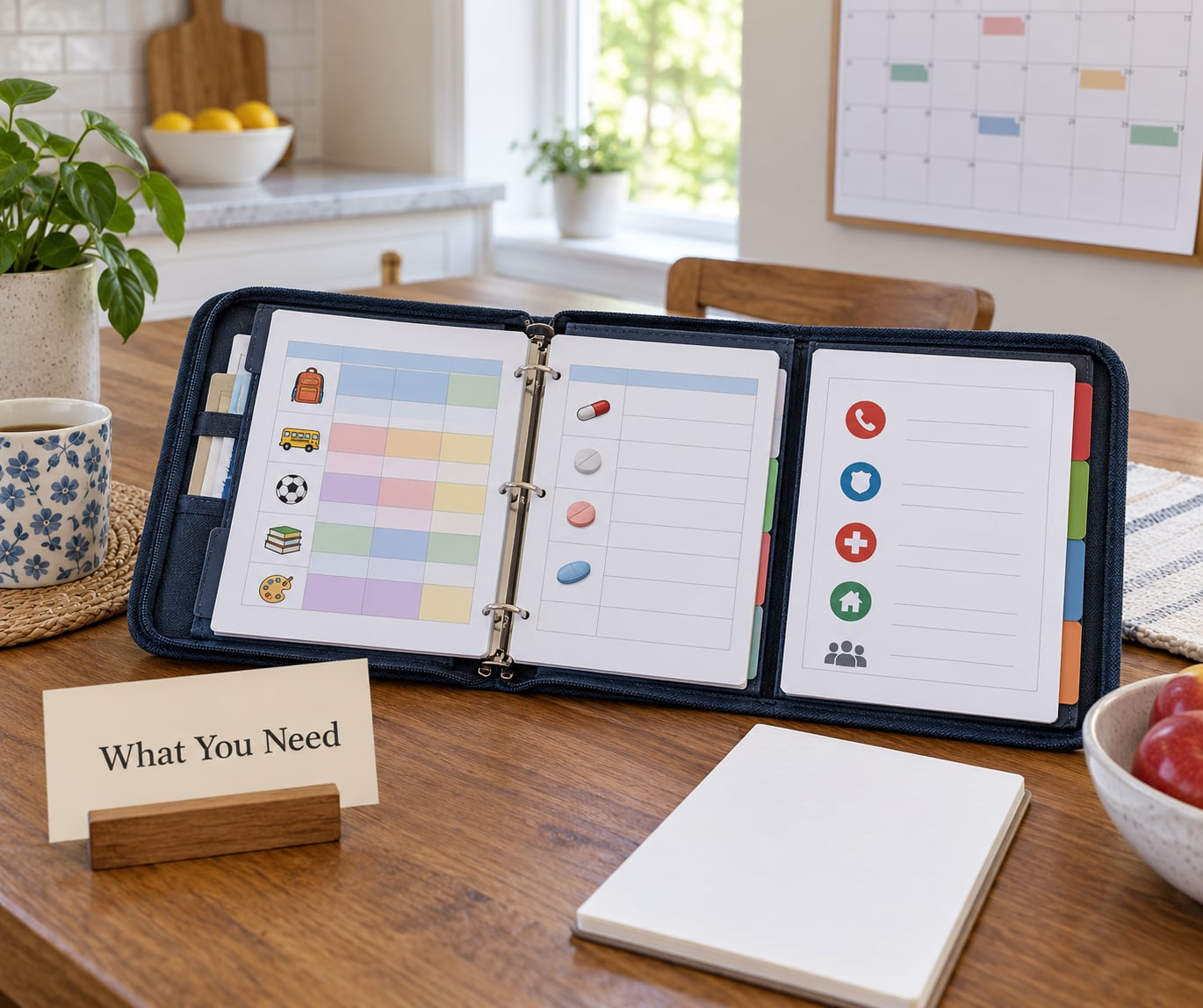
Gather these before the next difficult conversation, not during it. Most escalations happen because someone reaches for a document they do not have.
- The parenting plan or court order. A current copy, including any later amendments, is the single most useful page in the binder. If you have never read the order since the divorce was final, read it this week.
- School information. Teacher names, office phone and email, attendance portal, the IEP or 504 plan if your child has one, the bus route, the dismissal time, and who is authorized for pickup.
- Medical information. Insurance card, pediatrician and specialist contacts, current medications, allergies, and the pharmacy your child uses.
- Emergency contacts. Two adults who can be reached during your parenting time if you cannot. Agree on those names in writing.
- One agreed communication channel. Ideally a dedicated app or a single email thread used only for parenting. Not your personal number, not a group chat that includes your friends.
- A place for the record. A shared folder or notebook where messages, schedule changes, payments and school notices land with dates attached.
Add one non-document: a short written list of your own limits. What you will answer, how fast, what you will not discuss. Writing it down beforehand is the difference between a boundary and a reaction.
Step-by-Step
Set a child-centered parenting plan
A workable plan answers the boring questions in advance so none of them become arguments later. Write down the regular weekly schedule, holiday and school-break rotation, who handles transportation, which parent attends appointments, how routine costs are split, and which decisions need both of you.
Be specific enough that a tired parent could follow it. “Handoff is 6pm on Wednesdays at the school” beats “we alternate pickup”. Specify pickup location, what happens if the other parent is more than fifteen minutes late, and who transports to practices.
Finish with the information clause, which gets skipped more than anything else. List exactly what each parent must share and when: school notices, medical updates, changes in activities, changes in contact details. A child who switches households every week should never be the reporter.
Choose one reliable communication channel
Pick one written channel and live in it. Email works. So do dedicated co-parenting apps built to keep messages timestamped and exportable, including OurFamilyWizard, Talking Parents and AppClose. The specific tool matters far less than the rule that every exchange about your child happens there and nowhere else.
Turn off the other doors. No phone calls, because they leave no record and give the other parent room to recharacterise what was said. No texting about the child. No relaying messages through your child, your family, or your child’s other parent.
Then set a response window. Most plans work best with something like 24 hours for routine messages and faster for genuine emergencies. Saying in the first line of the plan, “I respond to routine messages within 24 hours” quietly removes half the perceived provocation.
Keep your own messages short, factual and child-focused. One topic per message. No accusations, no history, no subtext. You are writing for three readers: your ex, your child who may one day read it, and possibly a mediator or judge.
Separate essential messages from personal conflict
Most escalations start when an old grievance gets attached to a scheduling question. The fix is a simple filter you run before you hit send. Ask yourself one thing: is this message necessary for the child to function this week?
If yes, it goes out. It contains the fact, the date, the time, the place, and the ask. “Maya has a dentist appointment Thursday at 2:15pm. Please confirm you can take her, or reply by Tuesday so I can reschedule.”
If it is about the past, their parenting, their new partner, or what they said six months ago, it stays in your notes app. Not because it does not matter, but because sending it costs your child more than it gives you. Read it, feel it, then close the app.
Create predictable handoffs and routines
Handoffs are where the most damage happens because they are rushed, public and tired. Pick a consistent location and time, use the same one whenever you can, and prefer somewhere neutral and supervised, like a school entrance or a community center, when exchanges have been rocky.
Build a transition checklist and keep it identical in both homes. Homework, medication, water bottle, sports bag, comfort item, the child’s reading book. One sheet of paper on the fridge, photographed and shared on the parenting channel, saves more arguments than any conversation will.
Routines inside each household matter just as much. Similar bedtime, similar meal rhythm, similar school-night wind-down. Children calm down faster when the two homes stop feeling like two different countries.
Set boundaries without threats
A boundary is a statement about what you will do. A threat is a statement about what they deserve, and threats always escalate. Compare: “If you do this again I am telling everyone” against “I will not discuss this by text. I will move to email for scheduling.” The second one is a boundary, and it is short enough to actually use.
A workable boundary message has three parts: the neutral rule, the reason in one clause, and what happens next. Here is one you can adapt and send today.
“From now on I will answer messages about the children on this email thread only, within 24 hours. Phone calls and texts about the children will go unanswered, and I will continue our parenting here. This is not a reflection on you. It is how I am able to keep parenting calmly across both homes.”
The part people skip is the follow-through. Boundaries in co-parenting fail the same way every time: you set one, they push, you soften because the week has been hard, nothing changes, and you set it again next month. The boundary is real on the day you follow it, especially on the day it is inconvenient. Annoying a difficult ex is not a goal; predictability is.
If you are unsure whether a request is within normal co-parenting territory, pay attention to how it is made. A clear request names the child and the need. A violation of your parenting time involves someone else entirely.
Use a problem-solving process for disagreements
Real disagreements still happen. Give them a fixed sequence so they never improvise themselves: state the issue in one sentence, name the child’s interest, generate two or three options, agree on a trial period, write down what you decided, and review on a set date.
Works well: “We disagree about summer break. Two options are a one-week swap in June, or splitting the weeks with the kids together for the first week. Which do you want to try this year?”
A trial period matters more than people expect. Most of these disputes are low-stakes, and two weeks of a plan followed by an honest review settles more of them than any lawyer. Change the plan in writing afterward so the next conversation starts from a document instead of a memory.
Keep a calm written record
Keep a record and keep it boring. A written log changes how conversations go, because it removes the argument about what actually happened. Record dates, times, who was present, what was agreed, and what followed.
Save schedule changes, missed or late handoffs, expense receipts and payment records, school notices, medical information, and any message that matters to your child’s wellbeing. Screenshot messages with the date visible rather than saving a single line out of context.
Two cautions. Write in neutral language, the way a third person would describe it, because that is how it will be read by a mediator or judge. And do not build a surveillance file: this is a parenting record, not a case against your ex, and a bloated log full of interpretations helps nobody.
Have a backup plan for missed communication
Have an answer ready for silence before the silence happens. It usually looks like this: repeated non-response, messages read and ignored, no-shows or late returns, schedule changes announced after the fact.
For a genuine emergency involving the child, use the agreed emergency contact and try one more channel. If you hear nothing for a period that the plan defines as a safety concern, contact the school office, the pediatrician or emergency services as appropriate, and document that you did.
For everything else, do not chase. Send one final message: “I have reached out several times about the schedule. As of today I am assuming the current plan applies and I will plan around it.” Then act on that assumption and log it. When a parent stops responding, the plan you already have becomes the only document that matters.
If your ex refuses structured tools entirely, that is a data point, not a dead end. Keep your own written log, send a short proposal to move to a parenting app, and note the response. If you later need a court order requiring shared access, having a documented history of trying is exactly what you want.
When to involve a mediator, counselor, or lawyer
Escalation works best in fixed rungs, and going up one at a time keeps the cost and the hostility down. Think of it as four levels rather than two.
- Direct conversation. For anything you could resolve with one calm written exchange.
- A mediator. A neutral third party for schedule disputes, holiday rotation and communication breakdowns. Often required before certain court filings, and usually far cheaper than litigation.
- A co-parenting coordinator or parenting counselor. For a stuck stalemate, a new partner inserted into your child’s life, or repeated schedule changes that never settle. This is the rung most families skip.
- A family-law attorney. For safety orders, supervised contact, modification of an existing plan, cross-state situations, or anything where your child’s safety is in question. Ask about limited-scope representation if the full matter is more than you want to buy.
Bring your written record to every one of these meetings. It is the difference between describing a pattern and asserting a feeling.
If you may be the difficult party in someone else’s version of this story, run a quick self-audit before you send anything: would a calm reader see that message as about the child? Have you delivered a threat you intend to keep? Are you asking your child to carry a message or a feeling? The self-check is uncomfortable, which is exactly why it works.
Common Mistakes
Overexplaining every point. Long messages give the other parent twelve openings instead of one, and they will use them. Correction: one topic, three sentences, send.
Reacting in the moment. Answering within the heat of the moment means your child is present in a war they did not start. Correction: leave the message open, go walk, come back in twenty minutes, then decide if it needs a reply at all.
Using the child as the messenger. Asking your child to tell the other parent something is the fastest way to make them feel responsible for adult conflict. Correction: all messages go directly between you, in writing.
Letting there be no record. If the pattern lives only in memory and in feelings, nothing changes. Correction: dates, times, screenshots, receipts, kept calmly.
Handling money verbally. Reimbursement conversations conducted by voice produce the oldest arguments in co-parenting. Correction: put the amounts and dates in writing and keep receipts with the log.
Making promises to win a moment. Promising a schedule change, an extra holiday, or a reduced cost gets the peace of today and a worse conflict next month. Correction: propose a trial period with a review date instead.
Saying anything negative about the other parent near the child. Children copy what they hear, and they also carry what they are told. Correction: one honest, age-appropriate sentence, and stop. “Both of us want you at school on time” beats every speech.
Then protect the person doing the co-parenting. Conflict that never switches off burns the calm parent first, and children read exhaustion as danger. A support group, a therapist, a few hours alone, or even a hard conversation with a friend can keep you from becoming the difficult party in your own story. If you are still healing from the relationship, expect more flare-ups and build extra margin into your plan.
Frequently Asked Questions
How should I communicate with a difficult ex about our child?
Move everything to one written channel, ideally a dedicated co-parenting app or a single email thread, and keep it to short factual messages about the child only. State a response window, skip phone calls because they leave no record, and never use your child as a messenger. If a message is about the past rather than the week ahead, save it in your notes and send nothing.
How do I set boundaries with a co-parent who keeps insulting me?
Write the rule before you write the message, and keep it about your behavior rather than theirs. Say what you will do, not what they deserve: I answer scheduling messages on email only, within 24 hours. Then follow through on the day it is inconvenient, because a boundary you drop becomes a boundary you never had. Insults usually stop once they stop producing a reaction.
What should I do if my ex repeatedly ignores messages or misses handoffs?
Send one final written message saying you are assuming the current plan applies and will plan around it, then do exactly that and keep logging. Do not chase responses, and never withhold your own parenting time in response. Repeated silence is a pattern, and patterns are what mediation and court look at. If you are worried about a genuine safety concern for the child, use the emergency contacts you agreed on earlier.
How can I handle parenting disagreements without involving the child?
Run disagreements through a fixed five-step sequence: state the issue in one sentence, name the child’s interest, propose two or three options, agree on a trial period, and write down what you decided with a review date. Low-stakes disputes usually settle themselves with two weeks of a plan followed by an honest check-in. Change the result in writing afterward so the next conversation starts from a document, not a memory.
How should we document child expenses and important school information?
Keep one folder for the parenting record: receipts with dates, who paid what, and which parent covered which cost, plus school notices, medical updates and changes in activities. Write in neutral third-person language, since that is how it reads later. Screenshot messages with the dates visible rather than saving one line out of context. Share school and medical information directly between parents, never through the child.
When should a co-parenting mediator or lawyer become necessary?
Try one calm written exchange first, then mediation for schedule, holiday and communication disputes. A co-parenting coordinator is the useful middle rung for standoffs or a new partner inserting themselves into your child’s life. See a family-law attorney for safety orders, supervised contact, plan modifications, or cross-state situations. Laws differ by jurisdiction, so get local advice before you act.
Conclusion
Start with one sheet of paper. Write down the current schedule, the communication channel you will both use, and the three rules you will follow without exception: written only, brief and factual, child only.
Then send the boundary message, keep the log, and stop trying to be friends. That single step is usually the difference between co-parenting that drains you every week and a system that runs quietly in the background.
This article is for education, not legal advice. Rules about parenting plans and contact vary by jurisdiction, so check local requirements and talk to a licensed family-law attorney before anything goes further.