
Learning how to build a personal brand on LinkedIn comes down to three things people can point at: a profile that says who you help and what you do, posts that prove you know your stuff, and relationships that exist because you were useful to someone. That is the whole system. Everything else is decoration.
Most people get it backwards. They spend a month on a banner image, then post nothing for a year. I’ve watched it happen to colleagues who genuinely knew more than the people getting the interviews.
The good news is that the work is unglamorous and about 30 minutes a day. Below is the process I would follow if I were starting over today, including the parts most guides skip: how to avoid sounding like a LinkedIn robot, and how to know whether any of it is working.
Table of Contents
- What You Need
- How to Build a Personal Brand on LinkedIn: Step-by-Step
- How to build a personal brand on LinkedIn: Choose a clear professional niche
- How to build a personal brand on LinkedIn: Write a positioning statement
- How to build a personal brand on LinkedIn: Optimize the profile
- How to build a personal brand on LinkedIn: Create a content strategy
- How to build a personal brand on LinkedIn: Publish proof of your expertise
- How to build a personal brand on LinkedIn: Build relationships intentionally
- How to build a personal brand on LinkedIn: Review and improve
- Common Mistakes
- Frequently Asked Questions
- How often should I post on LinkedIn to build a personal brand?
- Do I need a personal brand on LinkedIn if I am not looking for a job?
- How do I build a LinkedIn personal brand while working in a niche industry?
- Should I use my real name or a personal brand name on LinkedIn?
- How long does it take to build a personal brand on LinkedIn?
- How can I update my LinkedIn profile after a career gap?
- Conclusion
What You Need
You do not need a designer, a camera, or a personal website. You need five things, and you can assemble them in one evening.
- A target role or niche. One sentence naming who you want to be known as. Not “professional” — something like “operations lead for hospital groups” or “brand strategist for small SaaS teams.”
- A value proposition. One line on the problem you solve and for whom. If you can’t write it in a sentence, you don’t have it yet.
- A current headshot. Face visible, shoulders in, plain background. Natural light from a window beats a studio, and your phone is fine.
- Three to five proof points. Numbers, projects, or outcomes. “Cut onboarding time from nine days to four” beats “passionate about operations” every time.
- An engagement plan. Twenty minutes a day to comment and reply. This is the step people skip, and it is the one that compounds.
Write all five on paper first. The paper version is faster to edit than anything you type directly into LinkedIn, and it keeps you from settling for the first wording that occurs to you.
How to Build a Personal Brand on LinkedIn: Step-by-Step
The process runs in seven steps, and the order matters. Do them in sequence and each one makes the next one easier.
- Choose a clear professional niche. Decide what you are known for.
- Write a positioning statement. Turn it into one sentence.
- Optimize the profile. Headline, About, Featured, experience, photo.
- Create a content strategy. Pick three pillars instead of posting whatever comes to mind.
- Publish proof of your expertise. Two posts a week, built from five repeatable formats.
- Build relationships intentionally. Comment, connect with context, follow up with value.
- Review and improve. Check the numbers every 30 days and change one thing at a time.
Now the detail behind each one.
How to build a personal brand on LinkedIn: Choose a clear professional niche
A niche is the answer to “when someone needs help with the kind of problem I solve, do they think of me?” Narrow feels risky at first. In practice it’s the opposite — a generalist profile disappears, a specific one gets remembered.
Frame it with four pieces: the role you hold, the problem you solve, the audience you solve it for, and the expertise you bring. Then test it against four real situations.
A career changer might land on “career changer who helps laid-off mid-career professionals rebuild résumés for operations roles.” A manager could use “first-line supervisor building retention habits for hourly teams.” A freelancer needs something like “independent bookkeeper for small creative agencies, month-end close in five days.” A small business owner might simply own a category: “owner of a six-location dental practice learning how to hire and retain hygienists.”
Pick the version that fits your real life right now. You can narrow further later as you learn which conversations pull you in.
How to build a personal brand on LinkedIn: Write a positioning statement
A positioning statement is a sentence, not a mission statement. It answers who you help, what you do, and what result they get.
The formula: I help [specific people] achieve [specific outcome] by [your method, experience, or credential].
Weak version: “Experienced marketing professional with a passion for brand growth.” Strong version: “I help first-time founders turn a side project into a real business by building the pricing, positioning, and launch plan before they spend on ads.”
The test is simple. Read it out loud to someone who has never met you. If they can repeat it back an hour later, it works. If they just nod politely, keep cutting.
Write three versions and pick the one that sounds like a person talking, not a committee. That sentence goes in your headline and opens your About section, and it becomes the filter for everything else you post.
How to build a personal brand on LinkedIn: Optimize the profile
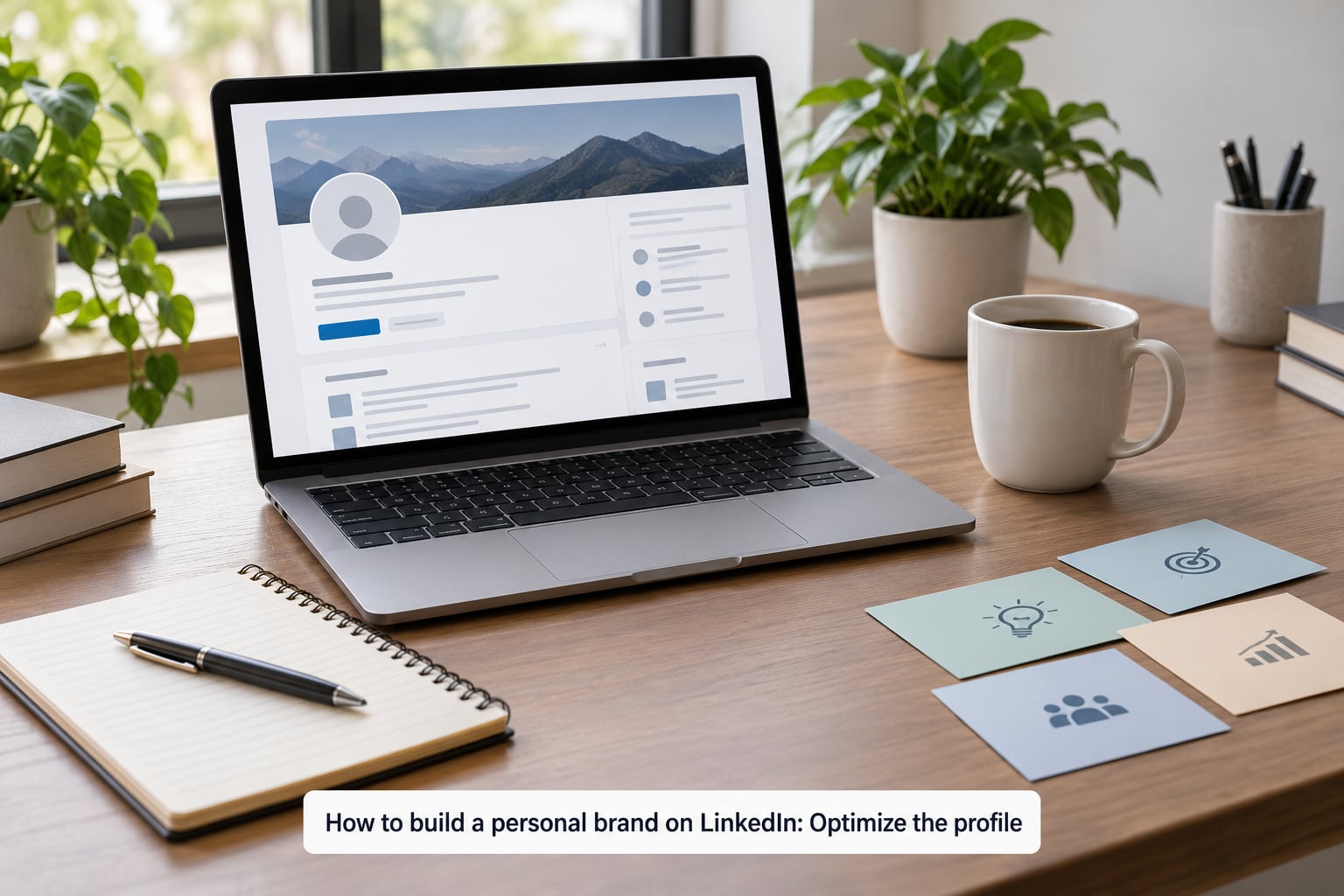
Your profile has about six seconds of someone’s attention. Work top to bottom in the order a visitor actually reads it.
The headline. You get 220 characters and most people waste them on a job title. Instead: positioning statement, then your role, then one keyword people hire for. Before: “Sales Manager at Acme.” After: “I help B2B SaaS teams win enterprise deals | Sales manager | 8 years in complex cycles.”
The banner. A plain background in a colour you actually like, with three words and your city. Nobody reads paragraphs up there.
The About section. Four or five short paragraphs. Open with the problem, not your job history. Close with what you want people to do — comment, message, or read your Featured section. Before: “Results-driven professional with 10 years of experience.” After: “Most small agencies lose weeks to bookkeeping cleanup. I help them build a clean monthly close in five days, without switching software or hiring someone full-time.”
Experience. Rewrite every bullet so it starts with an action and ends with a result. Skip the mission statements and the endless lists of duties.
Featured and skills. Featured holds your best post, one case study, and one link that earns you money. Add three to five skills that match your niche and ask two former colleagues for recommendations — a written recommendation does more work than twenty endorsements.
Photo and custom URL. Change your URL to your name. It looks far more deliberate than a random string of digits and it makes you easier to recommend.
One quick test: open your profile on a phone, have a friend read only the top screen for five seconds, then ask what you do. If they get it wrong, the top screen is the problem.
How to build a personal brand on LinkedIn: Create a content strategy
Content strategy is less about picking topics than picking pillars — three or four subjects you can return to for two years without running dry. People remember the person who keeps talking about the same thing, not the person who posted about everything last Tuesday.
A workable setup: one pillar on your core expertise, one on process and lessons, one on your industry or market, and one on your own career story. That last one is what separates you from an industry blog.
Balance matters too. If every post is expertise and no post is human, readers will assume you are selling something, and they will be right. If every post is personal and none carries substance, you become a person worth following and not a person worth hiring.
Three parts expertise, one part experience, as a rough weekly rhythm, keeps both in play. Strong opinions backed by specifics earn real engagement, and so do honest career stories. The gym selfie captioned “5 lessons about B2B sales” is what happens when the ratio breaks.
Skip the resume reposting. Nobody learned anything new because you changed teams.
How to build a personal brand on LinkedIn: Publish proof of your expertise
Two posts a week, written in about 20 minutes each, is enough for most people. The trick is having five formats you can repeat so you are never staring at a blank box.
- Lessons learned. Something that went wrong and what it cost you. These outperform everything else.
- Practical tip. One specific instruction someone can apply today, with the number or tool included.
- Project story. The situation, the constraint, the decision, the outcome. Three short paragraphs work.
- Industry perspective. Where you think a trend is heading, and what you’re seeing in your work that supports it.
- Career insight. What you learned moving from one role or sector to another. This is the post a career changer should write most often.
A sample week: Monday tip, Thursday career insight, then the same two slots the next week. Variety comes from the specific detail inside the post, not from changing format every day.
Openings decide whether anyone reads the rest. Strong starts name a cost or a mistake: “The client project I lost two hours of sleep over, and the check that would have caught it.” Weak starts announce that a lesson is coming.
Add two or three hashtags at the bottom, tag a colleague or company when it is genuinely relevant, and use a document post or carousel when you have a list to share. Original visuals get more comments than text alone, and the effort is visible.
How to build a personal brand on LinkedIn: Build relationships intentionally
Most of what looks like reach is actually a few dozen real relationships. Building them takes less time than it sounds.
Comment properly. Not “great post.” One or two sentences that add something — a similar experience, a counterpoint, a specific number. Twenty minutes a day, five thoughtful comments, beats an hour of posting.
Send connection requests with a line. “I’ve followed your work on pricing pages and wanted to connect” is fine. “I saw your comment about onboarding and would value your view on transition periods” is better.
Give before you ask. Send the article, the template, the introduction. People remember who was useful when they had nothing to offer yet.
Use groups and live events. Smaller rooms produce better conversations than a large feed, and recurring audio events build familiarity without you having to perform.
Follow up without pitching. “Wondering how the pricing change landed?” gets a reply. “Would love to discuss my services” gets an archive.
The fear of looking like a salesperson is the most common reason people stay quiet. Silence doesn’t look professional, it looks absent. Consistency with substance is what reads as credible.
How to build a personal brand on LinkedIn: Review and improve
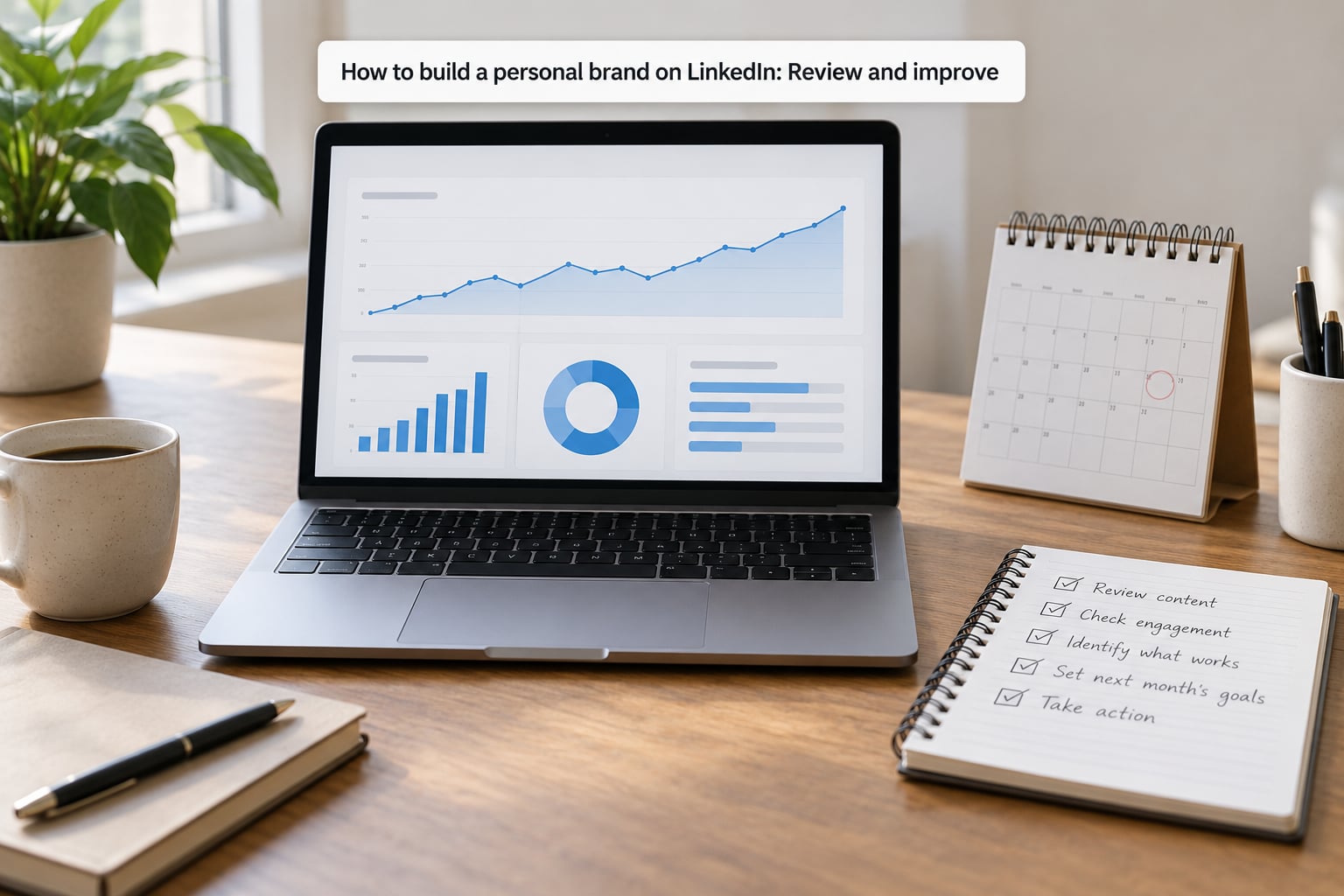
Open your analytics on the same day each month. Twenty minutes is enough to learn what to do next.
Profile views show whether people reach for you after meeting you. A low number usually means your headline doesn’t match your niche. Search appearances shows whether your keywords are working; if you’re aiming for a role you don’t yet have, add those terms honestly.
Impressions and engagement on each post tell you which pillars people actually care about. Keep the formats that beat your average and drop the ones that never do — even if you liked writing them.
Messages and invitations are the real signal. Five recruiters or clients writing to you is worth more than a thousand impressions.
Then change one thing. Update the headline, test a new pillar, or rewrite the About section’s opening. Changing three things at once means you learn nothing from the result.
One habit worth adding: written recommendations from real colleagues carry more weight than endorsements. Ask for two or three after a project wraps, while the details are still fresh.
Common Mistakes
Treating LinkedIn like a résumé. Fix: rewrite it as a landing page that explains what you solve. Recruiters can read a résumé in ten seconds; they need a reason to keep talking to you.
Picking a niche that’s too broad. “Leadership and management and coaching” says nothing. Fix: pick the one problem you can describe without notes, then expand after a few months of real conversations.
Posting only promotions. Every post a product announcement, and nobody follows. Fix: follow roughly 3-to-1, where three posts offer something useful and one mentions your work.
Copying someone else’s format. Someone else’s voice is the first thing a reader notices. Fix: write your first 20 posts as plain text with no template. Find your own register once the habit is established.
Posting and then disappearing. Silence after a post reads as a campaign. Fix: reply to every comment for two weeks, even the polite ones.
Waiting for it to feel right. Nobody finds their voice by thinking about it. Fix: publish your first post in the first week, at the quality level you can manage, then improve one element at a time.
Ignoring search. Fix: use the same words in your headline, About section, and posts that recruiters and clients type into the search bar. It works because the matching is literal.
Two smaller notes worth making. If you want a newsletter, start it once you have ten posts to draw from — a monthly send is enough. And if you build audience on LinkedIn, decide deliberately whether to cross-post; many people dilute a strong niche by running four platforms at half effort.
Frequently Asked Questions
How often should I post on LinkedIn to build a personal brand?
Two posts a week is the sweet spot for most professionals. It is enough to build a recognizable body of work without turning your feed into a second job. Three posts a week helps if you work in a field where ideas come easily, such as writing or teaching. Consistency beats volume: one post a week that you never miss outperforms a launch-week burst followed by silence. Reply to comments on the same day, and review what performed after 30 days.
Do I need a personal brand on LinkedIn if I am not looking for a job?
Yes, especially if you want clients, speaking invitations, or a side business. Most people find their next role or their first consulting client through people they already know, and those people are your network. A clear niche and steady posts also make you easier to recommend, because your colleagues can describe what you do without checking. If you only want an online presence and not opportunities, post monthly and skip the rest.
How do I build a LinkedIn personal brand while working in a niche industry?
Use the industry as your specificity and your teaching as the breadth. Write about the problems you solve in plain language so people outside your company understand the stakes. Two angles work well: process posts that show how your field actually works, and translation posts that explain a specialist topic for a general audience. Avoid sharing anything your employer would consider confidential, and check whether your contract restricts outside work or public commentary.
Should I use my real name or a personal brand name on LinkedIn?
Use your real name, especially when your goal is employment, clients, or credibility. Searchable names get found, and recruiters and clients search for people, not brands. A made-up name creates friction at the exact moment someone wants to verify you are legitimate. Personal branding is not a logo; it is a clear, consistent account of what you do and why you are good at it. If you run a business, put that brand in your Featured section or headline instead.
How long does it take to build a personal brand on LinkedIn?
Expect visible profile changes within a month and a noticeable network effect in three to six months of consistent posting and commenting. Search appearances usually move sooner, often within a few weeks of fixing your headline and keywords. The honest version is that the first three months feel slow because recognition takes longer than reach, and the compounding starts once you have repeat readers. Skip the first three months of checking follower counts.
How can I update my LinkedIn profile after a career gap?
Lead with what you have done rather than what you have not. Update your headline to your current target role, rewrite the About section around the skills you kept, and add any freelance, caregiving, or study work to the experience section with dates and outcomes. Write one post about what changed and what you learned while you were away, because gaps are normal and the story is genuinely interesting. Ask former colleagues for recommendations from the role before the gap.
Conclusion
Knowing how to build a personal brand on LinkedIn is less about design and more about repetition: one clear niche, one sentence about who you help, two posts a week, and twenty minutes a day of being useful to other people’s posts. Do those four things for three months and the profile writes itself.
Start this week. Pick your niche, rewrite your headline and About section, and publish one post about a lesson you learned the hard way. That single post is where the habit begins.