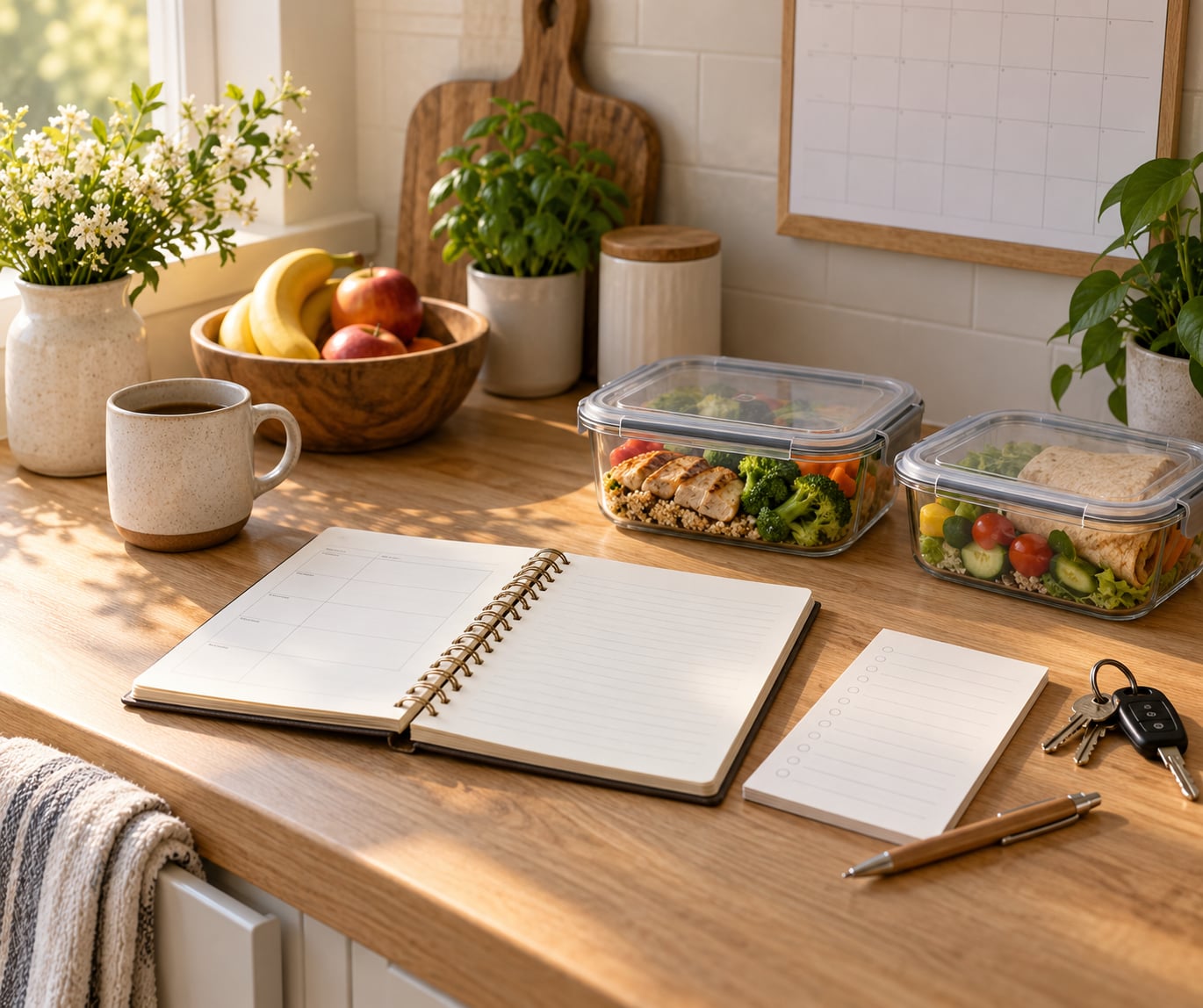
To survive single parenting day to day, you build a system instead of relying on willpower: one repeatable morning routine, a short list of backup meals, five house rules written down, a weekly money and sleep check-in, and at least two people who can actually show up. Single parents who do this well aren’t better organized than everyone else. They just made fewer decisions a day so the energy they have left goes to their kids.
This guide is for moms and dads, for people working full time, working shifts, or staying home, and for anyone parenting a toddler or a teenager. It’s also for the parents having a bad week, because the goal isn’t a perfect week. It’s a Tuesday that holds.
Here’s the honest thing about single parenting nobody puts on a poster: you’re running a two-parent job as one adult. The school emails, the appointments, the groceries, the money, the discipline, and the bedtime all land on one desk. Feeling exhausted is the normal response to an abnormal load, not a character flaw.
What changes things is structure. The sections below build that in six steps, and the whole thing works whether you’re a single mom, a single dad, or somewhere in between.
Table of Contents
- What You Need
- Step-by-Step
- 1. Create One Reliable Morning Routine
- 2. Simplify Meals and Household Decisions
- 3. Set Work and Parenting Boundaries
- 4. Build a Discipline System You Can Repeat
- 5. Protect Money, Sleep, and Personal Space
- 6. Make Support and Self-Care Routine
- Common Mistakes
- Frequently Asked Questions
- How can I keep up with parenting while working full time?
- What are realistic chores a single parent can assign?
- How do I stop feeling overwhelmed by everyday parenting tasks?
- How can I create a routine when my work or childcare schedule changes?
- How should I handle co-parenting problems without losing my composure?
- How do I take care of myself without making self-care another task?
- Conclusion
What You Need
You don’t need money for this. You need a few boring pieces of infrastructure, and an hour to set them up once.
- One shared calendar that everyone in the household can see. Work shifts, school pickup, appointments, custody handovers and your one weekly money check-in all go in it. If it’s not in the calendar, it doesn’t exist.
- A rules page — a note on the fridge or a note in your phone with three to five house rules on it. Written rules hold better than remembered ones, especially when you’re tired.
- Two backup meals you can make while exhausted. Not aspirational recipes. The kind you can start with one hand while holding a toddler.
- A laundry queue, not a laundry pile. One basket for kids, one for you. One load a day, started the moment you get home.
- A named emergency contact who is allowed to answer the phone at 6pm. One person, confirmed, with their number saved under a label you’d actually find.
- Your child’s school, doctor and after-school contacts written down somewhere you can reach at 6am.
That’s the list. Everything after this builds on it.
Step-by-Step

1. Create One Reliable Morning Routine
The morning decides the tone of the whole day, and the morning is decided the night before. Most of the work is prep, not parenting.
Before bed, set out tomorrow: clothes for everyone including a backup outfit, breakfast laid out, bags packed and by the door, water bottle filled, and any permission slips signed. Parents on r/Parenting describe running the dishwasher and clearing the kitchen before bed for exactly this reason, and it’s the cheapest trick in this article.
Then protect the first stretch of the morning. If you can wake 30 to 45 minutes before the kids need to be up, that time goes to coffee and getting dressed before anyone else needs you. It’s not selfish, it’s a head start.
Here’s a workable block for a school-age kid on a 7:30 start:
- 6:15 — you up, coffee, shower, dressed.
- 6:45 — wake kids, no negotiation yet, clothes from the night-before pile.
- 7:00 — breakfast and one thing that isn’t rushed, like you eating with them.
- 7:20 — teeth, hair, shoes, bag check at the door.
- 7:35 — out the door or on the bus.
- 7:40 — the first work block starts while the house is quiet.
How do you know it’s working? For five school days in a row, do you leave home without running back for something? That’s your metric. Not a happy morning, just no second departure.
If you’re up before your kids, guard that hour the same way. It’s the mental-load fix people search for — the quiet ninety minutes where you answer email, do the dishes and think without being interrupted.
2. Simplify Meals and Household Decisions
Feeding a family every day is the task that quietly eats the evening, so stop deciding from scratch. Run a rotation of four dinners you know, rotate a fifth you haven’t tried, and accept leftovers without apologizing.
Sort household work into three levels and write them down. Minimum is what keeps the house safe: dishes, laundry, food on the table. Preferred is what makes it livable: vacuumed floors, a changed bed, a wiped table. Done later is genuinely optional: organized toys, matching towels, a deep clean. Most days you hit minimum and one preferred item. That’s a successful day.
Single parents on Reddit describe a split-childcare model as what makes work possible, but the same logic applies at home: one kid cooks, one wipes, both load. Kids who are contributing at six learn fast that a household runs on participation, not on one adult catching up.
Batch what you can on a Sunday: cook one big pot of rice, roast a tray of vegetables, shred cheese. Weeknight meals then take 20 minutes instead of an hour.
3. Set Work and Parenting Boundaries
Combining a job and parenting solo means you need visible availability rules, not good intentions. Tell your employer, your manager, your coworkers and your family exactly when you are reachable, and put it in your email signature if that helps.
Protect a first work block with no interruptions. Notifications off, door closed, kids at school. Most single parents say this single change buys back two usable hours a day.
Have a backup plan written down before you need it: who covers when your kid is sick, what number you call when a school calls at 10am, which sick days you have left, and whether there’s a coworker or neighbor who has agreed in advance. Guessing under pressure is what turns one sick morning into a lost day.
Shift work needs its own version. Keep the same anchor points as best you can — a fixed wake time for your first shift, meals that work at 2am, and one full rest block. Most single parents running rotating shifts protect the rest block fiercely, because recovery between shifts is what makes them survivable.
If you’re staying home, protect it the same way: one block of your own work, study, money or exercise in the calendar. Parent time is the first thing to vanish when the day is only one person’s.
4. Build a Discipline System You Can Repeat
Solo parenting is harder partly because there’s no second adult to back you up, so consistency has to come from the system rather than from your mood at 7pm.
Start with three to five rules and write them down where everyone sees them. Five or fewer, or they stop working. Examples that hold up: shoes off at the door, one turn each on screens, hands off without hitting, toys away at bedtime.
Give a warning, then a short consequence, then a clean return. A common rule of thumb is one minute of time out per year of age, which keeps it proportional and short enough that you can actually enforce it without losing your temper.
Connect before you correct. A quick “you seem frustrated, let’s talk about it” does more than ten minutes of lecturing, because kids push hardest at the person who has no backup, and connection defuses it.
For meltdowns, put effort into energy first. Dance parties, music, a run around the block or a cold water reset buy back the calm you need. Then say one sentence, repeat it, and hold the line. Yelling back makes the room bigger, not the problem smaller.
Track follow-through for one week, not forever. A simple chart with a mark for each followed-through moment makes you look like you’re winning, because most days you’re following through more than you think.
5. Protect Money, Sleep, and Personal Space
Money stress and tiredness feed each other, and both make parenting harder in the same day. Twenty minutes on Sunday for a money check-in breaks that loop: what’s coming in this week, what’s due before Friday, and what’s genuinely late.
Keep it to the week ahead, not the whole life. Write down every fixed cost, then subtract what’s left, then decide the two things you can simplify. Fewer accounts to check means fewer anxious 11pm moments.
On money basics for a household running on one income, look at your actual fixed costs first, then benefits your state offers working families, then the childcare line, since that one surprises people the most. Budget rules and assistance programs vary by state and change, so check with your state agency or a local nonprofit rather than trusting an old list.
Sleep is the other lever. Pick a fixed bedtime, keep a 20-minute wind-down with the same three things in the same order, and protect your own bedtime even when the house is still loud. A parent running on five hours for a month is not managing, they’re accumulating a deficit.
Then protect one space that belongs to you. Not the whole house. Ten minutes in the car before you go inside, a room with the door closed, or the walk around the block that nobody uses as a shortcut.
6. Make Support and Self-Care Routine
Asking for help feels harder when you’re the only default parent, because saying yes to help feels like admitting you can’t do it. Reframe it: you’re not the only adult, you’re the only one currently holding the job.
Be specific when you ask. “Can you watch her Thursday from 4 to 7?” gets a yes. “Can you help more?” gets nothing. Keep three names: a person who can take a kid for an afternoon, a person you can call after a meltdown, and a person who will remind you that you need to sleep.
If your schedule is split, plan your off-days deliberately. People on r/DivorcedDads and r/SingleParents talk about off-days turning depressive when there’s no structure, so treat them the way you’d treat a work shift: one scheduled thing you enjoy, one chore that takes 20 minutes, one person you see. The day gets a shape instead of a hollow feeling.
Self-care works when it’s scheduled and small. A 15-minute walk, a class on a Tuesday, ten text messages with a friend who doesn’t need advice. People describe a gym session plus a few minutes of quiet as an anchor, but honestly, standing in the kitchen eating something warm counts too.
Watch for burnout signs that go past ordinary tiredness. Ordinary tiredness is fixed by a night’s sleep. Burnout shows up as resentment you can’t shake, dreading mornings you used to like, health problems, or feeling flat for weeks. When you notice those, drop one commitment before you break, and talk to your doctor or a counselor about the mood and sleep changes. This is general wellbeing information, not medical advice.
Common Mistakes
Mistaking constant motion for a plan. Doing more isn’t the answer when the day is already full of decisions. Fix: pick three non-negotiables for the week — morning routine, one meal plan, one support person — and let the rest stay messy. Quick tip: write the three on the fridge so you stop adding to them.
Changing the rules every time you’re frustrated. Rules that shift with your mood teach kids to wait you out. Fix: write down five rules and only change them during a calm weekly check-in, never in the middle of a fight. Quick tip: say the rule, then repeat it once, then stop talking.
Refusing help because it feels like failure. Working parents who describe a sustainable system almost all share tasks with a village. Fix: ask one person for one specific thing this week. Quick tip: text “can you take Thursday 4 to 7?” instead of waiting to be rescued.
Treating rest as something you earn. If you sleep when the house is finally quiet, you get the leftovers of your own life. Fix: put a bedtime on the calendar like an appointment. Quick tip: no work email or phone after your kids are down.
Comparing your Wednesday to someone else’s Sunday. Most parenting content is a highlight reel from a two-parent home with a chore wheel. Fix: compare this week to last week, not to a stranger’s best day. Quick tip: keep a one-line weekly note about what went well.
Deciding everything alone because asking feels slow. A five-minute text often saves a whole evening of resentment. Fix: send the message early in the day, not at 6pm when you’re out of patience. Quick tip: have three backup meal ideas ready before the day goes sideways.
Frequently Asked Questions
How can I keep up with parenting while working full time?
Block the first work hour while the house is quiet, set visible availability rules, and write a sick-day backup with a named person before you need one. Protect a fixed bedtime and one 15-minute block that belongs to you. Most single parents say one uninterrupted morning block plus one reliable backup adult buys back two usable hours a day.
What are realistic chores a single parent can assign?
Start with jobs that finish in under 15 minutes: setting the table, loading the dishwasher, sorting laundry, feeding a pet, taking out trash. Then add one weekly job per child, like bathroom cleaning or taking out the bins. Write them on a list on the fridge and check it off, so following through is visible to everyone.
How do I stop feeling overwhelmed by everyday parenting tasks?
Sort everything into three levels: minimum to stay safe, preferred to stay livable, and done later. Aim to finish the minimum plus one preferred item, and stop there. The mental load, which is the thinking and planning nobody sees, drops fastest when decisions are pre-made and the list is written down instead of held in your head.
How can I create a routine when my work or childcare schedule changes?
Keep three fixed anchor points regardless of schedule: a wake time, breakfast, and bedtime. Everything else can float around them. Then batch the flexible work into two or three blocks a week, so a shifted day does not rearrange the entire week. When childcare drops, treat it as a scheduling problem to solve, not a failure.
How should I handle co-parenting problems without losing my composure?
Communicate in writing, keep it short and factual, and stick to the schedule and the child. Read messages when you can respond calmly, not when you’re angry, and never write while you’re heated. If a conversation keeps turning into an argument, move it to a later time or use a structured co-parenting app or mediator so the conflict stays off the kids’ plate.
How do I take care of myself without making self-care another task?
Shrink it until it’s impossible to skip. Fifteen minutes of walking, one class a week, or coffee sitting down while someone else watches the kids. Put it in the calendar the same way as a work meeting, and lower the bar on the days you’re depleted. Self-care that requires a perfect mood never happens, and it doesn’t need to.
Conclusion
Surviving single parenting day to day comes down to cutting the number of decisions you make and building support before you need it. A routine handles mornings, a rotation handles dinners, written rules handle discipline, a Sunday check-in handles money, and one honest conversation with another adult handles the week you can’t do alone.
Don’t overhaul the whole day at once. This week, pick one morning routine, one backup meal, and one support person. Run them for seven days, then decide what to add.
And give yourself the same grace you’d hand a friend on a hard week. The goal isn’t a spotless house. It’s a kid who knows they can count on you, and a parent still standing at the end of the year.