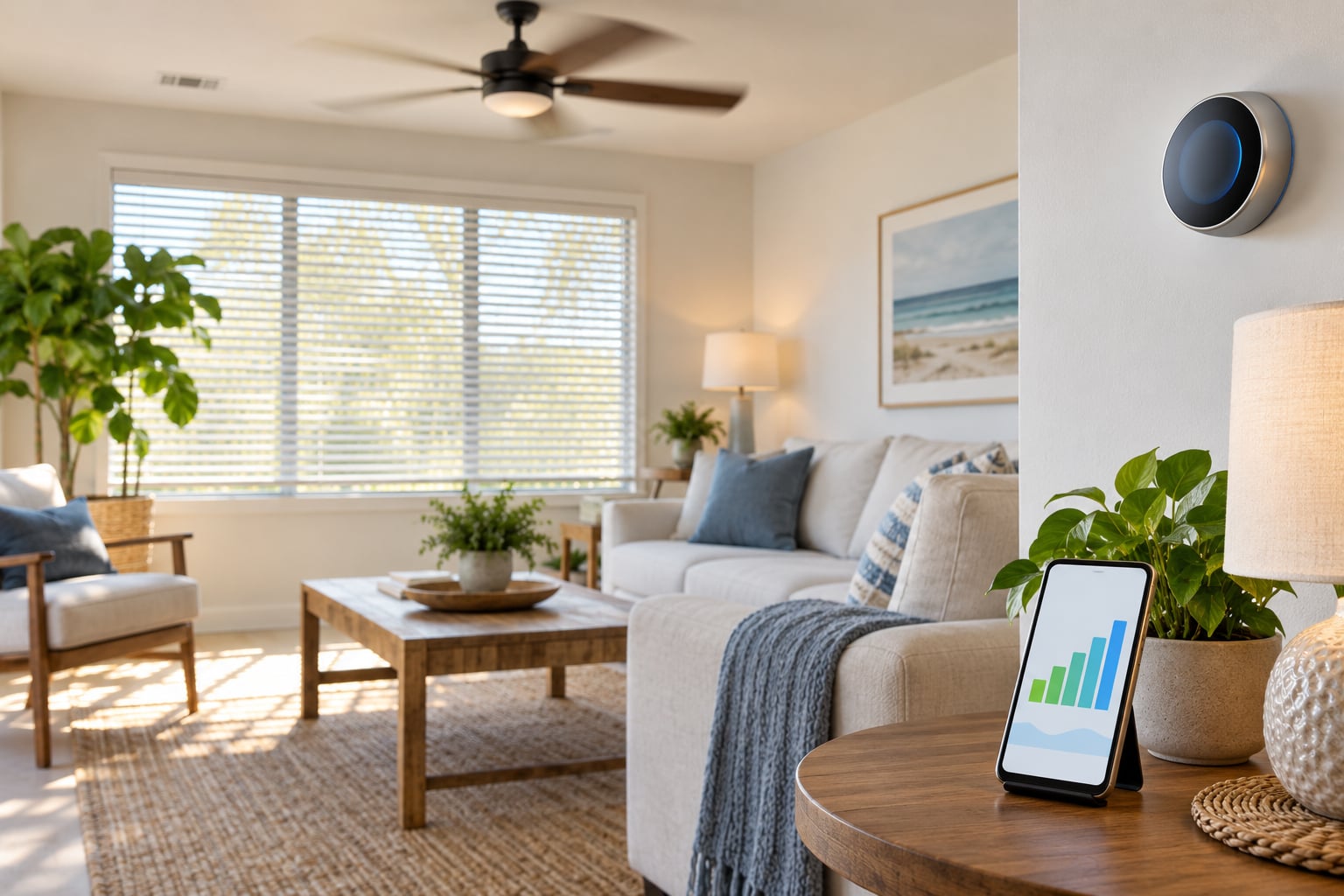
Your summer bill goes up because cooling is roughly half of what most households pay for electricity, and the air conditioner works harder every day as the outdoor temperature climbs. The thermostat is the single biggest lever you control. If you want to know how to lower your electric bill in summer, the plan below starts with your bill, walks through nine changes in order of impact, and ends with what to track so the savings stick.
I want to be straight with you about the ceiling on this. Behavior changes cut your usage, but they cannot stop a utility from raising its supply charge, and several utilities now pass those increases through harder in July and August. So treat the numbers below as ranges, not promises, and check your own rate before you assume a kWh saved is worth what you think it is.
One more thing worth saying up front. You do not need to spend money to do most of this. The first four steps are free, and they are the ones that move the meter the most.
Table of Contents
- What You Need
- Step-by-Step
- Start by Finding the Biggest Summer Energy User
- Set Your Air Conditioner Wisely
- Use Fans Before Raising the Air Conditioning
- Block Heat from Entering the Home
- Reduce the Work Your Air Conditioner Has to Do
- Make Hot-Weather Habits More Energy-Efficient
- Check for Hidden Energy Waste
- Use Rebates, Programs, and Rate Plans Carefully
- Track Your Results for One Full Billing Cycle
- Common Mistakes
- Frequently Asked Questions
- Does my electric bill go up in the summer?
- What thermostat setting saves the most electricity in summer?
- Does turning off lights really save energy?
- Are portable air conditioners cheaper than central air?
- What can I do if I cannot pay my summer electric bill?
- When should I call a professional instead of doing it myself?
- Start With the Biggest Summer Energy User
What You Need
You do not need a toolkit. You need a bill, a phone, and about an hour.
- Your last three bills. Twelve months is better, because it shows you what this house costs in a mild month. Summer comparisons against your own winter bill are misleading if your winters are mild too.
- Your thermostat. Any thermostat works for the first pass. A programmable or Wi-Fi model lets you schedule setbacks, which is where the bigger savings live.
- Phone or tablet. For reading the utility’s usage dashboard or your smart plug app, and for checking peak-hour windows on your rate plan.
- A flashlight and a pencil. For finding air leaks around doors and window frames. Do this in daylight with the lights off, or at night from the inside with someone shining a light from outside.
- Blinds, curtains, or shades. Whatever you already own is enough to start. Blackout curtains and cellular shades work better, but you do not need to buy anything before trying what is in the closet.
- Weather-stripping and caulk if you own the home, plus a screwdriver. Most of the cost here is a few dollars of tape and a tube of sealant.
Renters, check your lease before anything permanent. Filters, bulbs, and portable equipment are always yours to change. Window film, caulking, and smart thermostats usually are not, unless your lease says so. Homeowners, read the manual on your air conditioner before you open a panel or pull a filter, because a few manufacturers restrict DIY filter changes or require a specific filter grade.
Step-by-Step
Start by Finding the Biggest Summer Energy User
Your first job is to find out where the money actually went. Pull up the bill and look for three things: total kilowatt-hours used, your rate per kilowatt-hour, and any line item that is not a flat energy charge. That third one matters because a demand charge or a tiered rate means your savings math works differently than a simple multiplication.
Here is how to read it. A kilowatt-hour, abbreviated kWh, is one kilowatt running for one hour. A 3500-watt central air conditioner running for an hour uses 3.5 kWh. Multiply that by your rate, then by roughly how many hours the unit ran that month, and you have most of your cooling cost.
If your bill has a demand charge, your utility is billing you for the highest 15 or 30 minutes of power your home pulled during the month, not just the total. That is why a single afternoon of running the dishwasher, the dryer, and the oven alongside the air conditioner can cost you more for the whole month. If your rate is tiered, the first block of kWh is cheap and later blocks cost more, so trimming the top tier is where the savings concentrate.
Now compare this month’s kWh against the same month last year. An increase of 15 to 30 percent in a hotter-than-normal month is ordinary. An increase of 80 percent with the same weather usually means something specific, and it is worth finding.
| Appliance or system | Typical watts | Typical monthly kWh |
|---|---|---|
| Central air conditioner | 3,500 | 300 to 600 |
| Dehumidifier | 450 | 200 to 350 |
| Water heater | 4,000 | 150 to 250 |
| Refrigerator and freezer | 150 | 100 to 200 |
| Washer and dryer | 3,000 combined at peak | 100 to 200 |
| Dishwasher | 1,200 | 30 to 70 |
| Oven or range | 3,000 | 20 to 40 |
| Televisions and electronics on standby | 5 to 40 for the household total | 20 to 50 |
You can tell this step worked when you can name, in one sentence, which load is responsible for most of your increase. If you cannot name it yet, stop here and look again. Every step after this one depends on knowing what you are fixing.
Set Your Air Conditioner Wisely
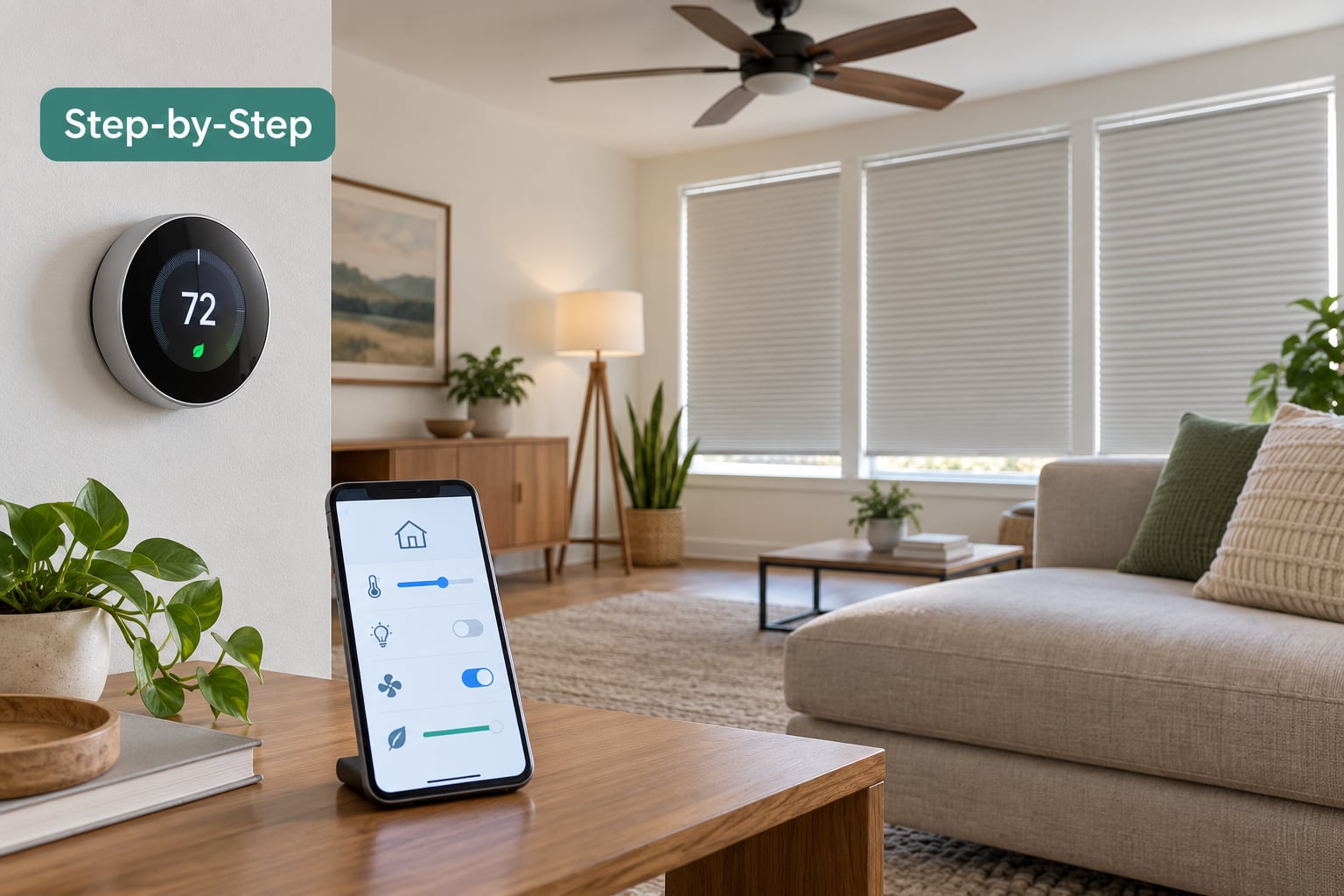
Set the thermostat to 78 degrees Fahrenheit while you are home and 80 to 82 while you are away, then schedule the change rather than making it by hand. Every degree you raise the set point above 78 cuts cooling energy by roughly 3 to 5 percent, which compounds across a month rather than adding up once.
The 78 figure is a starting point, not a rule. Comfort, humidity, health needs, and equipment type all move the right number. A house with a variable-speed compressor does better at 76 with steady airflow than a single-stage unit does at 78, because the smaller unit cycles on and off and wastes the energy it uses to start up. Households with infants, older adults, or anyone taking heat-sensitive medication should talk with a clinician before accepting a higher indoor temperature during a heat wave. Cooling is a health matter, not just a comfort one.
Use the schedule, not the manual wheel. A setback of 7 to 10 degrees for the 8 to 10 hours you are away is the highest-return single setting on most thermostats, and it costs nothing. Warm the house back up an hour before you get home so you are not paying to cool a space you are not in yet.
Also set the fan to Auto rather than On. On some systems, leaving the fan on continuously forces the compressor to run even when the house is already at temperature. If your outdoor unit is noisy at night, check with a technician whether it is a variable-speed unit running at low output or a worn capacitor.
You know it worked when your indoor temperature stays within a degree or two of the set point and the unit runs in long stretches instead of kicking on every few minutes.
Use Fans Before Raising the Air Conditioning
Run ceiling fans counterclockwise, which pushes air down the walls and along the ceiling, and use the highest speed that feels comfortable. A moving air current feels about 3 to 4 degrees cooler than still air at the same temperature, which means people often accept a warmer setting when a fan is running.
Run fans only in rooms someone is in. An empty room with a fan moving air costs electricity and cools nobody, and in humid climates it makes the moisture in your walls harder for the system to pull out of the house. Use the fan to cool the room you are in, close the doors to the rest of the house, and let the air conditioner handle the occupied zone.
Fans are not a substitute during dangerous heat. When outdoor temperatures run near or above the temperature your body can shed, moving air alone will not protect you. That is the point to check on people, drink water, and get to a cooled space.
The test is simple. If you can hold the thermostat a few degrees higher with the fan running and still feel fine, the fan paid for itself.
Block Heat from Entering the Home
Close blinds and curtains on any window that gets direct sun, especially west-facing windows in the late afternoon. Curtains or shades that fit the frame and overlap in the middle stop more heat than a blind with gaps along the edges, and reflective window film can cut solar heat gain through glass by roughly a third. Windows are usually the weakest thermal boundary in a house, so sun through glass heats the indoor air directly rather than warming the frame, which means a normal interior curtain only slows it down.
Work in this order: first the windows that get the most sun, because that is where the heat is. Then exterior shading, if you own the home, since an awning or planted trellis stops heat before it reaches the glass. Then the doors. A propped-open door or a broken window seal pulls conditioned air out and outside air in, and every unit of cooled air that escapes has to be replaced.
Close the blinds before the sun hits, not after the room is warm. A room that stays shaded from morning to evening can be several degrees cooler than the same room with blinds opened at noon.
Apartment dwellers and anyone without exterior control get most of the benefit from a lined curtain rod, which closes the side gaps where fabric usually leaks air. It is an afternoon of work and no drilling.
You know this worked when indoor temperatures near a shaded window track those in the rest of the house instead of running several degrees warmer.
Reduce the Work Your Air Conditioner Has to Do
Clear the return vents and supply registers. A return vent behind a sofa or a stack of boxes can cut airflow enough to freeze coils, raise pressure in the system, and burn out a compressor. This is the cheapest fix on the list and it causes expensive damage.
Replace a dirty filter on the interval your equipment manual specifies. A clogged filter makes the unit work harder for the same result, and some manufacturers require a particular grade such as a MERV 13. Skip it only if your manual tells you the unit has a washable filter. If the outdoor coil has fuzz on it, the compressor is pushing warm air against a dirty radiator, so hose the coil off with a garden hose once a year while the unit is off.
Run exhaust fans when you shower, cook, or run the dishwasher, and use the setting that actually pulls air out. In humid climates, indoor humidity is what makes 78 degrees feel like 88. Dehumidifying is cheaper than cooling.
Cook outside when you can. A gas range adds combustion heat to the house, and an electric oven adds several kilowatts of heat that the air conditioner then has to remove. Use a microwave or a small countertop unit for reheating instead of preheating the oven.
You know it worked when the system starts cooling a room at the same rate it did last year. If a technician tells you the unit is undersized or the ducts are leaking, that is a different conversation, and no amount of filter cleaning fixes either one.
Make Hot-Weather Habits More Energy-Efficient
Move the big loads off peak hours. Most time-of-use rates price the afternoon and early evening, roughly 4 to 9 p.m., higher than everything else, because that is when demand on the grid is highest. Run the dishwasher, wash clothes, and charge an electric vehicle overnight or in the early morning. Pool pumps are the easiest win here since they run for hours and nobody needs them at 6 p.m.
Wash cold and line dry. A large share of the energy a dryer uses goes to heating water out of the machine, and hanging clothes outside on a warm dry day removes that load completely.
Be careful with hot water. Most of a shower’s energy goes into heating the water rather than moving it, which is why a low-flow showerhead and a water heater upgrade cut the load more than anything you do in the shower stall itself. If you have gas and your water heater is gas, you are already in the cheaper fuel. If you have an electric resistance tank or an electric tankless unit, a heat pump water heater cuts that load meaningfully. Ask your utility about rebates before you buy, since many offer them for heat pump water heaters and ENERGY STAR models.
Switch any remaining incandescent or halogen bulbs to LED. An LED uses roughly a tenth of the electricity of the incandescent it replaces and produces almost no heat, which matters more in summer than most lighting advice suggests. Check the fixture’s wattage rating against the bulb’s actual draw so you do not buy a bulb brighter than the fixture was designed for, and confirm the fixture is damp-rated if it sits in a bathroom or covered porch.
Pool and hot tub owners should set pumps to run fewer hours at a slower setting rather than the same hours at full speed, and check that the hot tub cover is closed when nobody is using it. Electric vehicle charging on a Level 2 charger draws about as much as a small air conditioner, so schedule it the same way you schedule the dishwasher.
Check for Hidden Energy Waste
Standby power is real but modest, and it is worth knowing the honest number before you spend an evening on it. The Natural Resources Defense Council has put the total standby draw across an average American home at roughly 200 dollars a year. That figure is more than most people expect and less than most tip lists imply.
A switched power strip for a home entertainment setup, a printer, a game console, and a set of small kitchen appliances cuts most of that in one action. A smart plug on a schedule does the same thing automatically. Do not buy 20 of them, though, because each one has its own small draw.
Now look for the bigger problems. A refrigerator that runs constantly in a kitchen that stays above 85 degrees works far harder than its rating suggests, so check the temperature in there with an inexpensive thermometer and confirm it sits between 37 and 40 degrees. A refrigerator that frosts up on the inside walls, or that stays cold while the freezer is warm, needs service rather than a habit change.
A home using far more than it should at a modest thermostat setting usually has one of three causes: leaking or undersized ductwork moving cold air into an attic, an undersized or aging system that has lost efficiency, or a building envelope that lets hot air in around the clock. If you suspect any of those, stop tweaking and get an inspection.
Estimate your own savings with one multiplication: kWh reduced times your rate per kWh. Cutting 200 kWh a month at 18 cents is about 36 dollars a month, which tells you honestly whether a 60-dollar project is worth your weekend.
Use Rebates, Programs, and Rate Plans Carefully
Utilities offer rebates for programmable and smart thermostats, ENERGY STAR appliances, efficient heat pump water heaters, attic insulation, and duct sealing. Some states run the program and some cities do, so search your utility’s site for a rebate page rather than assuming you have none.
Home energy audits are the least-known program available. A number of utilities provide them at no cost and some utilities pay for the recommended fixes. A properly done audit gives you a prioritized list with modeled savings, which is far better than the guesswork in this article.
Three bill terms you will meet, defined plainly:
- Time-of-use rate. Different prices for different hours of the day. Good for you if your cooling schedule and your habits can move.
- Budget billing. The utility spreads your total annual cost evenly across the year. It does not reduce your usage, but it stops summer from being the month that hurts.
- Demand charge. A fee based on your highest power draw in the month, which makes running several large appliances at once expensive.
Read the electricity facts label on any retail plan before switching, and look at the expiration date and early termination fee. Plans advertising free nights or bill credits often price you back above the local utility for every month that is not hot enough to trigger the credit. Compare the full year against your current utility, not one July. In Texas, California, and the Northeast, rules and default rates differ a lot, so treat any plan comparison as local research.
If your bill is already unaffordable, contact the utility before you avoid the phone. Ask about budget billing, a payment arrangement, and any assistance program in your area. LIHEAP is the federal program, and most states run their own version with income limits. If a household member has a medical condition that requires powered cooling, tell the utility in writing and ask about medical certification, which changes shutoff protections and timing rules in many states. Missing the call is what turns a payment problem into a shutoff problem.
Track Your Results for One Full Billing Cycle
Write down today’s kWh and today’s habits before you change anything. Then compare at the end of the next cycle, adjusting for weather, because a cooler month will make you look good and a hotter one will make you look bad regardless of what you did.
Most utilities give you daily or hourly usage through an online account or app. Watching the curve is more useful than watching the total, because you can see exactly when your house drew the most power. If a spike happens between 4 and 9 p.m. on a weekday, something in the house is running hard in the evening, and that is your next target.
Decide what stays and what goes. Some habits will not be worth keeping, and that is useful information. Keep the changes that are automatic, like the thermostat schedule and the power strip, because they hold when you are busy.
You have succeeded when your next summer bill, adjusted for a similar number of cooling degree days, comes in lower than last year’s. That is the only comparison that really counts.
Common Mistakes
The most common mistake is setting the thermostat to 68 in July because the house feels warm by noon. That number is a winter setting, and it is the single largest source of avoidable summer cost in most homes.
The second is running fans in empty rooms, which adds a load and cools nobody. The third is blocking return vents with furniture, which starves the system and can damage it. The fourth is chasing pennies: swapping every bulb, lowering television brightness, or unplugging a toaster oven saves almost nothing next to a thermostat adjustment.
Then there are the shortcuts that are dangerous. Do not run a heavy-duty extension cord to a portable air conditioner, and do not use a space heater to fight a broken air conditioner in summer heat. Do not open a window unit to add outdoor air while the compressor runs, do not set the thermostat to off and expect the house to cool, and do not climb on the roof to hose the coil if you are not comfortable with the height. Portable units belong on a dedicated grounded circuit, straight into the wall.
One more trap worth naming: retail electricity plans. The two pages ranking for this question that push a provider’s plan are the two people trust least, and the reason is simple. A plan that gives you free nights in July is pricing you back in February. Compare a full year, and read the expiration date.
To hold on to what you saved, run the filter schedule, wipe the coil once a year, and re-check the thermostat schedule every couple of months, since most people quietly abandon theirs by August.
Frequently Asked Questions
Does my electric bill go up in the summer?
Yes, for most households. Air conditioning is usually the largest line item on a summer bill, often around half of it, because the system runs longer and works harder as outdoor temperatures rise. Refrigerators, dehumidifiers, and pool pumps add to the load at the same time. In many regions the per-kWh rate also climbs during peak demand hours, so the same usage costs more in July than in March.
What thermostat setting saves the most electricity in summer?
Set it to about 78 degrees Fahrenheit while you are home and 80 to 82 while you are away, and schedule the change instead of adjusting by hand. Each degree above 78 cuts cooling energy by roughly 3 to 5 percent, and the effect compounds all month. Households with infants, older adults, or anyone on heat-sensitive medication should ask a clinician before accepting a warmer indoor temperature.
Does turning off lights really save energy?
It depends on the bulb. For incandescent and halogen lamps, roughly 90 percent of the energy becomes heat rather than light, so switching those to LED saves real money and cools the room too. An LED uses around a tenth of the energy of the bulb it replaces. Standby loads such as televisions, game consoles, and printers add up too, and the Natural Resources Defense Council puts the total across an average home near 200 dollars a year.
Are portable air conditioners cheaper than central air?
Not on cost per hour, though they can be cheaper for a single small room. A portable unit typically draws 1,500 to 2,500 watts, and a central system draws around 3,500 watts, so the portable unit saves money only when you run it instead of the whole house. They also heat the room with exhaust air, so they work best in one closed room. Always plug them into a dedicated grounded wall circuit.
What can I do if I cannot pay my summer electric bill?
Call your utility before the due date rather than after it. Ask about budget billing, which spreads your annual total evenly, and about a payment arrangement. Apply for LIHEAP or your state version of it, and check for community action agency help. If someone in the home needs powered cooling for a medical reason, ask in writing about medical certification, which affects shutoff protections in many states.
When should I call a professional instead of doing it myself?
Call a licensed HVAC technician when cooling is weak no matter how long the unit runs, when the outdoor unit is loud or cycling rapidly, when the system needs refrigerant or a coil cleaned, or when your bills are far above what the same house used to cost at the same thermostat setting. Those symptoms point to low refrigerant, leaking or undersized ducts, an aging compressor, or an undersized unit, and none of those are DIY jobs.
Start With the Biggest Summer Energy User
Here is the short version. Pull out your last three bills and find the kWh figure, then compare this summer’s usage against the same month last year. Write down the one load responsible for most of the increase, because that is where your effort belongs.
Then make one change today that costs nothing: schedule the thermostat to 78 while you are home and 80 to 82 while you are away. Close the blinds on your sunniest window before you leave the room. Those two moves take about fifteen minutes and cover most of what a summer bill can give back.
Give it one full billing cycle before you judge it, and compare against last year’s usage for the same month rather than against your own winter bill. After that, the next thing worth your time is the free or low-cost energy audit your utility may already offer.