
Calling your providers is the fastest way to lower your monthly bills without switching anything. Phone, internet, insurance and utility companies all keep a set of discounts and rate tools that front-line reps are not allowed to offer unless you ask, so a single fifteen-minute conversation can shave twenty to forty dollars a month off a service you already have and plan to keep.
The method is simple: find out what you are paying, find out what someone else charges for the same thing, then ask the retention department for whatever closes the gap. What follows is the process in order, including the words to say out loud, the questions that move a call forward, and the move to make when the first person says no.
Last reviewed October 2026.
Table of Contents
- What You Need
- Step-by-Step
- How to Research Your Bill Before Calling
- How to Call Customer Service and Ask for Help
- What to Say to Lower Your Monthly Bill
- When to Ask for a Billing Adjustment or Credit
- How to Get the New Price in Writing
- What to Do If the Company Says No
- Common Mistakes
- Frequently Asked Questions
- Will every company let me lower my monthly bill?
- Is it better to threaten to cancel or ask for a retention offer?
- Can calling customer service cancel fees or lower my rate temporarily?
- What discounts are available for senior, military or low-income customers?
- Should I keep autopay when negotiating a lower bill?
- What if a phone or internet company says my price cannot change?
- Conclusion
What You Need
You need about fifteen minutes, your account number, the most recent bill, and one competitor price to compare against. That is genuinely it. The prep is what separates a call that ends in a discount from one that ends in “unfortunately I can’t change that.”
Gather this before you dial:
- Account details. Account or customer number, the exact plan name from the bill, and how long you have been a customer.
- The current charge. The monthly total, plus any one-time fees, equipment charges or add-ons listed on the statement.
- A competitor offer. A screenshot of a comparable plan from another provider, with matching speed, data allowance or coverage.
- Your history. Autopay enrollment, paperless billing status, bundled services, and any loyalty points on the account.
- A pen. Or a notes tab. You are going to record four things and forget them otherwise.
Start with the bills that have climbed or that you have never revisited since signing up. Wireless plans, internet, car insurance and gym or streaming memberships are the usual wins, because the provider has a reason to keep you and you have a reason to stay.
One thing to know up front: how much a company will move depends on where you live, whether you are under contract, and how long you have been a customer. A regulated utility rate or a promotional rate that is fixed for another eight months will not budge the way a discretionary cable add-on will. Set expectations accordingly before you pick up the phone.
Step-by-Step
How to Research Your Bill Before Calling
Research first, because the number you ask for should come from a real comparison rather than a round guess. Take the current bill and find the plan name, the base rate, and every line item you did not deliberately choose. Insurance and phone bills are the worst offenders for add-ons nobody remembers paying for.
Then pull a competitor price. For internet, a quick search for your address returns the plans actually available at your address, which is the only comparison that counts. For wireless, match the data allowance and the number of lines. For car insurance, quotes from three carriers in your state take about twenty minutes and give you a number with real weight behind it.
Multiply the monthly gap by twelve. If a competitor plan is thirty dollars cheaper a month, you are looking at three hundred sixty dollars a year, and that figure is the one you say out loud on the call. Check your own account for discounts you have never claimed, such as autopay, paperless billing or multi-line credits.
Finish by deciding on a target. If a plan change gets you most of the way there, say so. A representative who can see a realistic outcome will work harder than one handed an impossible number.
How to Call Customer Service and Ask for Help
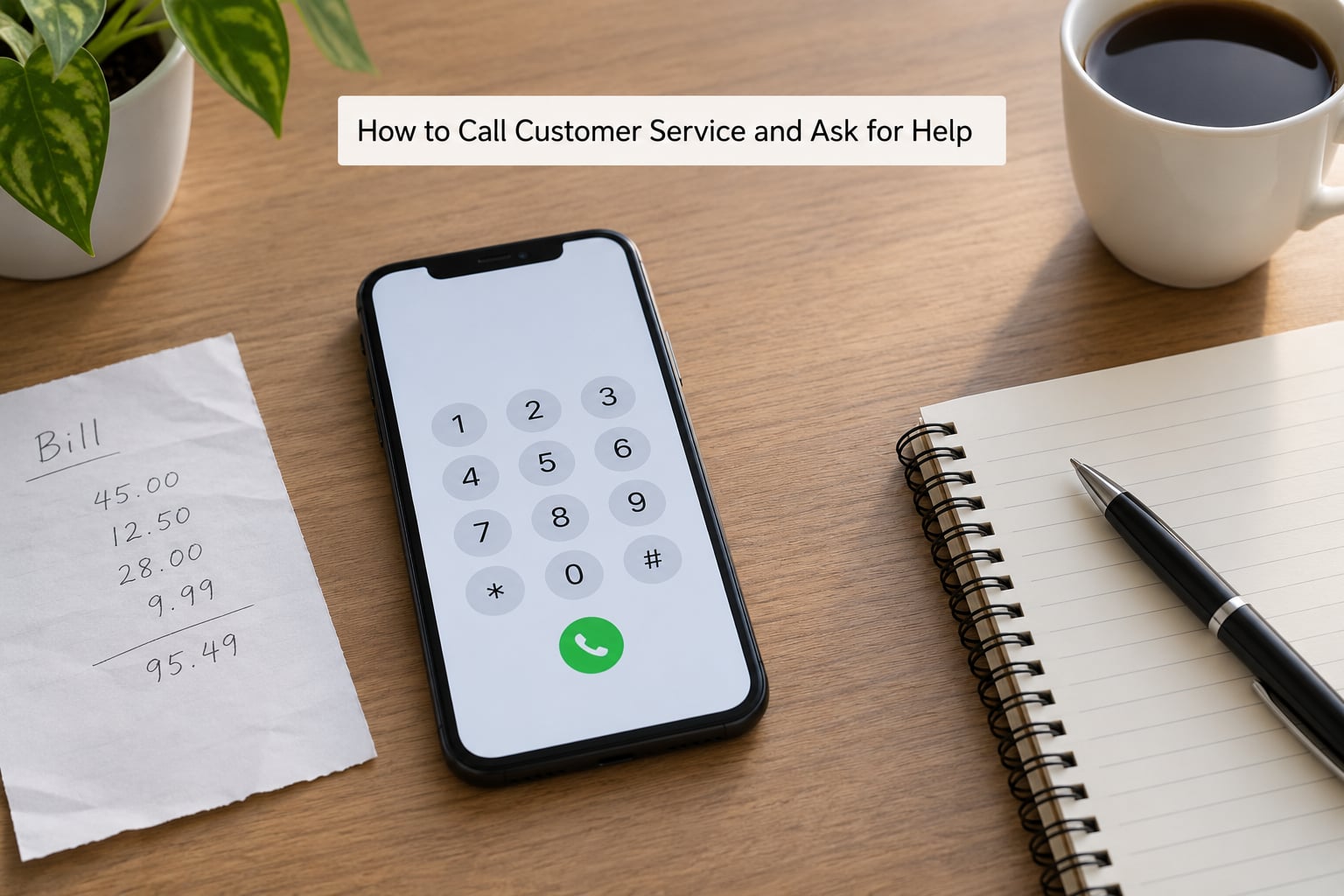
Most calls go nowhere because people negotiate with someone who cannot authorize anything. Say up front that you want to be transferred to the retention or loyalty team, and expect to be told that department does not exist. It usually does. Cable and wireless providers rarely list it in the phone menu, so ask to be routed through the cancellation path instead, since the team behind that path is the team that holds the discount authority.
Chatbots are the other wall. Keep pressing zero or saying “representative” until it routes you to a human, and if the loop repeats, hang up and call during a quieter window, usually mid-morning on a weekday. Call centers run shorter queues outside the lunch hour and the first hour after shift change.
Here is a copy-and-read opening. One reader on r/SavingMoney got nine dollars a month off a wireless plan with a version of it:
“Hi, I’m calling to find out if I have any discounts available to me. I’ve been a customer for four years and I’m seeing a lower rate from another provider for the same service.”
Polite, specific, no accusation. Then let the representative talk. Ask questions rather than making demands: “What promotions are available on my account?”, “Is there a loyalty discount for customers with my tenure?”, “What would it take to move me to your lowest tier plan?” Questions open options. A demand closes the conversation.
What to Say to Lower Your Monthly Bill
Say what you want in three parts: the current price, the comparison, and the request. “I am paying 92 dollars a month. Another carrier offers the same 15 gigabytes for 60. What can you do to close that gap?” That sentence is the whole negotiation in twenty words, and it works because it is factual rather than emotional.
From there, work through the options in this order, because each one costs the provider less than the last:
- Plan change. Often the cheapest fix. Ask what the lowest tier on your current service costs and what you lose by moving down.
- Unclaimed discount. Loyalty, autopay, paperless billing, multi-line and bundle credits are frequently sitting unused on the account.
- Promotional rate. A reduced price for six, twelve or twenty-four months. Always ask what happens in the final month.
- Add-on removal. Premium channels, insurance riders, device protection and international calling packages. Ask for a line-item total of what you are dropping.
- Bill credit. A one-time credit applied to the next statement, often the easiest yes on a first call.
Short script for the ask, if you want one to read:
“I’m not looking to cancel. I’m looking for the best retention offer available on my account. If you can’t make that change, can you transfer me to someone who can?”
Before you agree to anything, ask the three questions that separate a real offer from a vague one. What is the monthly amount, on what exact date does it start, and what happens when the promotional period ends? If the answer to the last question is evasive, the offer is not the deal you think it is.
Then be quiet. Silence after an offer does more work than another sentence of persuasion, and it is the single hardest habit to build.
When to Ask for a Billing Adjustment or Credit
Ask for a recurring rate reduction when the problem is what you pay each month going forward. Ask for a one-time credit when something specific went wrong: a charge applied in error, a fee you do not owe, or a promotional rate that lapsed early.
Four situations worth raising, with the line that opens each:
- Overcharge. “I was quoted 60 dollars and billed 92. Can you send me the itemized bill so we can find where the difference is?”
- Fee waiver. “I had one late payment last year and I would like to ask about removing that fee from this account.”
- Lapsed promotion. “My promotional rate ended three months earlier than the letter said. Can that be corrected?”
- Partial-month refund. “I switched plans mid-cycle and was charged a full month. Can I get a refund for the unused days?”
Keep these separate from the rate negotiation. Mixing them makes the conversation longer and gives the representative more reasons to stall. One request per call, resolved cleanly, beats a list of five.
How to Get the New Price in Writing
Get every agreement in writing because verbal offers are the most commonly reported failure point. Readers on r/Spectrum describe deals promised on one call and missing from the account on the next, and that gap only closes if you have a record.
Before you hang up, write down four things: the representative’s full name, the confirmation or case number, the exact monthly amount with its effective date, and any conditions attached, including the end date of a promotional rate and any equipment or contract requirement.
Then ask for the email. “Can you send me a confirmation of this change to my email?” Most systems generate one automatically within a few minutes. If the representative hesitates, that hesitation is information: the change may not be documented on their side either.
Check the account yourself within a day. Log in, open the current plan, and confirm the amount and the start date match what you were told. If they do not, call back with your confirmation number in hand and reference the earlier date. Providers move much faster on the second call when you can quote a reference.
Set a calendar reminder for one week before any promotional rate ends. The reminder is the difference between a lasting reduction and a twelve-month win followed by an unwelcome jump.
What to Do If the Company Says No
If the first person says no, treat it as a routing problem rather than a final answer. Front-line reps often have a narrow set of permitted adjustments, and the same company routinely approves a larger discount five minutes later on a different call.
- Thank them and hang up. Call back, ideally at a different time of day or through chat. A fresh agent has fresh authority and no memory of the refusal.
- Ask for a supervisor. “I’d like to speak with someone who can authorize a retention offer.” Supervisors carry a larger approval limit.
- Recheck your own facts. Contract end date, tenure, autopay status, whether the rate is already promotional, and whether the account has any unpaid balance flag.
- Downgrade instead of cancelling. “I would rather stay at a lower tier than leave. What is the cheapest plan you can move me to?”
- Accept a shorter promotion. Twelve months at a lower rate beats nothing, and it costs you nothing to take.
- File a formal complaint. After two failed attempts, the escalation path usually runs through a supervisor, then a written complaint, then a regulatory body for utility and telecom billing disputes.
If nothing moves after three genuine attempts, check whether you are under contract. An early termination fee can exceed the savings you were chasing, and in that case you are not negotiating anymore, you are just waiting out a clock. Know the exit date before you threaten an exit.
One honest limit worth naming: some bills will not move. Regulated utility base rates, fixed lease terms for the life of a lease, and taxes or government surcharges are not discretionary charges, and no script changes them. Focus your energy on the discretionary lines.
Common Mistakes
Accepting a verbal offer. The discount exists on the account or it does not. Fix: get the confirmation number and the email before the call ends, every time.
Switching plans before checking the fees. Downgrading can trigger equipment charges, contract problems or a loss of bundled pricing. Fix: ask for the full first-month total, including taxes and fees, before you agree to any change.
Threatening cancellation with nothing behind it. A bluff with no real alternative ends the conversation. Fix: know your actual exit cost before you mention leaving, and use cancellation language only when the number behind it is real.
Being rude to get leverage. Aggression rarely produces a durable account-level discount, and readers consistently report better outcomes when they were polite. Fix: keep your tone flat and factual, the same way you would describe a leaking faucet.
Canceling immediately and never reading the final bill. Cancellation triggers proration, equipment return charges and sometimes an early termination fee that was never in the terms you remembered. Fix: ask for the final bill amount and the charge-off date before you confirm, then check the statement when it arrives.
Waiting for the promotion to expire before calling. After the promo ends you are negotiating from the weakest position on the account. Fix: call one to two weeks before it ends, while you are still a customer paying the good rate.
Frequently Asked Questions
Will every company let me lower my monthly bill?
No, and the difference comes down to discretion. Discretionary charges, like cable tiers, phone plans, wireless add-ons, gym memberships and insurance premiums, are priced by the company and can usually move. Regulated charges, like utility base rates, taxes, government surcharges and fixed lease terms, are not the company’s to change. Ask about the discretionary part of your bill and expect movement there, not everywhere.
Is it better to threaten to cancel or ask for a retention offer?
Ask first, then mention cancellation only if it is true. A retention specialist can often approve a discount that a general representative cannot, and that authority depends on you staying a customer. Threatening to cancel when you have no intention of leaving reads as a bluff, and it ends the conversation early. If leaving is genuinely an option, knowing that calmly changes the whole tone of the call.
Can calling customer service cancel fees or lower my rate temporarily?
Both are possible. Fees such as late payments, service charges and equipment charges can sometimes be waived, particularly on a long-tenured account or as a one-time courtesy. A temporary reduction usually comes as a promotional rate that runs for a fixed number of months, and the standard practice is to ask directly what the rate reverts to when the promotion ends. Get that end rate in writing before you accept.
What discounts are available for senior, military or low-income customers?
Most providers publish eligibility criteria you can look up before you call. Seniors often qualify for reduced first- or second-tier pricing. Active and veteran military households are typically eligible for waived equipment, discounted lines and free month additions. Low-income households may qualify for a discounted base rate or a hardship program. Ask specifically whether your account qualifies, and have proof of status ready.
Should I keep autopay when negotiating a lower bill?
Keep it. Autopay is usually worth more as a bargaining chip than it costs you, because many providers offer a small discount for enrolling and some will remove it as a concession. If you use it as leverage, ask for the discount in exchange for staying enrolled rather than threatening to remove it. Read the autopay terms carefully, since some plans treat a failed payment as a reason to move you to a different rate tier.
What if a phone or internet company says my price cannot change?
Take the reason, because the answer shapes the next move. A promotional rate with a fixed end date cannot change until it expires, so set a reminder and call again beforehand. A regulated or regulated-adjacent charge cannot move at all. Everything else is worth a second call. Ask for the retention or loyalty team, then a supervisor, and request written confirmation of any change you are offered.
Conclusion
Pick the largest recurring bill on your list and make the call today, before you find another excuse. Have your plan name, your current monthly amount and one competitor rate in front of you, state your savings goal out loud, ask for the best retention offer available, and let the silence sit.
Before you hang up, write down the name, the confirmation number, the new amount and the date it starts. Then set a reminder for when the promotional rate ends. That is the whole method, and it works again on every bill you own.