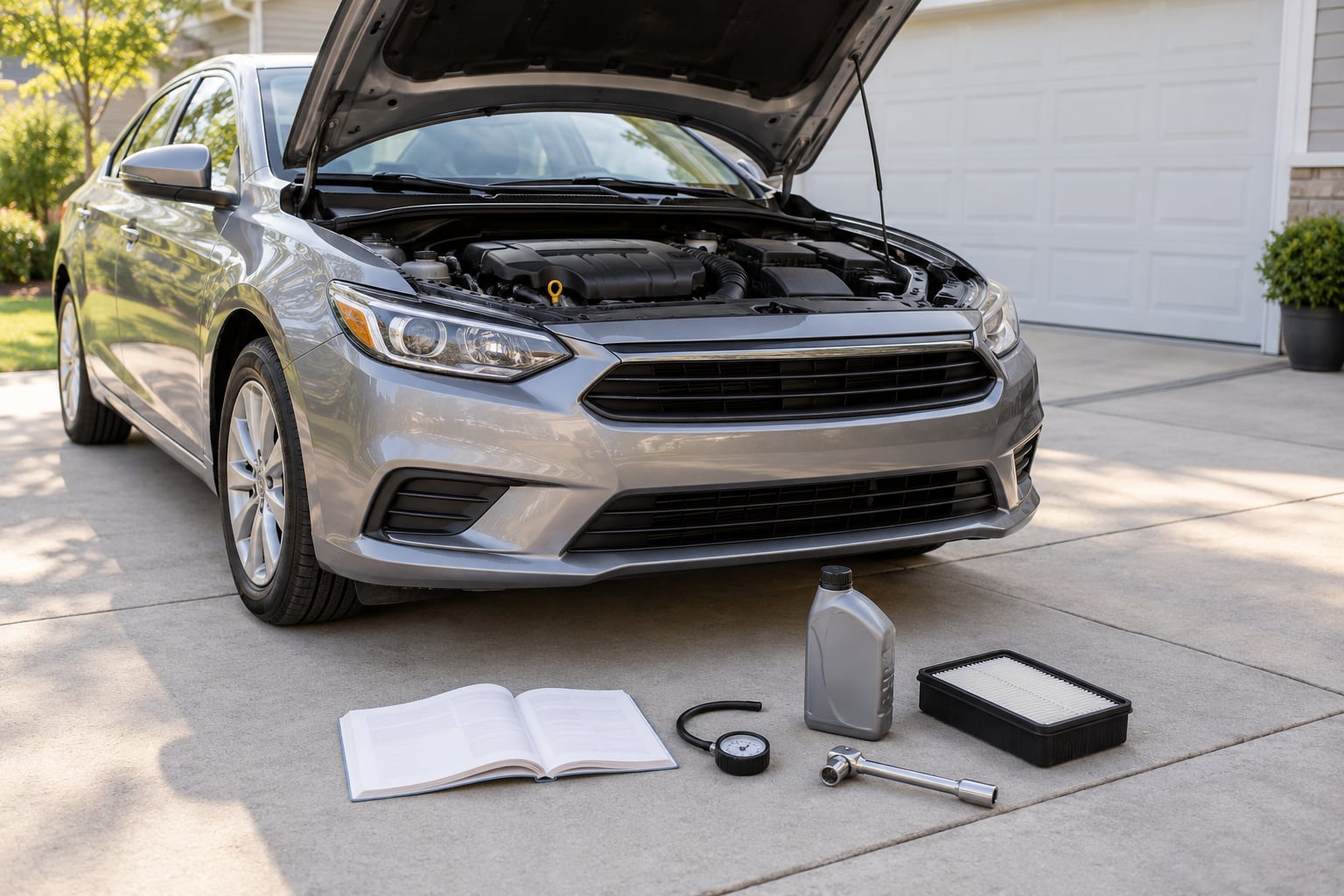
Learning how to maintain a car on a budget comes down to three habits: set aside a small fixed amount every month, run a ten-minute inspection of the free checks yourself, and spend that money on the items that protect your engine, your brakes and your ability to see. Everything else can wait. This guide covers the documents and tools worth buying, a five-step routine you can finish in a driveway, and a clear line between what to fix now and what to defer.
The reason it matters is simple arithmetic. Deferred maintenance converts a cheap part into a damaged assembly. A cheap engine air filter that is never swapped ends up as a plugged intake and a struggling engine; worn brake pads that keep going wear out the rotors as well. Staying current on the basics is the lowest-cost protection a driver can buy.
I keep a simple calendar for my own car and check it the first weekend of every month. It takes ten minutes and it removes the guesswork that makes car bills feel unpredictable. Most surprise expenses are not surprises at all. They are the result of a schedule nobody wrote down.
Table of Contents
- What You Need
- Step-by-Step: How to Maintain a Car on a Budget
- Step 1: Create a Maintenance Schedule and Budget
- Step 2: Check Tires, Fluids, and Lights
- Step 3: Keep the Engine and Cabin in Working Order
- Step 4: Handle Repairs Without Overspending
- Step 5: Know When a Mechanic Is Necessary
- Common Mistakes: Where Car Maintenance on a Budget Goes Wrong
- Frequently Asked Questions
- What is a good monthly budget for car maintenance?
- Do I really need to get my oil changed every 3,000 miles?
- What car maintenance can I safely put off when money is low?
- What is the 30-60-90 rule for cars?
- What can I check on my car with no tools at all?
- How do I know if my car is overdue for maintenance?
- Conclusion
What You Need
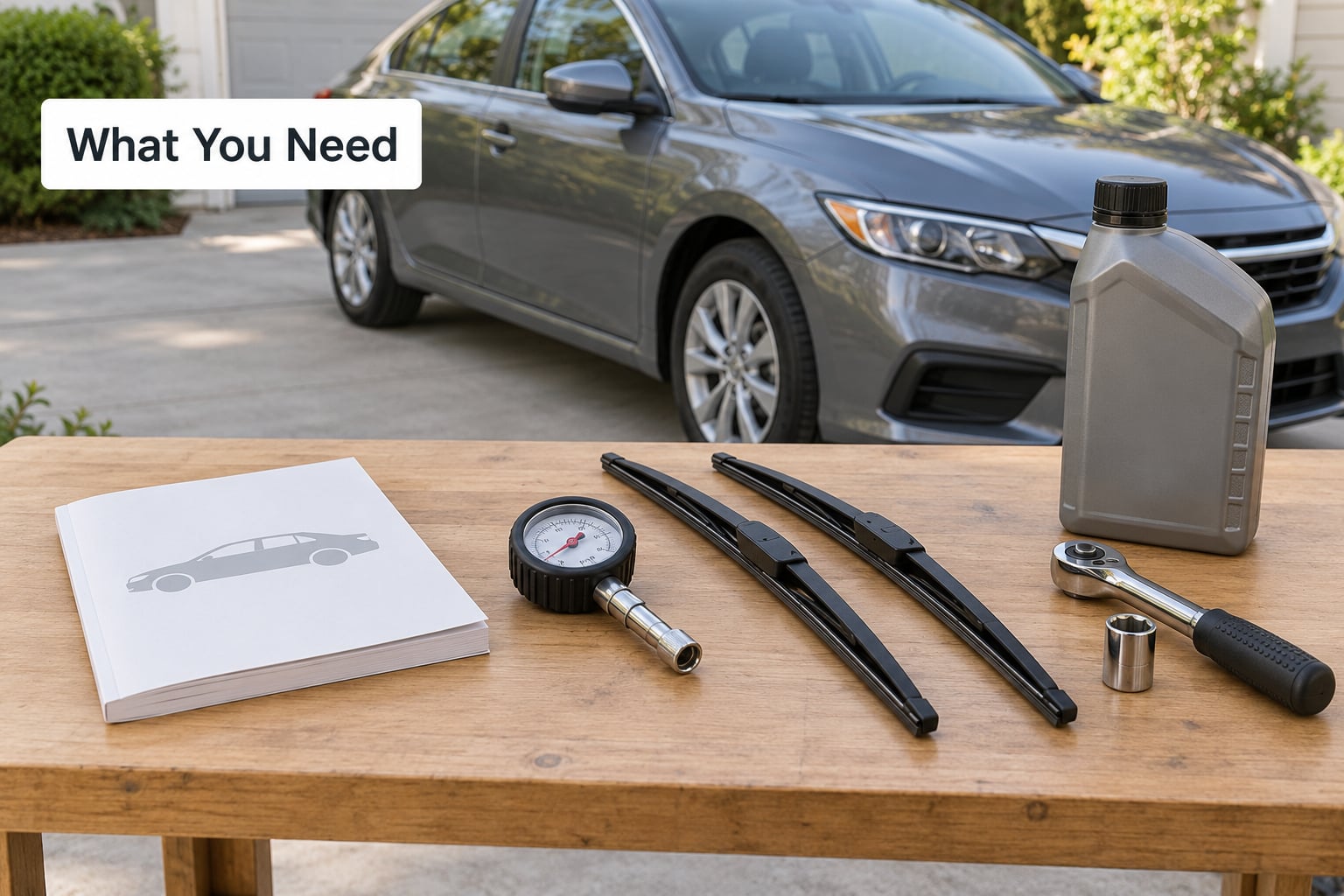
Gather four things before you touch anything: your owner’s manual, a maintenance log, a small set of tools, and a place to work. None of it requires a garage. A driveway, a parking lot with a flat spot, or a carport is enough for everything described here.
The owner’s manual is the most important item on the list, and it is usually sitting in the glove box. It carries the oil specification your engine actually requires, the correct tire pressures, the fluid types, and the manufacturer’s service intervals. Any schedule you read online, including this one, is a general guide. Your manual wins when the two disagree.
A maintenance log can be a notebook, a spreadsheet, or a note on your phone. Record the date, the mileage and what was done. That log becomes your evidence when you buy a used car, and it is how you tell at a glance whether something is genuinely overdue.
For tools, most drivers need fewer than they expect:
- A tire pressure gauge. A pencil-style model works and costs pocket change.
- A socket and ratchet set with metric sizes, which covers filters, terminals and many fasteners.
- A jack and a pair of sturdy jack stands if you plan to change oil or a wheel yourself.
- A small drain pan and a funnel for oil changes.
- A multimeter for checking battery voltage and testing fuses, or use the free testers at auto parts stores.
- A flashlight, gloves and a rag. A dark driveway at night defeats the whole plan.
- A tire tread depth gauge, though a penny works for a rough reading.
Then add the consumables you will replace on a schedule: engine oil in the specification your manual calls for, an engine air filter, a cabin air filter, wiper blades, washer fluid, and whatever bulbs your car takes. Buying these in a single trip during a promotion keeps the cost per item near the lowest it will ever be.
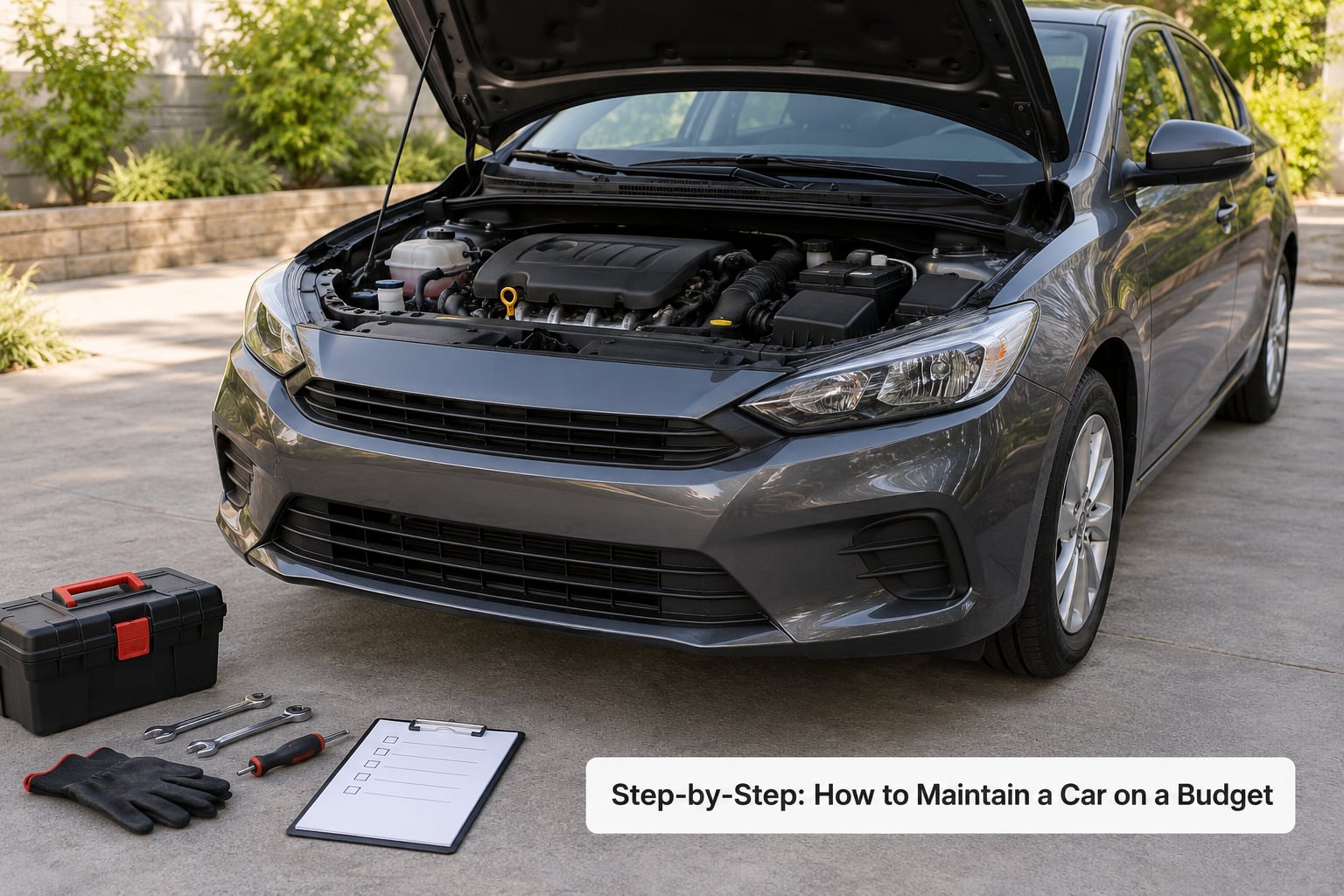
Step-by-Step: How to Maintain a Car on a Budget
Step 1: Create a Maintenance Schedule and Budget
Open the manual’s maintenance section and write out the four intervals you will actually manage: monthly checks, an oil change interval, a mid-life service, and a major service. Most cars follow a pattern that service visits cluster around 30,000, 60,000 and 90,000 miles, which is why the 30-60-90 rule is such common shorthand.
Next, decide the monthly amount. Take your planned annual spending, divide it by twelve, and set up an automatic transfer on the day you get paid. A sinking fund for car repairs is simply an account you add to before you need it, so an alternator or a brake job never turns into credit card interest. People on forums like r/Frugal and r/askcarguys repeat this advice more than any other: the car that breaks down unexpectedly is expensive because of the timing, not only the repair.
Write the number down where you will see it, and record the next two due items in your calendar. When money is tight, sort the list into three tiers: safety-critical items you never defer, engine-protecting items on a mileage schedule, and cosmetic items you postpone indefinitely. A dent, a faded headlight lens, a rattly cargo cover and worn floor mats sit in the third tier without guilt.
Step 2: Check Tires, Fluids, and Lights
This is the monthly ten-minute routine, and it catches more trouble than anything else you can do without a lift. Start with the tires. Read the recommended pressure on the driver’s door jamb sticker, not the number molded into the sidewall, which is a maximum rather than a target. A gauge costs almost nothing and underinflation is the most common and most quietly expensive tire problem.
Tires lose roughly one PSI for every ten degrees the temperature drops, so check pressure cold, before driving. Low pressure makes the engine work harder, wears the outer edges of the tread faster, and quietly costs you fuel. For tread, insert a penny into the groove with Lincoln’s head down. If you can see more than a sliver of the top of the head, the tread is low enough to plan for replacement.
Run the tread across the full width of each tire and inside the grooves, and look for cuts, bulges or objects still embedded. Then check the fluids. Pull the dipstick, wipe it, reinsert it fully, and pull it again. The level should sit between the two marks. Look at the coolant reservoir and confirm the level is between the cold marks. Power steering and brake fluid reservoirs have their own lines, and washer fluid is the cheapest item on the whole list.
Finish with a walk around the car. Turn on the headlights and check that both beams work, test the brake lights and the turn signals, and run the wipers on a damp towel so they do not streak. Look underneath the car where you usually park for a puddle, a colored stain or a dripping hose. If you find a fresh puddle, treat it as a trip to a shop rather than a monthly check.
Step 3: Keep the Engine and Cabin in Working Order
Oil is the single cheapest engine protection there is. The interval depends on the oil type: conventional oil is commonly changed around 3,000 miles, while synthetic blend and full synthetic usually stretch to between 5,000 and 7,500 miles on modern engines. Check your manual, because a manufacturer may specify either a time limit or a mileage limit, whichever comes first, and severe stop-and-go driving often shortens the interval.
Changing oil at home takes about half an hour once you have a drain pan and a way to raise the car safely. Warm the engine, then let it sit so the oil drains cleanly. When you lift the car, use jack stands rated above the vehicle’s weight and never work under a car resting on the jack alone. Drain, replace the washer or crush gasket, refill with the exact specification, and check the level again after a short drive.
Filters are the other easy win. An engine air filter is one of the cheapest parts on the car and usually takes a couple of minutes once you know the clips. A cabin air filter sits behind the glove box and comes out with the same effort. Check both every few months, and replace the cabin filter more often if you park on dusty streets or near heavy traffic.
Clean the windshield inside and out with a product made for glass, and replace wiper blades when they streak or chatter rather than smearing. Test the battery with a multimeter while the engine is off, and many auto parts stores will check it free. Look at the terminals for a pale, crusty buildup and clean it with a wire brush if you see any.
Finally, look at the serpentine belt and the hoses you can reach without removing anything. A healthy belt is matte with straight, even ribs. Cracks, fraying, a shiny glaze or a belt that looks slack enough to squeal are all reasons to deal with it soon, because a snapped belt can strand a car instantly. Check your manual for when the timing belt is due on your engine, since that job is firmly in the mechanic column.
Step 4: Handle Repairs Without Overspending
When something needs professional work, the money is saved before the wrench turns. Get at least three written quotes for the same job, describe the symptom in the same words each time, and ask each shop to itemize parts and labor separately. An estimate in writing is also the document you use when the final invoice arrives.
An independent shop is usually cheaper than a dealer for routine service on the same car, and for warranty work the manufacturer almost always allows it. Free inspections at parts stores and coupon programs are worth using for tires, batteries and brakes. If you are not repairing immediately, ask for a donor-grade part, which is a used or remanufactured component that performs the same job.
Reading the invoice is a skill worth building. Every line should name a part and a labor operation, and you should be able to match each line to something you discussed. Ask what happens if you decline an item. Many shops will prioritize a brake job and let a cabin air filter wait a month, and that is a reasonable trade when money is short. Anything tied to stopping, steering or visibility is the exception, and those items do not wait.
If a bill feels out of line, ask for the old part back. Plenty of shops will show you the worn part, which ends a disagreement faster than any argument about prices. Local prices vary a lot by region, so confirm the numbers that matter in your own area before making a decision.
Step 5: Know When a Mechanic Is Necessary
Some work is not a driveway job. Brakes that grind, squeal or pull to one side, steering that feels loose or wanders, any overheating, smoke from under the hood, a fluid leak that keeps growing, a burning smell, or a transmission that hesitates or slips all need a trained technician. These are safety systems and drivetrain components, and a botched attempt costs more than the original repair.
A steady check engine light is different from a blinking one. A blinking light means stop driving and get it looked at. A steady light may be a loose gas cap or a failed sensor, but you cannot read it with a guess. Most cars built in the last two decades have a diagnostic port, and a parts store or shop can pull the code for free or very little.
Get to a shop when you hear a new noise that follows you into gear, when fuel economy drops noticeably without a change in your driving, or when the car hesitates or runs rough. Those signs usually mean a small problem is growing. Ignoring them is how a routine repair turns into a monthly payment you did not plan for.
Common Mistakes: Where Car Maintenance on a Budget Goes Wrong
- Stretching oil intervals because you are short on money. Buying the correct oil and changing it on schedule is the cheapest engine protection available. Cheap oil used correctly beats expensive oil used too rarely.
- Ignoring a warning light. A pending code is a warning, not a sentence. Reading it early is cheap; running the car until something fails is not.
- Using the sidewall pressure as the target. Always inflate to the door-jamb figure. The sidewall number is a maximum rating.
- Overinflating instead of measuring. Add air by the same increments you would remove it. Extra pressure wears the center of the tread and hurts braking on wet pavement.
- Mixing oil types or filling short. Use the specification and viscosity your manual lists, and never top up a nearly empty engine without replacing it fully.
- Letting one estimate turn into the whole repair. Decline the add-ons you did not ask about, and get the diagnosis written down first.
- Working under a car supported only by the jack. Use rated jack stands. This one is not a money-saving tip.
- Replacing parts the schedule does not call for. Cabin air filters and cosmetic items can wait. Timing belts, transmission fluid and brake fluid cannot.
Frequently Asked Questions
What is a good monthly budget for car maintenance?
Most drivers set aside something in the low tens of dollars a month for an older car, and more for a newer one. The number matters less than the habit: pick an amount, move it automatically to a separate account every payday, and treat it as untouchable until a bill arrives. A sinking fund turns an emergency into a planned expense.
Do I really need to get my oil changed every 3,000 miles?
Only if your manual specifies conventional oil. Synthetic blend and full synthetic commonly stretch to between 5,000 and 7,500 miles on modern engines, and many manufacturers publish exact intervals. Check the manual and the oil specification before you buy anything, because using the wrong oil can void coverage and shorten engine life.
What car maintenance can I safely put off when money is low?
Start with cosmetic work: dents, paint, faded lens covers, worn interior trim and a rattly cargo cover. A cabin air filter can usually wait a while too. Never defer brakes, tires, steering components, lights, wipers, coolant, battery or anything that affects stopping, steering or visibility. Those are what the money is for.
What is the 30-60-90 rule for cars?
It is shorthand for servicing your car at roughly 30,000, 60,000 and 90,000 miles, where more systems get inspected as the car ages. It is a convenient habit rather than a requirement, since real intervals come from your manual. At each milestone, expect to review fluids, filters, belts, hoses, brakes and increasingly the transmission and cooling system.
What can I check on my car with no tools at all?
More than most people expect. Walk around and look for leaks, check that every light and turn signal works, run the wipers on a damp towel, inspect tire tread with a penny, and confirm the oil level using the dipstick built into your engine. Confirm your tire pressure against the door-jamb sticker even if you borrow a gauge from a gas station.
How do I know if my car is overdue for maintenance?
Signs include a check engine light, a dipstick reading near or below the low mark, frayed wiper blades, a dim battery, low coolant, and tires whose pressure drops fast. If you have no records at all, the mileage on the odometer plus the intervals in your manual tells you what was missed. A shop can read stored diagnostic codes to fill in the rest.
Conclusion
Three things to do this week. First, pull your owner’s manual out of the glove box and write the next three due items into a calendar. Second, run the ten-minute walkaround: tires, fluids, lights, wipers and a look underneath. Third, set up a small automatic monthly transfer so repairs come out of a fund instead of your checking account.
That is the whole method. Spend on safety and on the engine, do the free checks yourself, and let the cosmetic work wait until the money is there. How to maintain a car on a budget is mostly discipline about which jobs come first, not a secret list of cheaper parts.