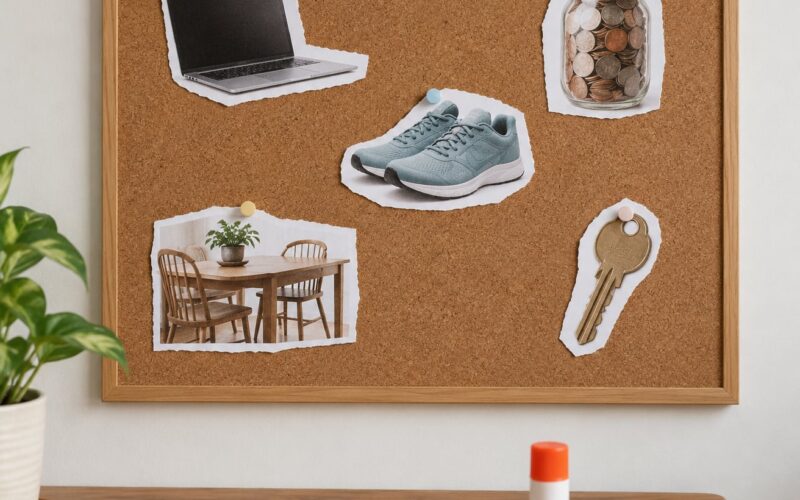
Most people do not fail at discipline because they do not know what to do. They know exactly what to do, and still cannot start. The fix is to stop treating discipline as a personality trait you either got or did not, and start treating it as a system you install. That is how to build discipline when you lack motivation: shrink the task until it feels almost insultingly small, remove the friction that lets you avoid it, attach it to something you already do, and track proof instead of waiting to feel like it.
This takes about twenty minutes to set up and a couple of weeks of dull repetition before it feels automatic. There is no moment where you feel disciplined. You just notice one day that you did the thing without arguing with yourself, and it turns out the arguing was never the work.
Table of Contents
- What You Need
- Step-by-Step: How to Build Discipline When You Lack Motivation
- Define the smallest action you can repeat
- Remove decisions and friction
- Start before motivation appears
- Attach the action to an existing routine
- Track proof instead of relying on feelings
- Use accountability and realistic rewards
- Review the system every week
- Common Mistakes
- Frequently Asked Questions
- Can I build discipline without ever feeling motivated?
- How long does it take to build a discipline habit?
- What is the smallest useful habit I can start with?
- Why do I lose discipline after missing one day?
- Should I use a habit tracker or rely on motivation?
- How do I stay consistent when I am tired or stressed?
- Conclusion
What You Need
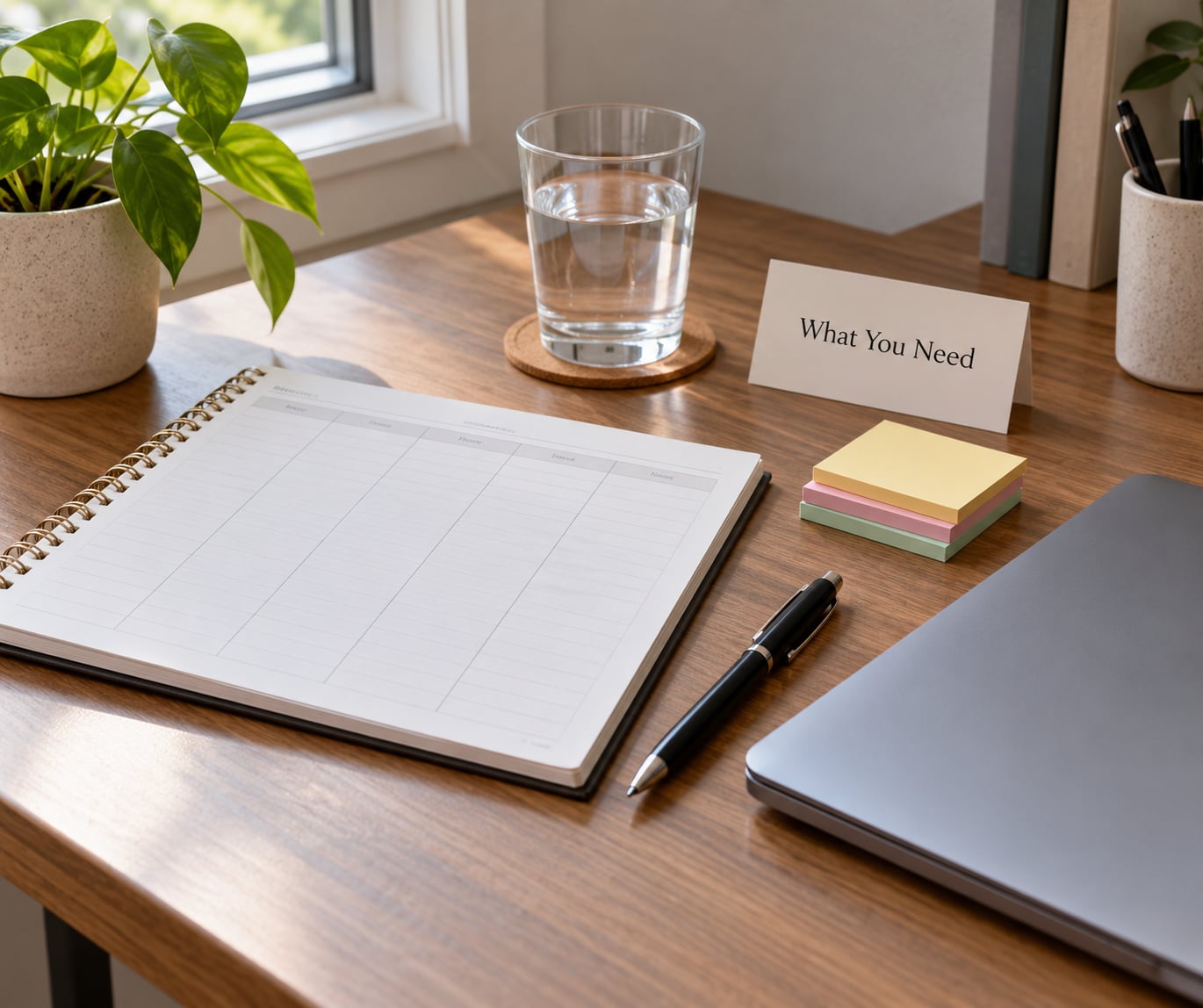
Four things, and none of them cost money or require unusual willpower:
- One specific goal. Not “get healthier” or “be more productive.” Something like “write 300 words on the project” or “walk 20 minutes.” One goal. Naming a second one is how most people end up doing neither.
- A calendar or a habit tracker. Paper works. So does a note on your phone. It needs to be somewhere you see without opening anything.
- A quiet place to work. The same chair most of the time, ideally with the phone in another room. Not a special office, just consistent.
- One accountable person. Someone who will ask whether you did it, and who does not care about your excuses. A friend, a partner, a coworker, an online group.
That is genuinely it. Expired gadgets, complicated apps, and elaborate morning routines fail because they add decisions before the behaviour starts. Every extra choice is another chance to talk yourself out of it.
One more preparation is worth doing before day one. Notice whether the low motivation is constant or situational. If it started suddenly and comes with changes in sleep, appetite, or interest in most things, that is a conversation to have with a doctor or therapist rather than a discipline problem to brute-force. Structure helps either way, but it does not replace treating exhaustion or a mental health condition.
Step-by-Step: How to Build Discipline When You Lack Motivation
Define the smallest action you can repeat
Take the goal and cut it until the result is almost insulting. Not “run 5K” but “put on shoes and walk around the block.” Not “write the book” but “open the document and write one paragraph.” Not “save money” but “check the account balance on the first of the month.”
Real examples across common goals:
- Exercise: change into workout clothes and do two minutes of movement.
- Studying: open the textbook and read one page, out loud if nobody is listening.
- Saving: move one amount to the savings account, even if it is small.
- Writing: write one sentence, badly, without editing it.
- Job searching: make one edit to one application, or send one email.
The test is simple: could you do this version on your worst day, tired and doubtful? If not, cut it again. You can always raise the size later. You cannot recover a routine you abandoned in week one.
You know it worked when you can answer yes or no without negotiating with yourself. A vague goal produces vague evidence, and vague evidence is easy to talk yourself out of.
Remove decisions and friction
Each decision costs a small amount of energy, and tired people spend it badly. So make the desired behaviour require fewer choices and the undesired one require more.
- Lay out the materials the night before. Shoes by the door, laptop open on the desk, textbook on the chair.
- Change location for the task. Working at the couch usually means the couch wins, because the couch has trained you.
- Put the phone in another room, not face down on the desk. Face down still invites the flip.
- Make the unhelpful choice harder. Leave snacks in a cupboard, not on the counter. Log out of the shopping site.
- Pre-decide the first sentence of the task. Starting a task is harder than continuing one, so decide the first line before you sit down.
People underestimate this step because it feels like it is not doing anything. It is doing the work. The reason a routine that worked in one place collapses in another is usually location, not character.
Start before motivation appears
The plan assumes you will feel like starting, so you wait. Instead, pick a fixed starting cue and give yourself permission to do only the minimum version when it fires. Brush your teeth, then walk. Finish breakfast, then write one paragraph. Close your laptop at the end of work, then read ten pages.
The first few minutes are genuinely the hardest. Not because the task is difficult, but because beginning requires holding a goal in mind, and that is work on its own. Two things help: lower the emotional stakes by naming a smaller version as legitimate, and start before you have finished deciding you want to. Nobody feels ready right before they start. They feel ready about ten minutes after.
If the version is truly small enough, you will often finish it. Then you are free to stop, and stopping when the minimum is done keeps tomorrow cheap.
Attach the action to an existing routine
New habits fail when they rely on you remembering them. Anchor them to something already happening, using a simple formula: after I do X, I will do Y.
- After I brush my teeth, I will walk for five minutes.
- After I eat lunch, I will read ten pages.
- After I park at work, I will write one sentence of my project.
- After I pour my evening coffee, I will open the document.
- After I get out of bed, I will make the bed and drink a glass of water.
Pick a cue that happens at roughly the same time daily and that you are not likely to skip. Then keep the wording literal. If the plan says “after my morning coffee, I will journal,” then even a bad morning triggers it.
This works because the cue is already firing on its own. You are not adding a new decision to your day, you are hanging the new behaviour on an existing moment.
Track proof instead of relying on feelings
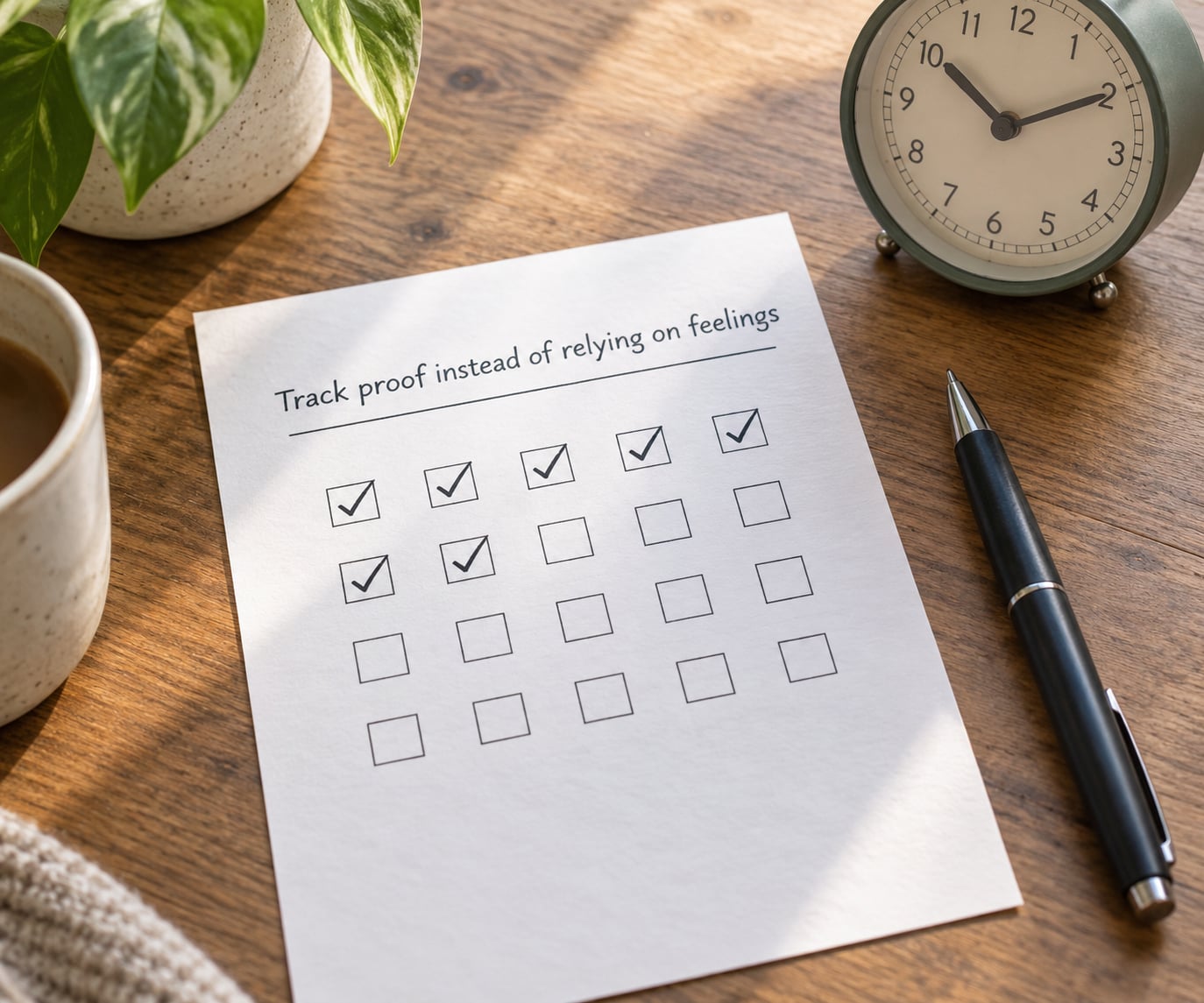
Feelings are noisy and change by the hour. A record is not. On any calendar, checkbox chart, spreadsheet, or phone note, mark the day you did the minimum version. That is the whole record.
Record three things: whether you did it, how long it took, and one word about how it went. The third one matters more than it sounds. After a few weeks you can see that evenings are consistently harder than mornings, or that the days you skipped all had the same cause.
Streaks are useful until they turn into pressure. A tracker that punishes you for a missed day quietly trains you to stop opening it. Better: track the restart. Count how quickly you got back after a lapse, and aim to restart the next day rather than the next Monday.
When you miss, mark it and move on. Do not double up to compensate, do not erase the entry, and do not write a paragraph about why you failed. That is the whole recovery mechanic: a missed mark is data, not a verdict.
Use accountability and realistic rewards
Work deadlines get met because someone is watching. Personal goals collapse because nobody is. A short, regular check-in changes the arithmetic, even if the other person does nothing but ask.
Options that work: a daily message to one person with what you did; a weekly fifteen-minute call; a public progress post; a shared board where someone sees your marks. Pick the smallest one you would actually keep up.
Public commitment helps some people and backfires for others. If the thought of reporting a missed day makes you avoid the activity entirely, keep it private and tell one person instead. The mechanism is the same either way.
On rewards, choose something that lands soon after the action, not something you earn in a month. The reward should reinforce the routine, not compete with it. A book, a coffee, a podcast episode, a short walk. Avoid turning it into a punishment scheme, because fear-based systems reliably produce avoidance.
Review the system every week
Ten minutes on a fixed day, same four questions:
- Consistency: how many days did I hit the minimum, out of how many realistic opportunities?
- Difficulty: was the action too easy or too hard this week?
- Energy: what did my sleep and energy look like on the days I showed up?
- Obstacles: which single thing blocked me most, and what could be removed next week?
Then adjust one thing. If consistency is low and the effort felt heavy, shrink the minimum. If you keep forgetting, change the cue or the location. If you are hitting the floor every day and it feels automatic, raise it.
Reviewing weekly is what stops one hard week from becoming a permanent exit. Most people do not quit because the system failed. They quit because they never scheduled the moment to look at it, so the first bad stretch felt like evidence the whole idea was wrong.
And do not redesign everything from scratch after a collapse. Forums full of people restarting routines keep one lesson in common: the structure that worked before is usually a better starting point than a new plan invented during a bad week.
Common Mistakes
- Waiting for the feeling. Motivation peaks with novelty and fades when the task turns into ordinary work. Starting before you feel ready is the whole practice, not a trick you are doing wrong.
- Setting a goal that is too large. “Write a book” or “get in shape” produces a multi-week plan, then overwhelm, then avoidance. Cut to one sitting.
- Using shame as motivation. Self-blame feels urgent and then shuts follow-through down. A missed day is information about the system, not evidence about your character.
- Changing routines constantly. A new plan every Monday means nothing has had time to attach. Keep one system running long enough to feel boring before you judge it.
- Trusting streaks more than restarts. Breaking a record feels like failure and leads people to abandon habits entirely. The habit that survives years is the one with a low floor and a fast restart.
- Blaming yourself when something bigger is going on. Exhaustion, burnout, depression, and attention conditions can all flatten motivation. If the flatness is constant rather than situational, talk to a professional instead of tightening the system further.
Almost nobody starts well. The people who look consistent are usually the ones who restarted quickly the last time they slipped, and said very little about it.
Frequently Asked Questions
Can I build discipline without ever feeling motivated?
Yes. That is the practical goal here. Motivation is a feeling that arrives with novelty and leaves once the activity becomes ordinary, so a system that only works when you feel like it will always be unreliable. Build the routine so the minimum action is small, cued to something you already do, and easy to restart. Most people feel motivated on roughly a third of good days. The routine is designed for the other two-thirds.
How long does it take to build a discipline habit?
There is no fixed number, and anyone promising one is selling something. For small actions, most people get noticeable relief within two to three weeks of consistent repetitions, and full automaticity takes considerably longer. Daily habits can feel automatic after around sixty days, but that figure assumes a small action and few missed days. What matters more than the timeline is that the routine survives bad weeks, because consistency in real life is never a straight line.
What is the smallest useful habit I can start with?
An action that takes under two minutes and needs no equipment, decision, or good mood. Read one page. Do five push-ups. Write one sentence. Put the shoes on and walk to the end of the street. The point is not the value of that action, it is that it removes the barrier to starting. Once the starting is automatic, the harder version can be attached to the same cue and usually is, without much negotiation.
Why do I lose discipline after missing one day?
Because a streak turns the routine into a record, and a broken record feels like failure. The fix is to design for the miss before it happens. Set a floor low enough to hit on your worst day, treat a missed day as data rather than a verdict, and define in advance when you restart. Many people return the next day once the restart rule exists, because one skip stops meaning the end.
Should I use a habit tracker or rely on motivation?
Use a tracker. Motivation fluctuates hourly and cannot tell you whether you actually showed up, so it is a poor record of anything. A calendar, a checkbox chart, or a note on your phone takes seconds to update and gives you two things you cannot get otherwise: proof of consistency and a pattern you can examine. The caveat is to track restarts as well as completions, so the record never becomes a source of pressure.
How do I stay consistent when I am tired or stressed?
Drop the target to the floor version and keep the cue. A five-minute version during a hard week still counts, and it protects the link between the routine and its trigger, which is what you would lose by skipping entirely. Lower energy usually means friction matters more, so cut decisions, prepare materials the night before, and move the action to a time of day when you have more capacity. Also check the basics: sleep, food, and movement change follow-through more than any tracking app.
Conclusion
Start with one goal and one small action. Write down the smallest version you could still do on a bad day, attach it to something you already do at a fixed time, and put it on a calendar you will actually see.
Then do it once, badly if necessary, and mark it. How to build discipline when you lack motivation comes down to that repeated sequence: define the floor, start before the feeling arrives, track proof, and restart fast the next time it slips. Discipline is not a personality you are waiting to acquire. It is what is left when a good system carries you through the days you do not feel like much.