To get kids on a school morning routine that works, you need three things: a fixed wake-up time, a short written-down sequence of steps, and the prep done the night before. Start with five to seven steps, not fifteen, and give the new routine a full week before you judge it. Most families see a real difference in seven to ten school days, and it usually costs you less effort than the morning arguing it replaces.
The mistake I see most often is parents trying to install twenty steps at once. A seven-year-old cannot hold fourteen instructions in working memory at 7:15 in the morning, so they hear the first two, ignore the rest, and get told off. Fewer steps, seen rather than heard, works far better than a long list shouted across a hallway.
This guide covers what you need before you start, a six-step process, and what to do when it falls apart on a Thursday. I have written it for families with one or more school-age children, whether you work full time, stay home, or are solo parenting. Nothing here requires a printable you have to buy, and nothing depends on a perfect child who never dawdles.
Table of Contents
- What You Need
- Step-by-Step: How to Get Kids on a School Morning Routine
- Start With the Evening Before
- Create One Simple Morning Sequence
- Set Clear Expectations and Consequences
- Let Children Help Build the Routine
- Practice Before the Real Deadline
- Review and Adjust the Routine
- Common Mistakes
- Giving five instructions at once
- Building a 15-step routine in week one
- Keeping the sticker chart going forever
- Expecting independence on day one
- Starting the new routine on a Monday
- Letting screens decide the morning
- Frequently Asked Questions
- What if my child refuses to follow a school morning routine?
- What time should kids start getting ready for school?
- How long should a school morning routine take for different ages?
- Should parents use rewards or consequences for morning behavior?
- How can I get children ready when I have more than one child?
- How do I restart a routine after mornings have become chaotic?
- Conclusion
What You Need
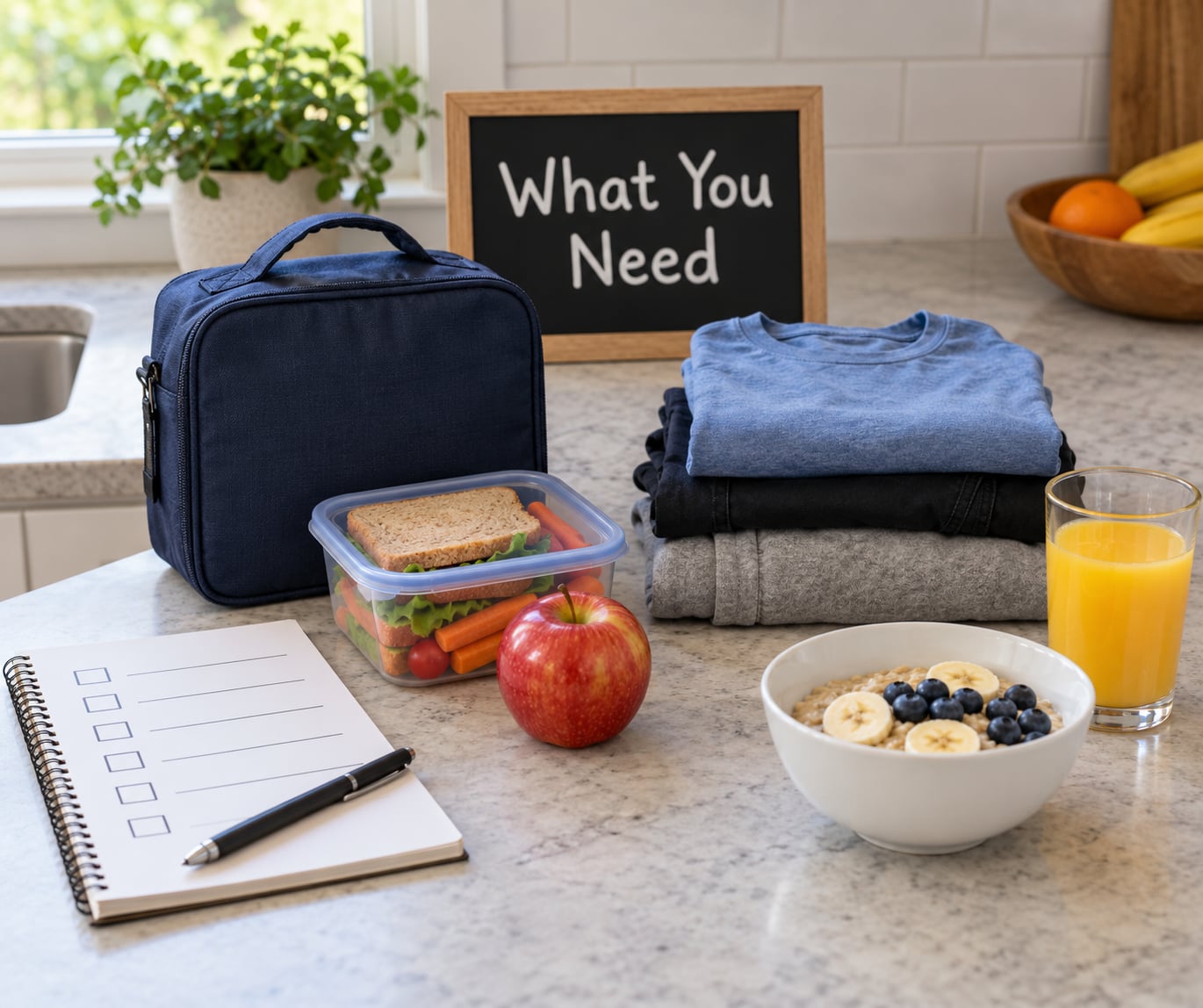
You need very little to start. Families who get this right tend to have the same short list, and most of it costs nothing.
- A realistic wake-up time. Pick the latest time your child can get up and still leave without rushing. Working backward from the door is more reliable than picking a number off a sleep chart, because the school start time, the commute and the number of kids are the facts you actually live with.
- Five to seven tasks, written down. That is your whole routine. Toilet, dressed, breakfast, teeth, shoes, bag, out the door is seven and it is plenty.
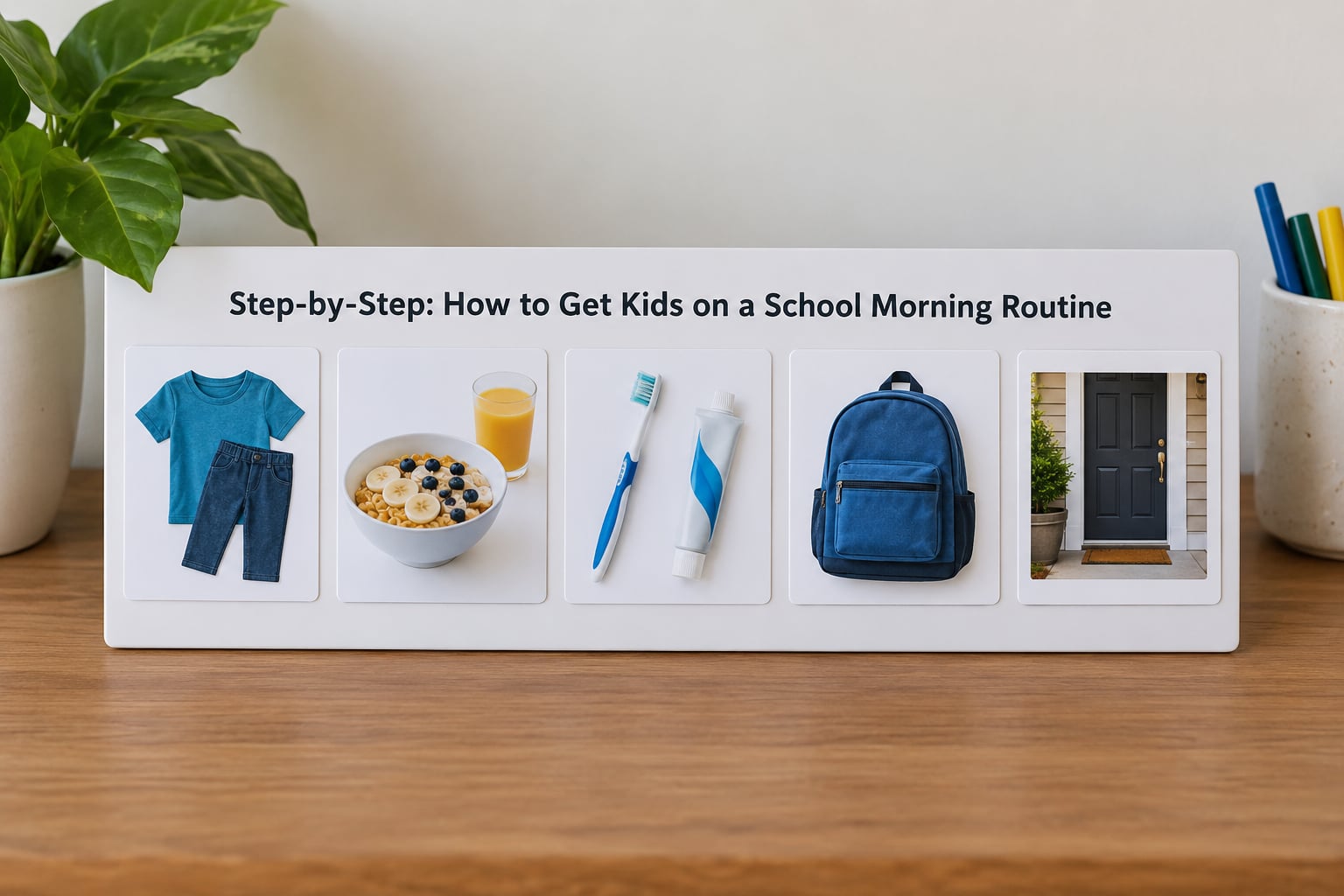
- One visual cue. A chart on the fridge, a laminated card, or a checklist taped inside the front door. For a child who cannot read fluently, use picture icons instead of words.
- A gear station. A hook by the door for the backpack, and a spot where shoes live. Every morning spent hunting for shoes is a morning you donated to the floor.
- One written rule about screens. Decided in advance, not argued at 7:20.
- A family agreement. Two or three lines, written by you, signed by your child. It tells them what happens when a step gets skipped, and it takes the surprise out of it.
Skip the timer app for now. A visual timer is genuinely useful later, especially with a child who loses track of time, but in week one it adds a new thing to learn. Get the sequence working with paper first, then add tools.
Step-by-Step: How to Get Kids on a School Morning Routine
Start With the Evening Before
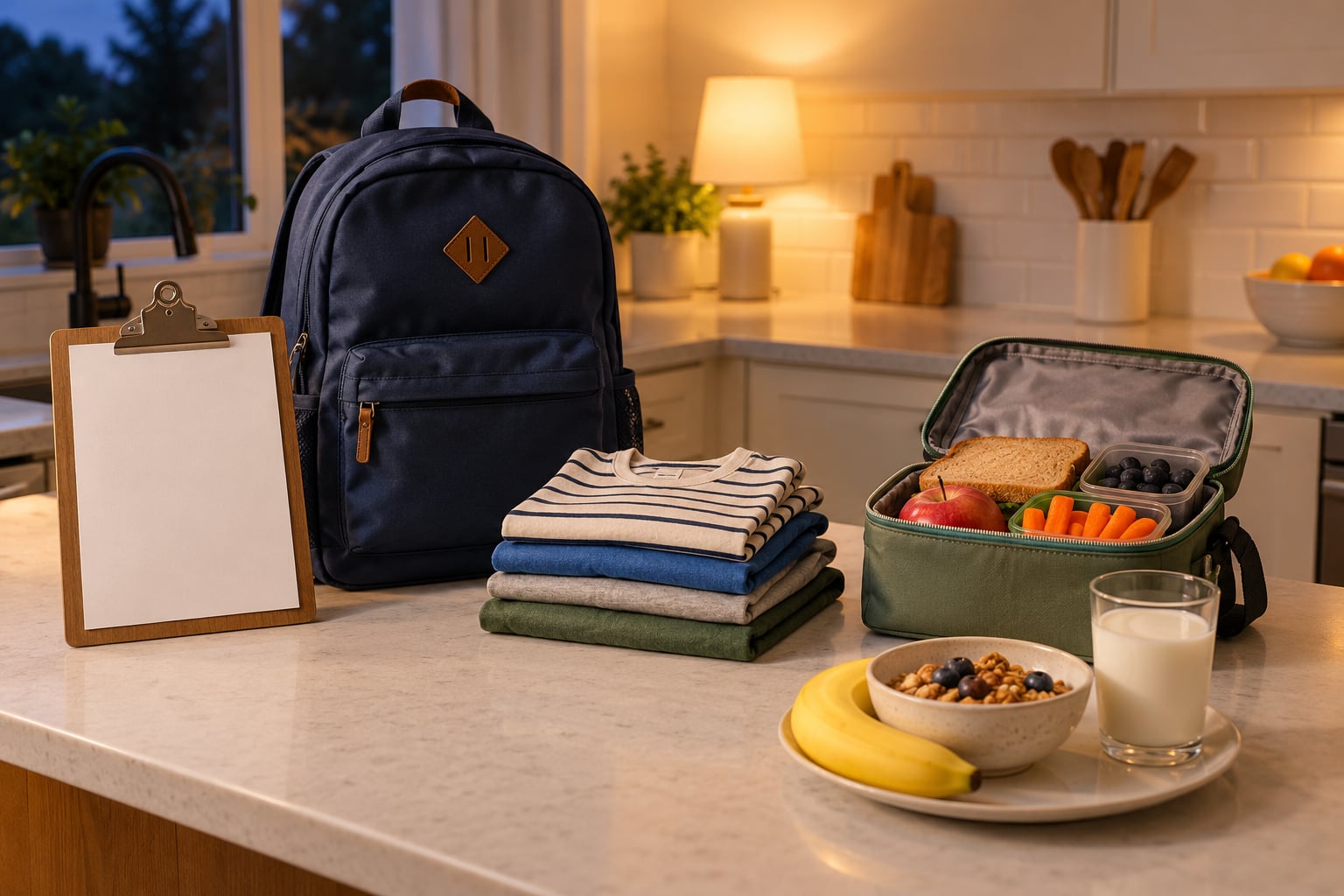
The biggest morning win is doing the decisions the night before. Clothes out, backpack packed, breakfast staged, water bottle filled. Parents describe this as the single change that gives them back the most time, because the child is no longer deciding what to wear while you are deciding what to eat.
Give it a name and a home. Call it the ten-minute reset, run it at the same time each night, and put it on the same chart as the morning sequence. If breakfast is non-perishable, set the bowl, the cereal and the spoon on the counter. If it is not, decide in advance what the grab-and-go option is so nobody has to think about it while hungry.
How do you know it worked? By 8pm the backpack is on its hook, clothes are on the chair, and nobody is asking you tomorrow what’s for breakfast.
Create One Simple Morning Sequence
Write the steps in the order you want them to happen and keep the order identical every day. Predictability is doing the work here, not creativity. A routine that works is boring: same wake time, same order, same seven steps, same words from you.
Work out how long each step actually takes before you commit to a wake time. A realistic primary-school morning runs about 75 to 90 minutes from out-of-bed to out-the-door, and that includes some slack. A lean version for a child who eats breakfast at school can be about 35 minutes: wake, toilet, dressed, teeth, snack in hand, bag, door.
Add a slow-start buffer at the front. Several parents in forum threads on this exact problem mention the same thing: kids do better if they have a few minutes sitting up in bed before the routine begins, before anything is asked of them. Ten quiet minutes costs you less than a ten-minute negotiation.
Write each step as one short verb. Dress. Teeth. Bag. Not get dressed and brushed and packed for school, which is three instructions wearing a coat.
Set Clear Expectations and Consequences
Tell your child what happens when a step is skipped, and make sure the consequence is one you can actually carry out. Predictable beats severe. If bag is not packed by the door time, the bag goes in the car and your child tells the teacher. Simple, dull, and it works because it never varies.
Give calm reminders rather than raised ones. One reminder, then a neutral consequence. Repeating the same instruction six times is nagging, and nagging teaches your child that you will eventually stop.
You will know this step worked if a week passes without you reminding anyone more than once in the morning.
Let Children Help Build the Routine
A child who helped write the sequence argues with it far less. Sit down together and ask which step always feels hardest and what would make it easier. A preschooler might tell you the socks are the problem. That is useful information.
Then let them do the parts they can. A kindergartener can put on underwear and pyjama bottoms, find their own socks, feed the dog, and check their own bag. A tween can do nearly everything except the parts that need an adult, which are the small ones: signing forms, checking water bottles, cutting food in half.
The goal is not a child who needs no help. It is a child who no longer needs you to remind them. Aim your energy at removing the reminders first, then the hands.
Practice Before the Real Deadline
Rehearse the routine on a relaxed weekend morning before it counts. Start at the same wake-up time, run the same seven steps in the same order, and have an adult point at the card rather than saying anything. This is where you find the bottleneck: nearly always the one step nobody has timed.
Repeat it three times before you judge it. Most families need a full week of real school mornings anyway, because a practice on Saturday does not prove anything about a rushed Tuesday.
If the practice goes badly, shorten the routine. Cut it to four steps for a week and add a fifth when those four are automatic. This is normal, not a sign that you chose wrong.
Review and Adjust the Routine
At the end of two weeks, check three things: how many mornings were calm, what time you actually left the house, and which step ate the time. Write the answers down. A family that reviews gets a better routine than a family that keeps reacting.
Then adjust one thing only. If you leave the house late every day, either move the wake-up time 20 minutes earlier or remove a step. Do not do both, or you will not know which one worked.
Expect to adjust again at the halfway mark of the school year, after a holiday, and any time your child’s responsibilities change. A routine is a current description of your mornings, not a document you sign once.
Common Mistakes
Giving five instructions at once
Replace it with one. Say one step, point at the card, then wait. Silence is more effective than a fourth reminder, and it costs you nothing.
Building a 15-step routine in week one
Cut it to five and add one per week. A shorter routine you actually follow beats a complete one you abandon by Thursday.
Keeping the sticker chart going forever
Reward charts produce short-lived compliance, and plenty of parents have burned through several. Use the chart for two to three weeks to teach the sequence, then retire it and switch to the card. Once the steps are automatic, the reward is no longer doing anything.
Expecting independence on day one
Pick one step to hand over completely and leave the rest for now. Independence grows when a child owns a real task, not when they are given all of them at once.
Starting the new routine on a Monday
Begin on a Friday, or better, build it over a weekend. Starting on the first day back with a new system is how families decide within three days that routines do not work.
Letting screens decide the morning
Decide your rule in advance and write it on the chart. Most families who keep screens out of the first 45 minutes report fewer dawdling episodes, not more.
Frequently Asked Questions
What if my child refuses to follow a school morning routine?
Start by shrinking the routine, not by adding pressure. When a child refuses, the steps are usually too many, too vague, or the child has no say in them. Cut to four steps, write each as one verb, and let your child choose the order and the chart design. Then run it for a week without comments. A refusal is often about feeling rushed rather than about the routine itself.
What time should kids start getting ready for school?
Work backward from when you need to close the front door. Most primary-school mornings need 75 to 90 minutes from out-of-bed to out-the-door, including a ten-minute slow-start buffer. If breakfast happens at school, 35 minutes is realistic. Set the wake-up time first, then everything else in the morning shifts to match it, including bedtime the night before.
How long should a school morning routine take for different ages?
Preschool and kindergarten children usually need 60 to 90 minutes and heavy adult prompting at first. Primary-age children, roughly 6 to 10, settle around 45 to 75 minutes. Tweens often run 35 to 50 minutes because they move fast once the steps are familiar. Treat these as starting points, not targets, and adjust until your family leaves the house with a few minutes to spare.
Should parents use rewards or consequences for morning behavior?
Use consequences more than rewards, and keep them small and predictable. Sticker charts work well for two or three weeks while a child learns the sequence, then tend to lose their effect. A consequence such as a packed bag going into the car when it is missed is easy to carry out and easy to explain, which matters more than how strict it sounds.
How can I get children ready when I have more than one child?
Stagger the routines by about 15 minutes so the youngest is mid-routine when the oldest is finished, then pair each child with an age-appropriate job. Share the load rather than doing both yourself: one child feeds pets or gets dressed independently while you handle the other. Two separate visual cards, one per door or wall, keep each child from waiting on the other to finish.
How do I restart a routine after mornings have become chaotic?
Stop where you are and restart at the first step you can actually control. Do not rebuild everything at once: pick three steps for the first week, add two more once those run without reminders, and go back to the ten-minute evening reset. Expect a dip around day four, which is normal, and review after two full weeks rather than after two good days.
Conclusion
Tonight, do one thing: write five steps on a piece of card and tape it inside the front door. Then set the clothes and the backpack out while your child is asleep.
Keep the same order for a week, remind once, and review on day fourteen. The goal is not a child who never dawdles. It is a child who gets ready with less help than they did last month, and a parent who is no longer standing in the hallway at 7:15 saying the same sentence every morning.