To meal prep for a busy work week, you pick five meals, cook two proteins, one grain and two trays of vegetables in a single 60 to 90 minute session, then portion everything into containers for Monday through Friday. You should be able to do this from a small kitchen with a stove, one sheet pan and about a dozen containers, and the whole plan costs roughly what five ordinary dinners would.
That is the honest version. There is no magic to it, and nobody enjoys a three-hour Sunday of chopping. What changes is the 6pm question: instead of standing in the kitchen deciding what to eat while tired, you open a container and eat.
The approach that actually survives a real work week is component prep, not five identical finished meals. You cook the parts separately, then assemble them differently each day. That fixes the single most common complaint I hear from people who tried meal prep and quit, which is that by Wednesday every container tastes the same.
This plan works best for people who get home after six with nothing left in the tank. It also works for six-day work weeks, shift schedules and cooking for one, since the cooking session just happens on whatever evening you have free.
Table of Contents
- What You Need to Meal Prep for a Busy Work Week
- Step-by-Step: A Simple Five-Day Workweek Meal Prep Plan
- Choose Your Five Meals Before You Shop
- Shop Once and Prep Only What You Will Eat
- Batch-Cook the Base Components
- Portion, Label, and Store Lunches Safely
- Build a Five-Day Lunch Rotation
- Use a Backup Plan for Busy Thursdays
- Common Meal Prep Mistakes and Easy Fixes
- Frequently Asked Questions
- How long does meal prep last in the fridge?
- How do I prevent food poisoning from meal prep?
- What foods should I not prep more than a day ahead?
- Is meal prep suitable for weight management?
- How do I reheat meal prep without making it dry?
- Conclusion
What You Need to Meal Prep for a Busy Work Week
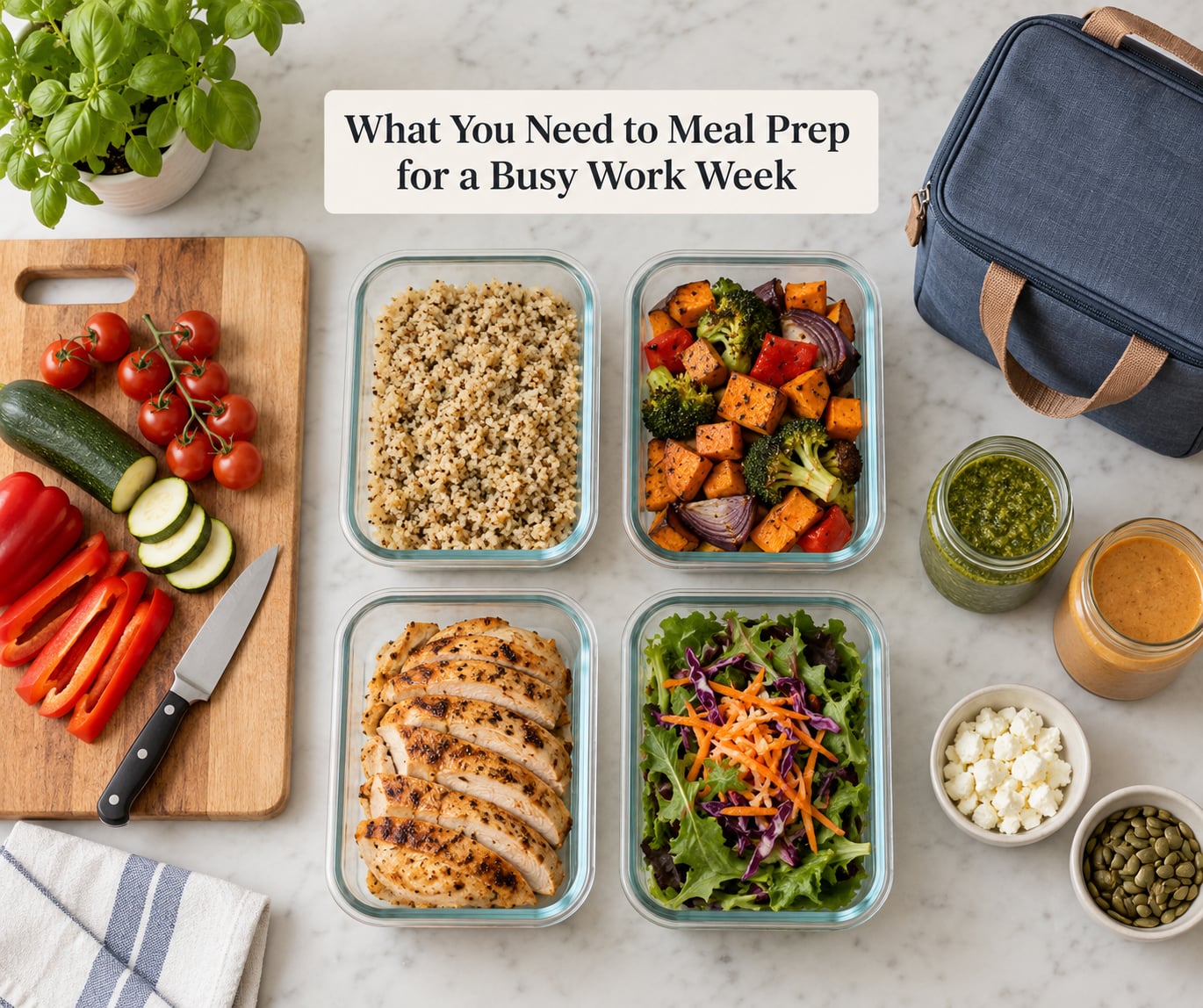
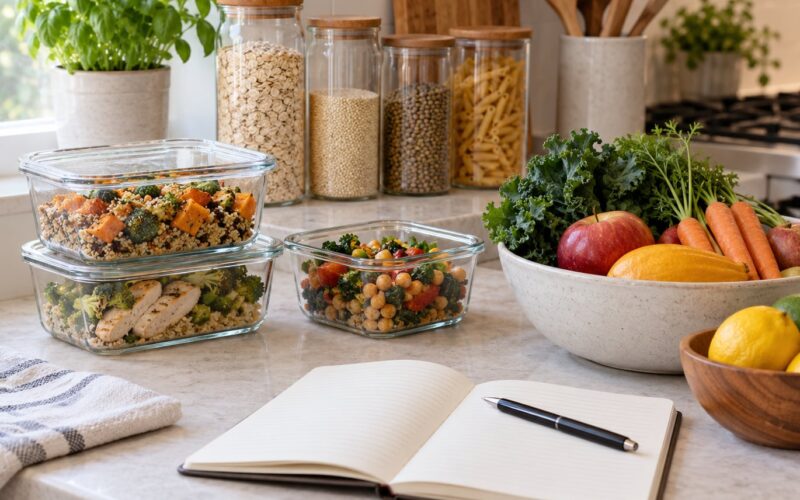
You need far less gear than the meal-prep world implies. A cutting board, a sheet pan, a pot, a skillet and a set of containers that hold roughly two cups each will carry you through a full week.
Planning tools. Whatever you already use to keep track of the week, a paper notebook, a notes app or a shared calendar with your household. The only field that matters is the day, because it is the day that tells you which container comes out of the freezer on Sunday night.
Containers. Get five or six that hold about two cups, ideally with a divided compartment so the sauce never sits on the rice. Glass holds heat better and stains less over time, and plastic is lighter if you are carrying it on a commute. Make sure whatever you buy is microwave-safe, since a work lunch usually means a reheat.
Food-safety supplies. A shallow tray or sheet pan for cooling cooked food quickly, a permanent marker or masking tape for labels, and a small insulated bag with an ice pack if your commute or office is not temperature-controlled. These matter more than any gadget, because most spoiled lunches fail on the trip to work, not in the fridge at home.
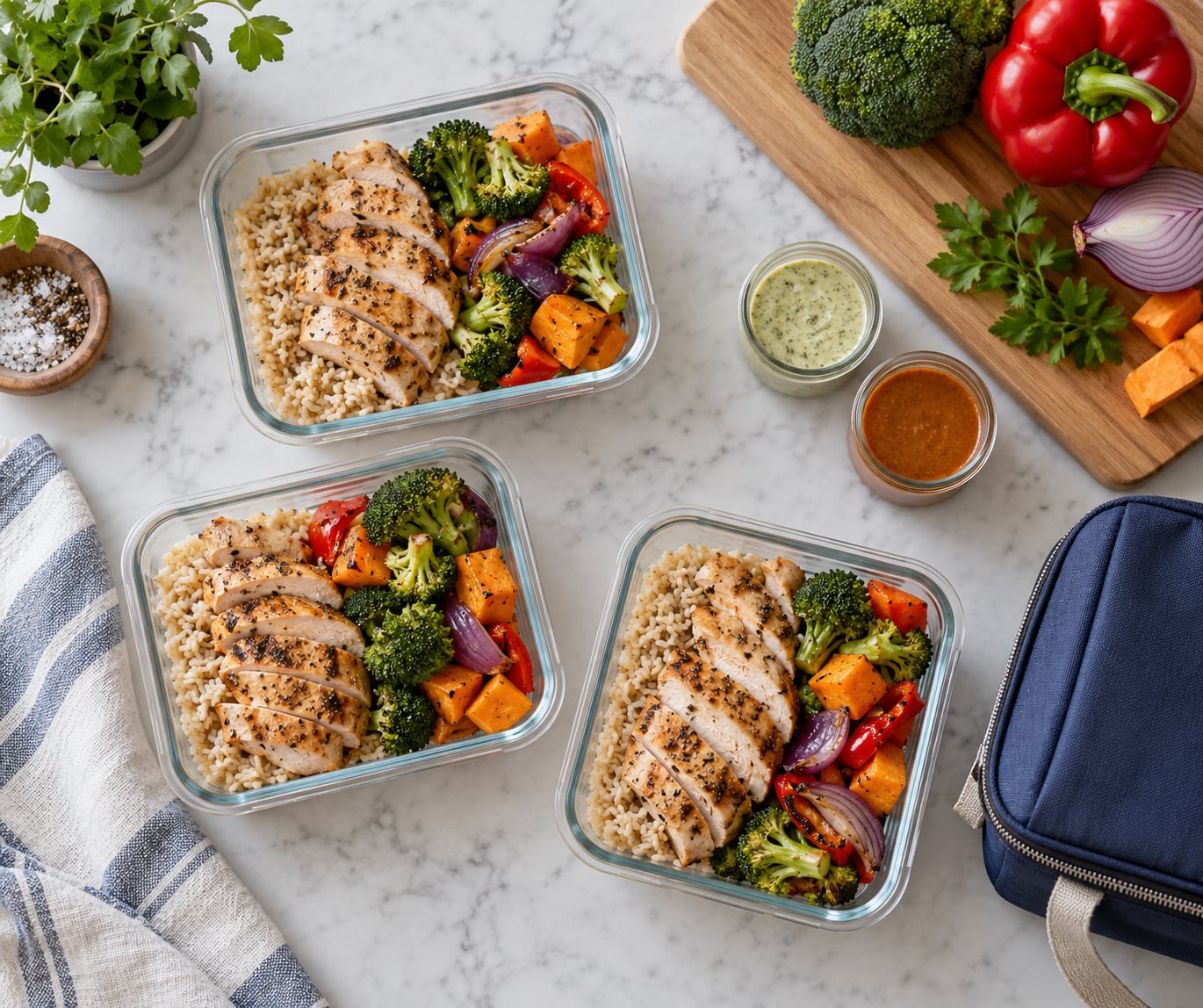
Ingredients. Two proteins, one grain, two vegetables and one sauce covers an entire week if you are willing to combine them differently. Chicken thighs or ground turkey, brown rice or quinoa, roasted broccoli and sweet potato, and something acidic like a lemon-tahini dressing or salsa will feed five lunches without repeating.
You do not need specialty equipment. An electric pressure cooker helps if you have one, a slow cooker started before you leave in the morning helps even more, and a toaster oven keeps a sheet pan from hogging the oven when dinner is already cooking.
Step-by-Step: A Simple Five-Day Workweek Meal Prep Plan
Choose Your Five Meals Before You Shop
Choose your meals before you open a store app, because shopping without a list is how people end up with six half-used jars and no protein.
Match meals to the energy you actually have on each day. Monday and Friday are usually the hardest, so put something you genuinely look forward to on those days and put the quieter meals in the middle.
Then use a simple formula: a protein, a whole-grain or starchy carbohydrate, a vegetable, and a sauce. Every lunch you build should hit all four parts. A container with chicken and rice but no vegetable is going to leave you hungry by three in the afternoon, and you will end up at the vending machine anyway.
Prioritize ingredients that repeat across meals. If you buy a rotisserie chicken, use it in Monday’s bowl, Wednesday’s wrap and Thursday’s grain salad. If broccoli and sweet potato go in the oven together, they can fill three different lunches on three different days.
A useful test: if you can name the five meals in a single breath, the plan is simple enough to keep. If any meal needs a recipe you have never made, swap it out now rather than at 4pm on Sunday.
Shop Once and Prep Only What You Will Eat
Shopping once is the part that saves the most money, because you buy the ingredients that overlap instead of the ingredients that go bad in a drawer nobody opens.
Check the pantry first. You almost always have oil, salt, spices, vinegar and a canned tomato or two sitting there. Then build the list around your five meals and add only what those meals do not already cover.
Here is a sample five-lunch shopping combination built from ten ingredients:
- Two pounds of chicken thighs, roasted on a sheet pan
- One pound of ground turkey, browned in a skillet
- One batch of brown rice, cooked in the same pot
- Broccoli and sweet potato, roasted together
- Black beans, drained and rinsed
- A jar of salsa and a lemon-tahini style dressing made at home
Ten ingredients, five lunches, two sauces, and enough food that Thursday and Friday come out of the same session. Nothing goes to waste because nothing overlaps.
Buy proteins on sale and cook them all at once. Buying five chicken breasts at once and roasting the whole tray is cheaper and faster than making a decision at the grocery store three nights in a row.
Batch-Cook the Base Components
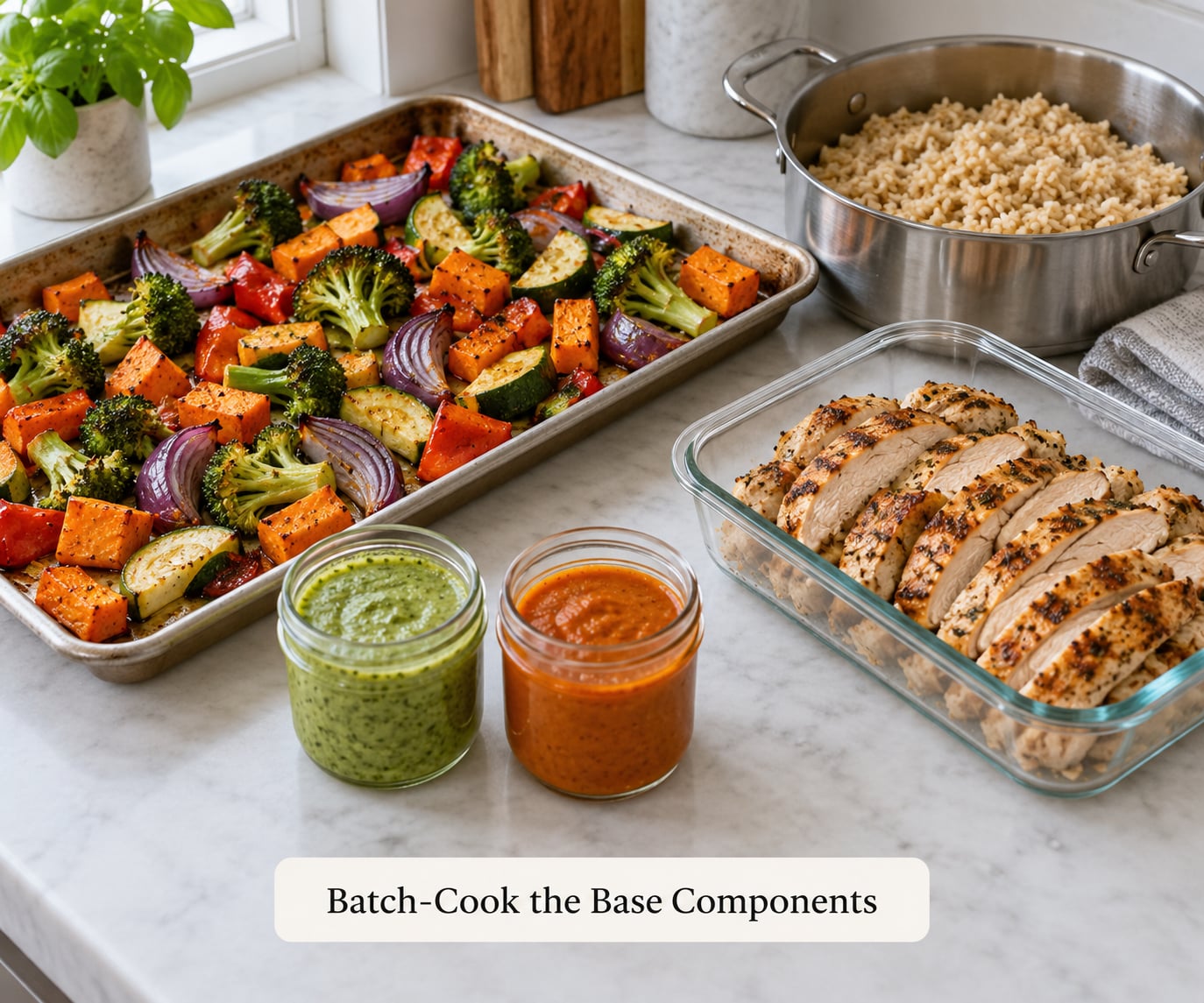
Batch cooking means cooking large quantities in one session and portioning them into individual meals. The order matters more than the menu, because overlap is what makes the session finish in ninety minutes instead of three hours.
Minute 0 to 15: stovetop first. Put the pot of water on for rice and preheat the oven. While the water heats, cut vegetables. Food cooks faster when the oven is already hot, so vegetables go in before anything that needs the stovetop.
Minute 15 to 45: oven and pan together. Roast the sheet pan of vegetables at 425°F while you brown the ground meat in a skillet. Season the meat in two halves, one plain and one with a different spice blend, and you have two flavors from one pan.
Minute 45 to 65: protein and grain. Roast or grill the protein alongside the vegetables. Check poultry with a thermometer and pull it at 165°F internal; ground meat is done at 160°F, and whole cuts of meat and fish are done at 145°F. Those are USDA minimum internal temperatures and there is no negotiating with them.
Minute 65 to 85: sauces. While protein rests, whisk the dressing. Make one creamy and one thin, because they behave differently across the week. A thin dressing goes on grain bowls, a thicker one clings to wraps and roasted vegetables.
Minute 85 to 90: cool. Spread food in a single layer rather than piling it into hot containers. Heat trapped in a deep container is how the center of a batch stays lukewarm and unsafe overnight.
Batch size is simple: cook for six and you get five lunches plus one spare. Cook for three and you get three lunches and the freedom to decide again on Wednesday.
Portion, Label, and Store Lunches Safely
Get food into the fridge or the freezer within two hours of cooking. The USDA guidance is to refrigerate cooked food promptly and to keep it at or below 40°F, and it applies just as strictly on a busy Wednesday as it does in a calm kitchen.
Portion with a rough hand rather than a scale. A palm-sized piece of protein, a third of a cup of grain and half a cup of vegetables builds a balanced container most days. Once you plate three or four in a row, you will see the right size without measuring anything again.
Label each container with the day and the reheating note. Use a permanent marker directly on glass or masking tape on plastic. The label saves you the 4pm guess about whether Thursday’s box is safe to take out, which is exactly when you should not be guessing.
Refrigerated cooked food lasts three to four days, so only Monday and Tuesday reliably need to be in the fridge. Wednesday through Friday belong in the freezer. Move them to the fridge Sunday night or Monday morning so they thaw on schedule instead of on Thursday afternoon.
Sauce travels better in a separate small container. Dressing sitting on rice all night turns the rice into paste, and a jar of sauce gives you one more variation without any extra cooking.
Leave a shallow gap at the top of each container. Food packed tight steams itself, and steamed broccoli has a dull, watery texture that people mistake for bad meal prep.
Build a Five-Day Lunch Rotation
The rotation is where the same five components stop tasting identical. Each day changes at least one element: the sauce, the form, or the texture.
Monday: grain bowl. Rice, roasted vegetables, sliced chicken, black beans, lemon-tahini dressing, and any crunchy topping. Start with your best-looking meal, because Monday sets the tone for the week.
Tuesday: taco bowl. Rice, ground turkey with the second seasoning blend, roasted sweet potato, salsa and a spoon of plain yogurt on top. Same base, completely different flavor.
Wednesday: wrap. Tortilla, chicken, vegetables, a thin drizzle of sauce. Eat it cold so you do not depend on a microwave, which is the most common office problem.
Thursday: salad-style box. Chopped vegetables and protein over a bed of rice with the remaining dressing on the side. This is the day most people are tired of the same texture, and a cold, crisp box is a real change.
Friday: fried rice or grain bowl. Break the container open at your desk, add a fried egg if your office has a kitchen microwave, and use the last of the sauce. Friday is allowed to feel like a different meal.
Two sauces and a garnish change do more for variety than cooking six separate recipes. Freeze chopped green onion or herbs separately and add them at reheat time, and you get freshness on a meal that was cooked five days ago.
Use a Backup Plan for Busy Thursdays
Keep one meal that requires no cooking and almost no planning. Not because Thursdays always go wrong, but because for someone the week goes sideways often enough that a plan with no slack becomes a plan you abandon.
A few no-cook options that hold up well: hard-boiled eggs with nut butter on crackers or celery, cottage cheese or Greek yogurt with fruit, a tuna pouch with crackers, hummus with raw vegetables, or a handful of nuts and a piece of fruit.
Stock these once and they last. Boil a dozen eggs on prep day, keep nut butter and crackers in a drawer, and pack a pouch of nuts in your bag on Monday so it is already in the office with you.
If someone else in the house is doing the cooking this week, this is also the week to delegate. A single shelf-stable meal per day is a low-effort request, and it keeps the habit alive even on the weeks where the session itself has to be skipped.
If the session has to be skipped entirely, cooked meals and ready-to-eat staples from a meal delivery service are a reasonable fallback for the week. Paying for help with the one week you have no time is different from relying on it every week, and for someone who does not cook at all it may be the only version of this that works.
Common Meal Prep Mistakes and Easy Fixes
Planning too many recipes. Five lunches built from ten ingredients is realistic. Five lunches from five different recipes is a project, and projects get cancelled. Fix: choose meals that share ingredients, and cook one protein and one grain that can be recombined four ways.
Prepping food that gets boring by Wednesday. This is the reason most people quit. Fix: store components separately, keep two sauces on hand, and change the form of the meal at least twice, not just the flavor. A bowl becomes a wrap becomes a salad from the same batch.
Storing sauce on everything. Dressings soak grains and greens overnight and leave you with soggy, bland food by Tuesday. Fix: pack dressing in a small separate jar or the divided compartment of the container and add it right before eating.
Overfilling containers. A full container cannot cool properly, freezes badly, and reheats unevenly. Fix: leave two to three centimeters of space at the top, and cool cooked food in a single layer before you close anything up.
Waiting too long to refrigerate. Two hours is the limit, and it is shorter when the room is hot. Fix: slide the sheet pan onto a rack so air moves under it, and refrigerate as soon as the steam stops rising.
Cooking for ten when you will eat five. Prep fatigue is real, and a huge batch mostly creates freezer containers you will not eat. Fix: cook six servings for five lunches. Extra food is a side effect of good planning, not the goal.
One efficiency tip carries most of the weight: clean as you go. Wash the cutting board and the mixing bowls while the oven is running, and by the end of the session there is one pot soaking instead of five. A session that ends with a clean kitchen is a session you will run again.
Two containers are enough at the start, then buy more as the habit holds. Most people begin with one protein and one grain and add variety only once the Sunday session has stopped feeling like a chore.
Frequently Asked Questions
How long does meal prep last in the fridge?
Cooked, refrigerated food keeps three to four days, so plan on Monday and Tuesday in the fridge and Wednesday through Friday in the freezer. Move the later meals into the fridge on Sunday night so they thaw slowly. If you smell something sour or the texture is slimy, throw it out. Once thawed in the fridge, use it within a day or two and never refreeze it.
How do I prevent food poisoning from meal prep?
Cook to the USDA minimum internal temperature: poultry to 165°F, ground meat to 160°F, and whole cuts of meat and fish to 145°F. Refrigerate within two hours, keep your fridge at or below 40°F, and cool food in a single layer rather than a deep pile. At work, use an insulated bag with an ice pack, and discard perishable food left unrefrigerated for more than two hours.
What foods should I not prep more than a day ahead?
Leafy salads and raw vegetables go limp and watery, so add those at reheat time instead. Pasta turns mushy after a night in the fridge, so freeze it slightly underdone if you must prep it. Yogurt and dairy-based sauces can split when reheated, so add them last. Cooked grains, proteins and roasted vegetables all hold their texture well for three to four refrigerated days.
Is meal prep suitable for weight management?
It can help, mostly because portioning is decided before you are hungry and tired. A palm-sized protein, a third of a cup of grain and half a cup of vegetables per container is a useful starting point rather than a strict prescription. If you are managing a specific condition or calorie target, talk to a registered dietitian or your doctor for individual advice rather than copying a generic plan.
How do I reheat meal prep without making it dry?
Add a splash of water or broth before reheating chicken, rice or grains and cover loosely with a lid or plate. That trapped steam does most of the work. Heat in short bursts rather than long stretches, and stir in vegetables near the end so they stay crisp. Add delicate toppings like herbs or greens after reheating, not before.
Conclusion
Knowing how to meal prep for a busy work week comes down to a repeatable system: pick five meals, buy ingredients that overlap, cook one protein and one grain in a single ninety-minute session, and portion it into labelled containers with the later days frozen. Rotate the sauces and the format so nothing repeats, and keep one no-cook backup for the weeks that get away from you.
Start smaller than that. Choose two proteins, one grain, two vegetables and one sauce, and prep only the number of lunches you will realistically eat before the food would spoil. Six servings is a complete first week, and finishing it is worth more than planning ten.
This plan was reviewed for 2026. USDA safe minimum internal temperatures and refrigeration guidance are the reference points used throughout.