You can lose weight without counting calories by changing what you eat, how much volume you take in, and how carefully you notice fullness. The honest part: an energy deficit still has to happen. You just build it with protein, fiber and water instead of arithmetic.
I know the appeal. Nobody wants to weigh a serving of rice at 9pm after a long shift. And the numbers rarely stay cooperative for long anyway. This guide is for readers who are done with food-tracking apps but still want results.
What follows covers what you need, six practical steps, the mistakes that stall most people, and the questions readers ask most. If weight loss is connected to a medical condition, medication, pregnancy, or a past struggle with disordered eating, talk to your doctor or a registered dietitian before changing how you eat. They can adjust the plan to your body and your history.
Table of Contents
- What You Need
- Step-by-Step: How to Lose Weight Without Counting Calories
- How to Lose Weight Without Counting Calories by Building Balanced Plates
- How to Lose Weight Without Counting Calories by Practicing Portion Awareness
- How to Lose Weight Without Counting Calories by Eating More Protein and Fiber
- How to Lose Weight Without Counting Calories by Changing Drinks and Snacks
- How to Lose Weight Without Counting Calories by Moving Every Day
- How to Lose Weight Without Counting Calories by Sleeping and Reviewing Progress
- Common Mistakes
- Frequently Asked Questions
- Can I really lose weight without counting calories?
- How much weight can I lose without tracking calories?
- What should I eat when I do not want to count calories?
- Do I need to avoid carbs to lose weight without counting calories?
- How do I stop overeating when portions are not measured?
- When should I talk with a doctor or registered dietitian about weight loss?
- Where to Start This Week
What You Need
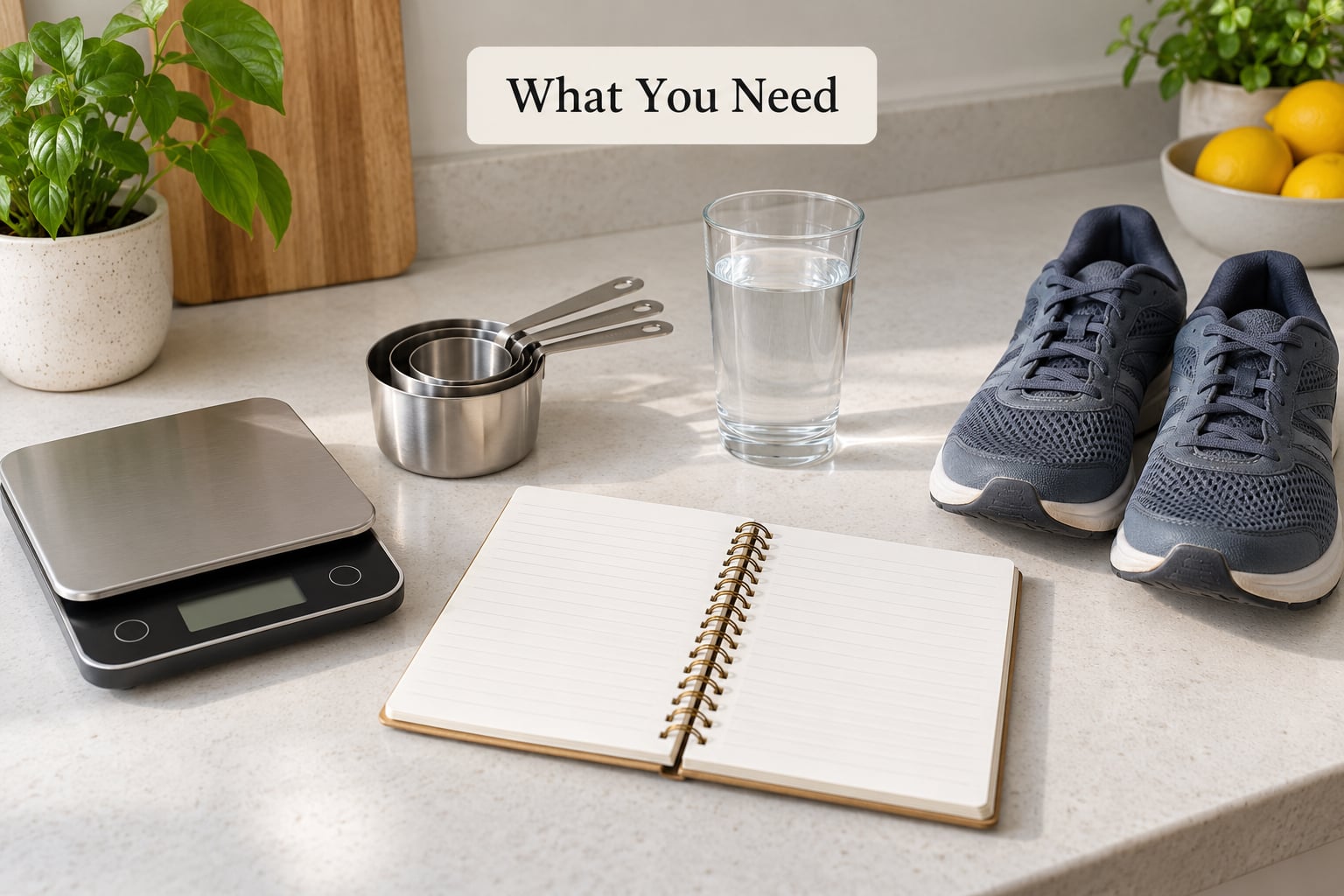
You do not need a tracking app, a smart scale, or any special food product. That is the whole point. What helps is a small, ordinary kit.
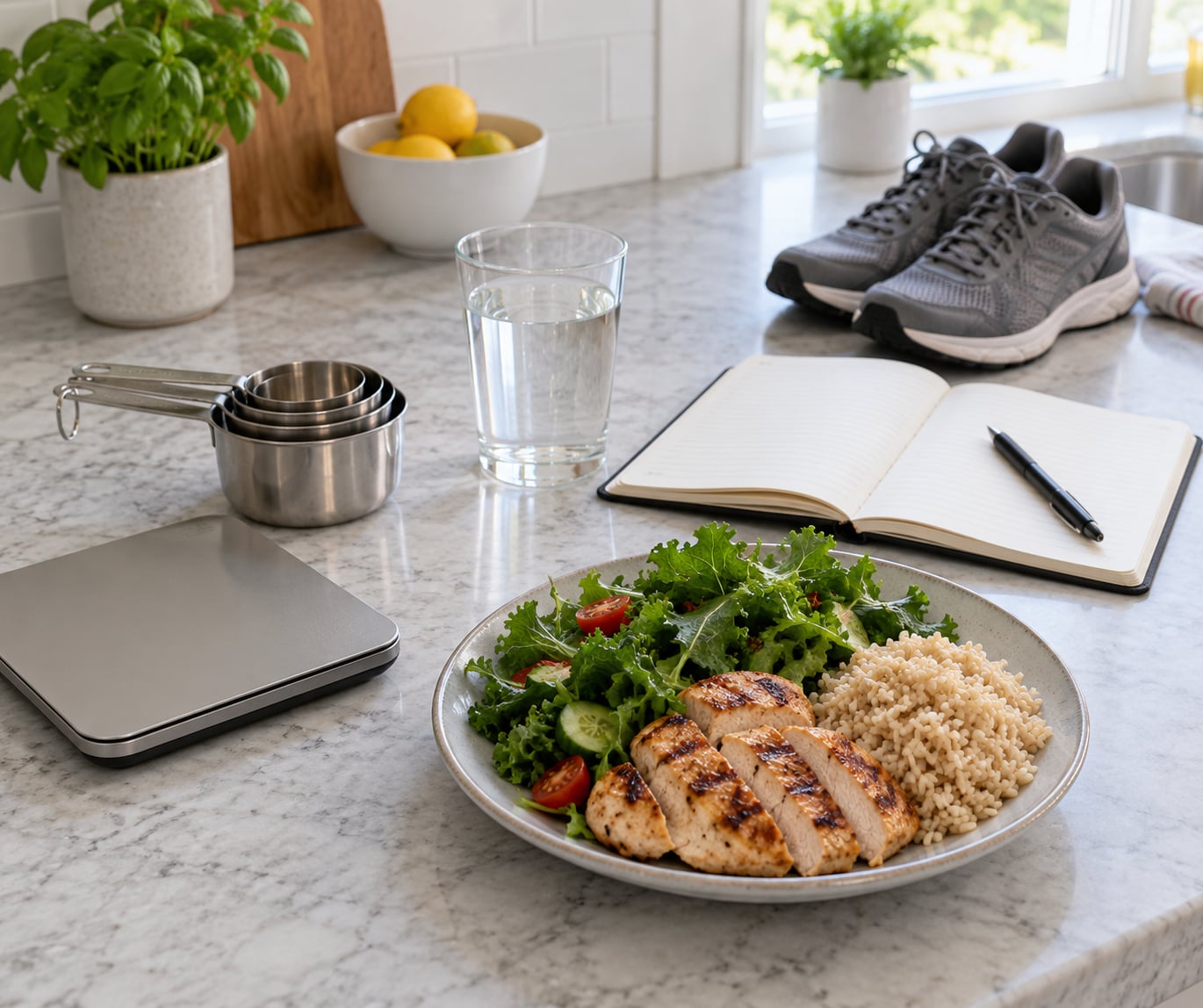
A food scale or a set of measuring cups for the calorie-dense extras, mostly oils, nut butters and sauces. A water bottle you actually refill. Comfortable walking shoes, because walking is the least negotiable movement in this plan. And some way to keep track of habits rather than numbers, a notebook, a checklist on the fridge, or a notes file.
That last one matters more than people expect. Weight progress without numbers needs somewhere to land. Energy, sleep, hunger, clothing fit, all of it goes in the same place your old app used to be.
Step-by-Step: How to Lose Weight Without Counting Calories
Six steps, in the order that tends to work best. Do not run them all at once. Pick the first two, get them boringly automatic, then add the next.
How to Lose Weight Without Counting Calories by Building Balanced Plates
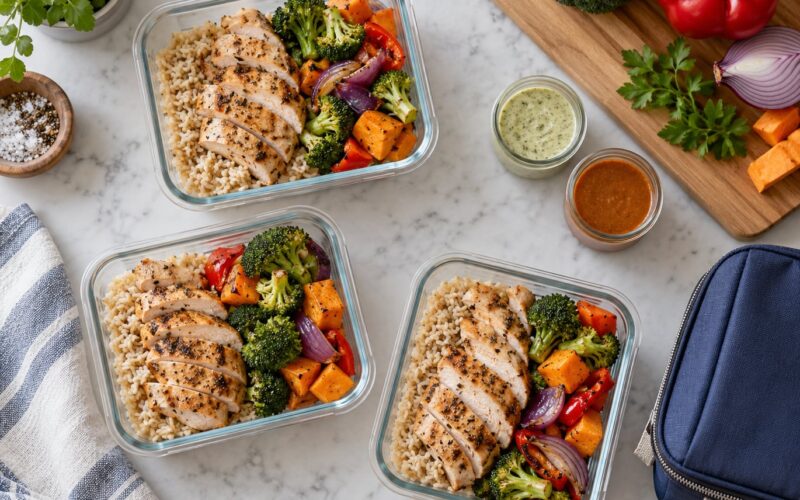
Build each meal from four parts instead of building it from a total: a pile of vegetables or fruit, a protein source, a high-fiber carbohydrate, and a small amount of healthy fat. Harvard Health makes a similar case, noting that diet quality tends to move weight more reliably than simply cutting portions.
The plate method makes it visual. Fill half the plate with non-starchy vegetables, a quarter with protein, a quarter with a starch, then add a small dish of fat. A Journal of the American Medical Association study found that people who ate consistently high-quality diets lost more weight than people who restricted the same amount of calories while eating lower-quality food.
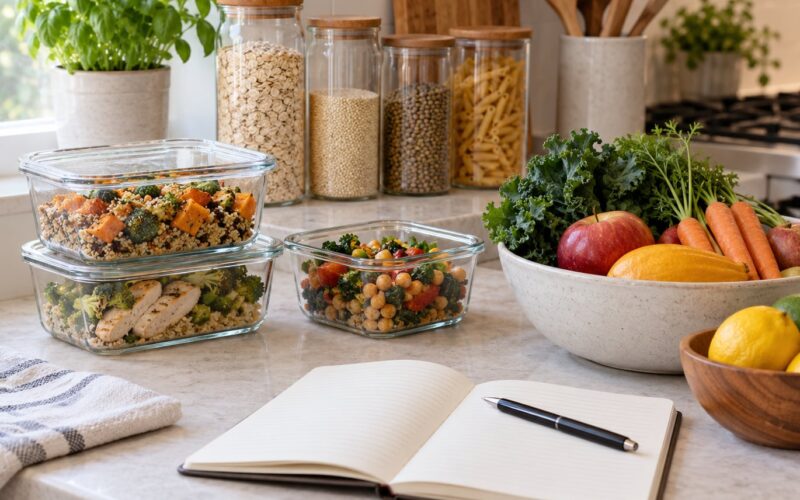
This is easier with food you already cook. Collard greens with black-eyed peas and brown rice. Grilled chicken with sweet potatoes and broccoli. Okra and tomatoes with a scoop of rice and a piece of fish. Bean-based stews built the night before, eaten all week. The plate rule does not care what cuisine it is looking at.
Why it works is volume and protein together. Vegetables and lean protein fill a stomach for a long time at very low energy density, so you arrive at the end of a meal actually satisfied rather than merely finished.
How to Lose Weight Without Counting Calories by Practicing Portion Awareness
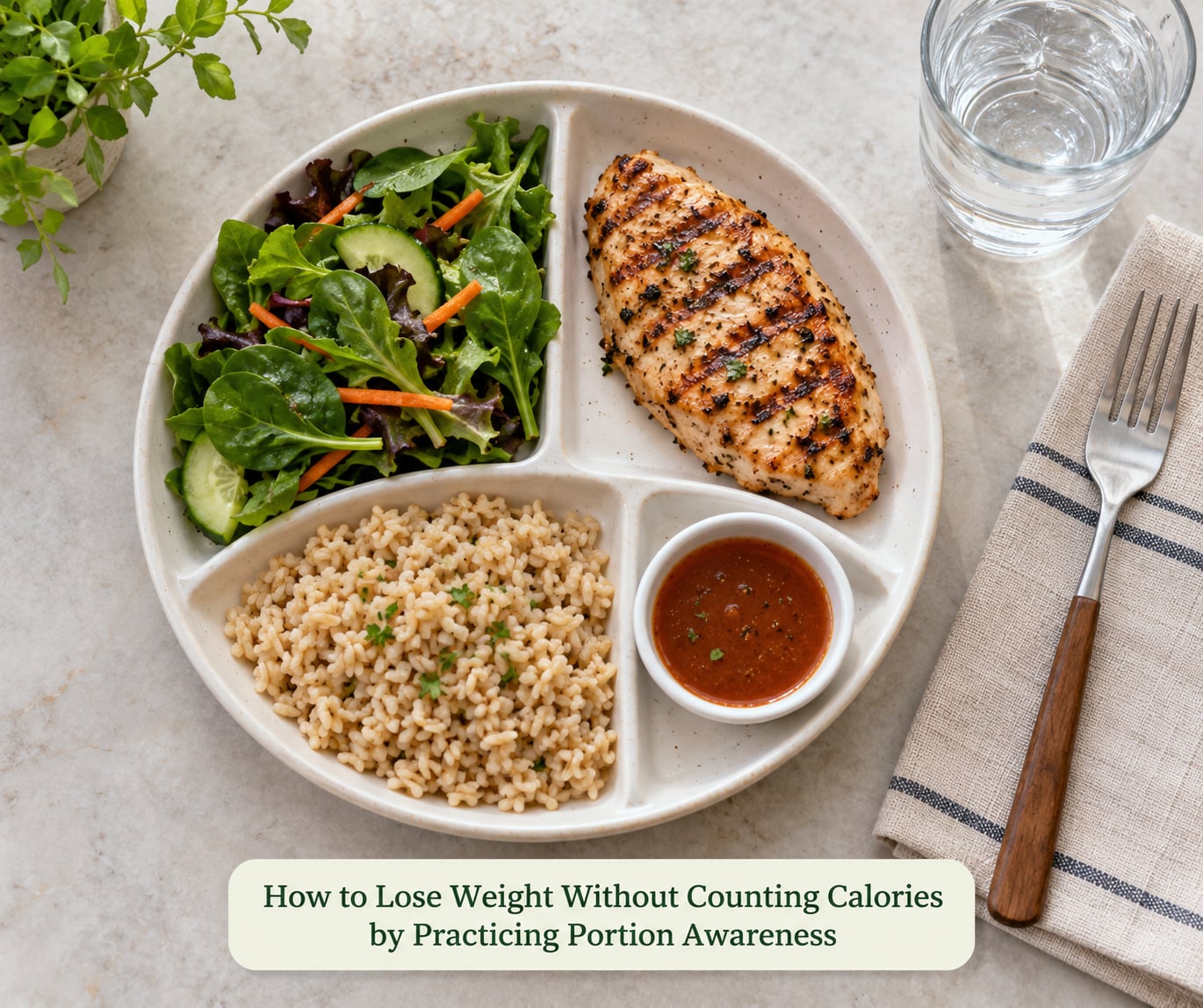
Portion control without a calculator works because your hands already measure. A palm of protein, a cupped handful of rice or beans, a fist of vegetables, a thumb-sized portion of fat. Nobody has to weigh these and nobody has to be right about them to within fifty calories.
Serve vegetables generously. Restrict what you pour, not what you scoop. Oil, dressings, sauces, nuts, cheese and nut butter are where the surprise calories live, because a tablespoon is small and easy to add three times. Measure those and relax about the rest.
For restaurant food, split the entrée and take half home. Skip the bread basket and share one for the table. Choose a side of vegetables instead of a fried side, and treat dessert as a deliberate choice rather than an automatic one.
Then slow it down. Twenty minutes per meal, no phone, no television, and stop around 80% full. That Japanese practice, called hara hachi bu, is loosely translated as eating until satisfied, not full. It is the cheapest portion tool that exists and it takes no equipment.
How to Lose Weight Without Counting Calories by Eating More Protein and Fiber
Protein and fiber are the two levers that control actual physical hunger. Protein digests slowly and costs energy to process. Fiber adds bulk and holds water in the gut, so a bowl of beans or a plate of greens occupies space you can feel.
The mechanism is hormonal. Ghrelin rises when you are hungry. Leptin signals fullness over the longer term. Cholecystokinin, usually shortened to CCK, and GLP-1 both respond during and just after a meal, and both are triggered most strongly by protein and fiber. Low-quality meals produce a weaker signal, which is why the third cookie still sounds reasonable.
Accessible options: eggs, black beans, lentils, chickpeas, Greek yogurt, tofu, fish, chicken, oatmeal, leafy greens, berries, nuts and whole grains. On Reddit, people in the weight-loss communities keep repeating the same pairing, protein plus a high-fiber carbohydrate at breakfast, and report that it flattens the late-afternoon snacking that used to end in whatever was closest.
How much you need varies with your body, your age and your activity. Treat the food list as a direction rather than a prescription, and get personal numbers from a registered dietitian if you want them.
How to Lose Weight Without Counting Calories by Changing Drinks and Snacks
Liquid calories are the easiest win because you do not notice them. Sweet tea, soda, juice, sports drinks and alcohol arrive with none of the chewing that tells your brain food is coming. Water, sparkling water, unsweetened coffee and unsweetened tea do not. Most people who make only this one change report a visible difference within a few weeks.
Snacks are not the enemy. Unplanned snacks are. The fix is a planned snack you can actually stop eating: an apple with a small handful of nuts, plain Greek yogurt, carrot sticks with hummus, a boiled egg, a small bowl of popcorn with a measured scoop of butter.
Watch the hidden extras again. Dressings, dips, croutons, and the sauce that comes on the side are the repeat offenders in home cooking. Drizzle instead of pour. Keep the measuring spoon in your hand for a week and the problem mostly solves itself.
If you eat with a family who wants different food, cook one base and add different toppings. That one habit, mentioned over and over in the Reddit threads, is what makes this work for people cooking at home for other people’s tastes.
How to Lose Weight Without Counting Calories by Moving Every Day
Movement matters more than most articles like this admit. Daily walking burns more energy than most people realize, and it needs no gym membership, no class, and no tracking.
Start with what you can repeat. A ten-minute walk after dinner. A dance session in the living room. Biking with a kid on the back. Twenty minutes of body-weight work twice a week, squats against a wall, glute bridges, a push-up on the counter. Then add a little: five more minutes each week, or one more repetition per set.
Use a step count as a guide, never as a grade. If your baseline is 4,000 steps, going to 6,000 is a real change. Failing to hit a number you invented last month is not a failure, and treating it that way is how people quit walking.
Some days you will need to work around joint pain, an injury, or a condition your doctor told you about. Ask about which movements are appropriate for you, and stay with what you can do comfortably.
How to Lose Weight Without Counting Calories by Sleeping and Reviewing Progress
Short sleep makes hunger louder. The National Sleep Foundation and multiple NIH-funded studies connect poor sleep with increased appetite and higher body weight, largely through hormones that govern hunger and stress. Seven to nine hours is the range most adults are pointed toward.
Stress deserves the same attention. Cortisol rises during chronic stress, and it pushes cravings toward quick, dense comfort food. Notice your weak times. Late evening after a hard day is the classic one, and the fix is usually a ten-minute walk and a phone call, not more willpower.
Since there is no app telling you what happened, watch non-scale progress instead. How your clothes fit. Your waist, measured once a month. Your energy in the afternoon. Whether you are getting stronger. Whether you are sleeping through the night. Whether you can walk farther than last month.
Bring concerns to a healthcare professional. Rapid weight change without trying, feeling faint, or any symptom that worries you deserves a medical opinion rather than another week of adjustment.
Common Mistakes
Skipping meals to lose faster. Very few people sustain this, and the rebound tends to be larger than the original loss. Three solid meals usually beats two skipped ones and a binge at night.
Making rules so strict they break. A plan that forbids every carbohydrate is a plan that ends with a binge. Allowing a portion of what you enjoy keeps the plan alive through a year instead of a month.
Treating healthy food as unlimited. Nuts, avocado, olive oil and granola are nutritious and calorie-dense at the same time. Portion those. They are the exception that proves the plate rule matters.
Buying detox teas, fat burners or supplements. Nothing on a shelf replaces a deficit and a routine. Some of these products also contain stimulants that raise your heart rate. Save your money.
Exercising in intense bursts and then stopping. Ten minutes of walking most days beats one punishing hour on Sunday. Consistency is what changes your baseline.
Reading a two-week plateau as personal failure. Weight stalls are common and usually mean water, muscle, salt or hormones rather than a broken plan. Check your non-scale signals before you change anything.
Most of these are not willpower problems. They are design problems, and they get fixed by making the plan easier to repeat.
Frequently Asked Questions
Can I really lose weight without counting calories?
Yes. You still create an energy deficit, you just build it with food choice instead of arithmetic. Prioritizing protein, fiber and high-water-content vegetables lets you eat satisfying volumes while cutting total energy intake. Many readers on Reddit report steady results this way once they stop weighing every gram. Counting calories works short-term, but the fatigue of tracking is a common reason people quit and rebound.
How much weight can I lose without tracking calories?
Expect early changes in the first couple of weeks, mostly from less refined carbohydrate and better hydration, then a steady rate of roughly 1 to 2 pounds a week. Ten pounds in 30 days is possible but aggressive, and it rarely holds without tracking. Slower rates keep more muscle and are far easier to maintain. Judge progress by energy, strength and how clothes fit rather than by daily scale changes.
What should I eat when I do not want to count calories?
Build meals from four parts: vegetables or fruit, a protein source, a high-fiber carbohydrate and a small amount of healthy fat. Think collard greens with beans and brown rice, grilled chicken with sweet potatoes and broccoli, or a bean-based stew. Water and unsweetened drinks instead of sugary ones. The plate method works because high-volume, low-density foods fill you up on far fewer calories than dense foods do.
Do I need to avoid carbs to lose weight without counting calories?
No. Carbs do not block fat loss, and cutting them sharply tends to end in a rebound. Keep your carbohydrate sources high in fiber and minimally processed, such as oats, brown rice, sweet potatoes and beans. Portion them the way you portion fat, and pair them with protein. This is one of the mistakes that turns a working plan into a broken one within a month.
How do I stop overeating when portions are not measured?
Slow the meal down and eat without your phone for about twenty minutes, then stop near 80% full. Use hand portions as your rough guide, serve vegetables generously, and measure only the calorie-dense extras like oil, dressings, nuts and nut butter. Split a restaurant entrée and take half home. Structure beats precision here, and most people find their own natural portion once they slow down.
When should I talk with a doctor or registered dietitian about weight loss?
Talk with a professional before you start if you have PCOS, insulin resistance, diabetes, a thyroid condition, are pregnant or breastfeeding, take medication that affects appetite, or have a history of disordered eating. Check in during the process if you feel faint, dizzy or unusually fatigued, or if weight changes quickly without trying. A registered dietitian can also set protein and fiber targets matched to your body without you tracking anything.
Where to Start This Week
Start with two changes and nothing else. Put the vegetables on half the plate at dinner, and swap your daily sugary drink for water or unsweetened tea. Two habits are honest enough to repeat, and repeatable is the whole game.
Review it in a month by how your clothes fit, how you sleep and how your energy holds through the afternoon. If weight is part of the picture, weigh at most once a month, never daily. When you eventually reach the weight you were aiming for, keep these same defaults so you never have to pick up the app again.
And if any part of this feels like it needs adjusting for your body or your medical history, a registered dietitian is the fastest way to get a plan that fits you rather than the other way around.