To prepare for a long road trip with kids, plan the drive around their nap and bedtime, pack a small kit of mess-free snacks and quiet activities within arm’s reach, and stop every two hours so everybody can move. Load the car the night before, then adjust the plan as you drive.
Here is how to prepare for a long road trip with kids for any trip over about four hours of driving, whether you are crossing two states for a family visit or moving across the country. Most of the work happens in the 48 hours before you turn the key, and most of the arguing happens in the final two hours of the drive. Families who plan those two windows well usually report a much calmer trip.
A long drive with kids goes wrong on logistics, not on driving. Snacks, breaks and entertainment decide whether the trip is memorable or exhausting, and the whole thing can be assembled from a single checklist rather than guesswork.
Table of Contents
- What You Need
- How to Prepare for a Long Road Trip With Kids: Build the Essentials
- Step-by-Step
- Map the Route and Plan Realistic Breaks
- Confirm Child Seats, Safety, and Vehicle Readiness
- Pack Food and Water Without Overloading
- Create a Simple Entertainment Plan
- Pack Comfort and Sleep Essentials
- Set Rules That Reduce Conflict
- Do a Full Car and Paperwork Check
- Keep the First Two Hours Calm
- Common Mistakes
- Helpful Tips for the Road
- Frequently Asked Questions
- How often should we stop on a long road trip with kids?
- What snacks should we pack for a long drive with children?
- How do we keep kids entertained without relying on screens?
- Should we let children sleep in the car during a road trip?
- What should we do if a child becomes carsick?
- What to Do First
What You Need
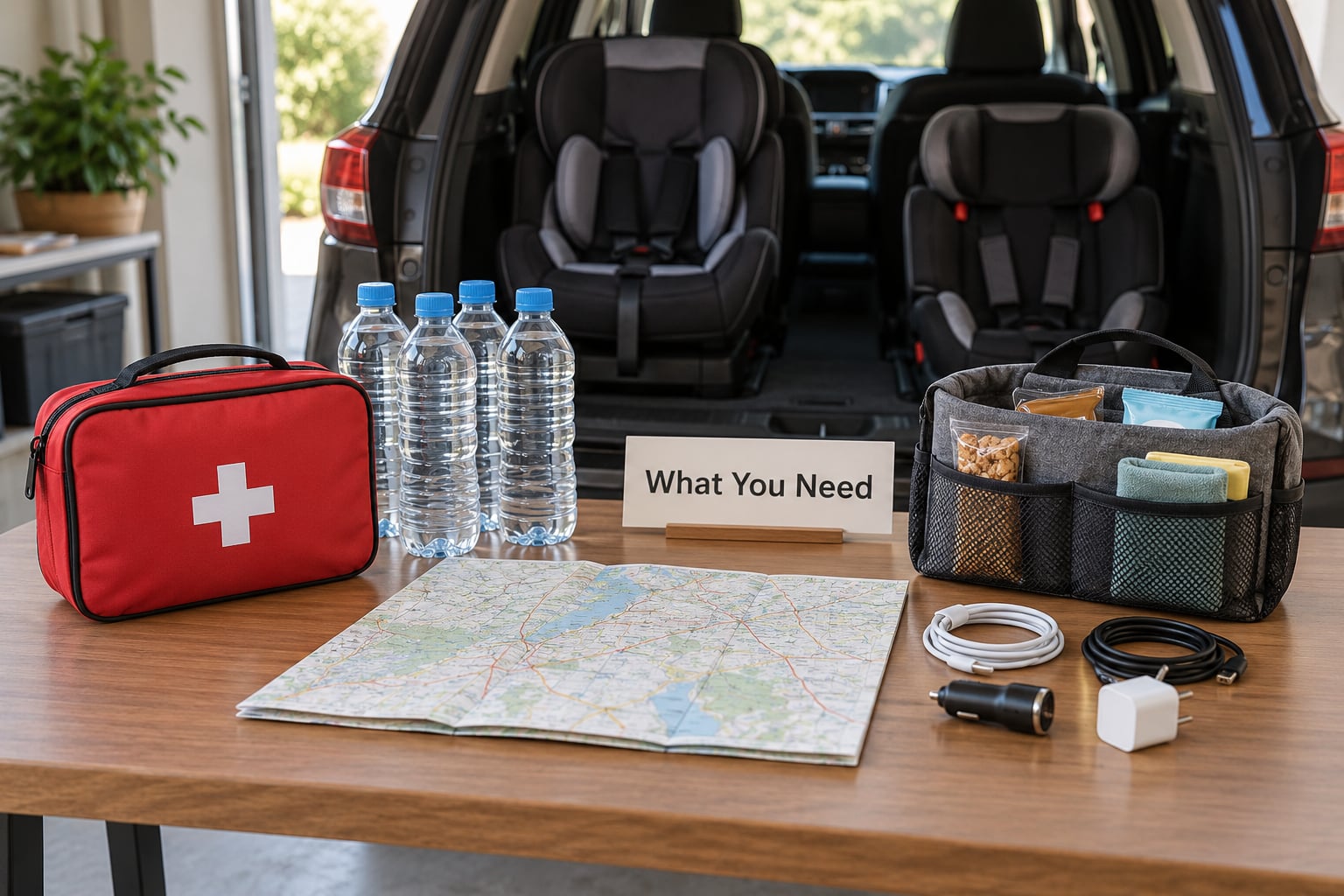
Before you pack anything, write down the variables that actually change your list. The same checklist that works for a four-hour drive with two school-age kids will fail you on a twelve-hour run with a toddler and a teenager, because the sleeping, eating and bathroom needs are different.
Start with the route and the duration. Four hours of driving is a different animal from ten, and the difference shows up in how many breaks you need and whether you can reach your destination before bedtime. Then list each child’s age and needs, since a two-year-old, a nine-year-old and a fifteen-year-old need three completely different plans in the same vehicle.
Note the weather along the route rather than just at your destination, and check what the vehicle can carry without blocking the driver’s view out the rear window. Work out the seating arrangement, especially if an adult can sit in the back, and think about medication, allergies and anything a doctor has told you to watch for.
Finally, know where the rest stops and playgrounds are. A stretch of highway with no services between exit 40 and exit 90 changes how you pack diapers and snack bags. Treat everything below as a checklist you adapt, not a fixed list you obey.
How to Prepare for a Long Road Trip With Kids: Build the Essentials
Six categories cover nearly every trip. Once you know which items sit in each one, packing takes about the same amount of time whether you are gone for two days or two weeks.
Documents and safety. Identification, reservations, insurance details, emergency contacts, a first-aid kit and the paperwork for any medication your children use.
Food and water. Pre-portioned snacks, one or two real meals, refillable bottles and a cooler for anything perishable.
Clothing. One full outfit per child per day plus a change of clothes for everyone, layers for a cold car, pajamas for early departures.
Entertainment. A screen option with downloads finished in advance, screen-free games, art supplies and audio content, organized so the adult driving never has to search.
Comfort items. The familiar blanket, the stuffed animal that does not get traded, headphones, sun protection, hand-wiping supplies and a travel pillow for anyone who falls asleep.
A break schedule. Planned stops every two hours, written down, with the longer ones reserved for a playground or a walk rather than a parking-lot break.
The packing method matters more than the list. Parents on r/Preschoolers and the forums that show up for this query all land on the same rule: whatever you need on the road goes within adult reach, everything else goes in the trunk. Bag it by zone so that a diaper change does not require unpacking a suitcase.
Step-by-Step
Map the Route and Plan Realistic Breaks
Open your map app and look at the whole drive before you commit to a departure time. Note the fuel stops, the rest areas with restrooms, the stretches with no services, and the exit numbers where you would need to get off if a child became carsick.
Divide the drive into two-hour segments and choose one real stop per segment. A stop that only involves a bathroom is fine occasionally, but a park, playground or open field burns energy and buys you a much calmer next hour. The parents on the whattoexpect.com forum describe a routine that works: they stop at playgrounds, parks or rest areas with open space, have a meal there, and let the toddler run.
Add about 25% more time than the app estimates. That buffer is not padding, it is where the missed rest stop, the wrong exit and the toddler who will not put on shoes at a truck stop go to live.
Tell your children what the trip looks like in concrete terms. Say how many stops there are, that the next stop has a bathroom and a place to run, and what will happen at arrival. Parents on CruiseCritic boards say the trips that go well are the ones where expectations were set before the car started, not negotiated at mile 200.
Confirm Child Seats, Safety, and Vehicle Readiness
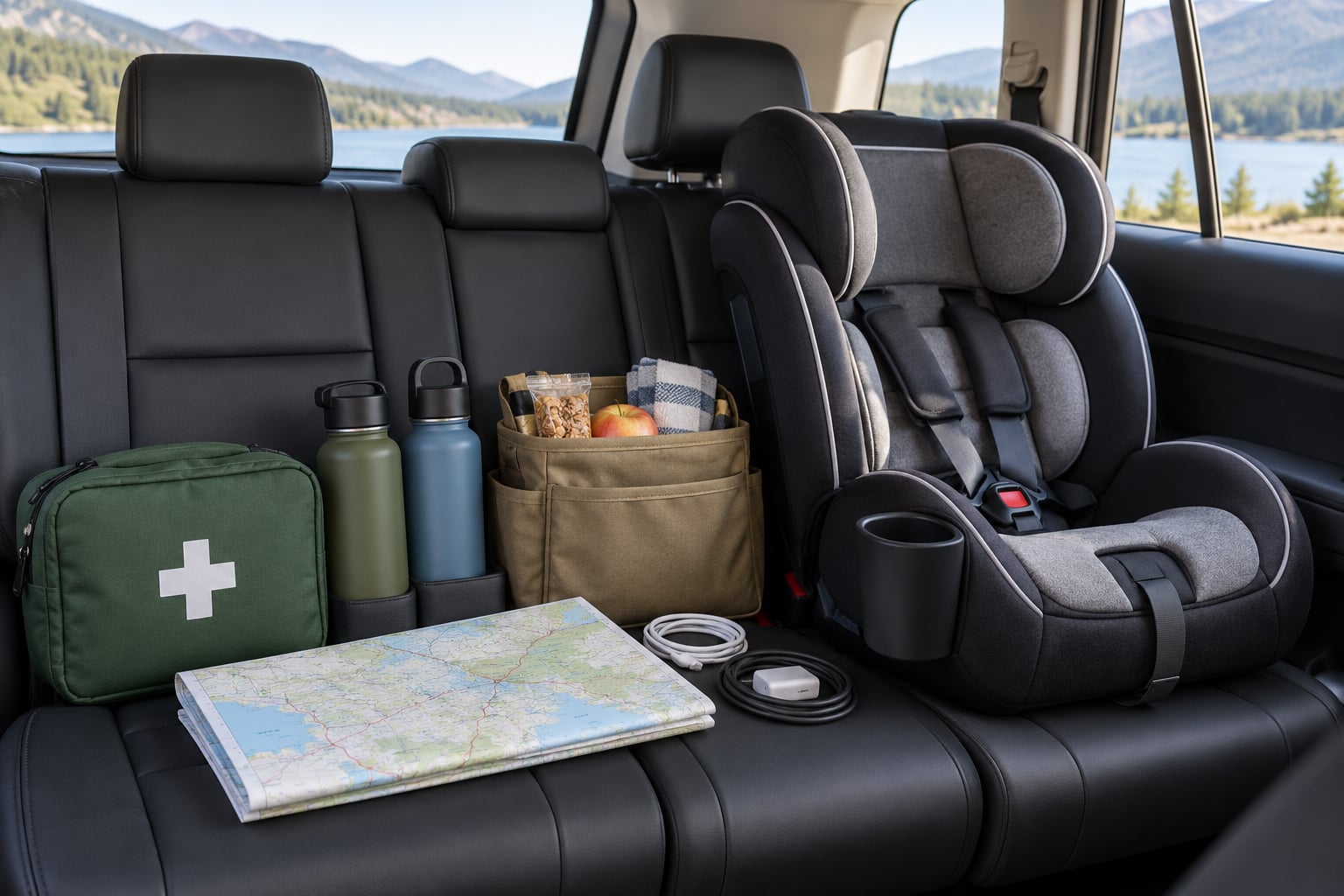
Check every restraint against the seat manufacturer’s instructions and your vehicle’s manual, and check them again after any installation. Choose the seat based on your child’s height, weight and age rather than on when they seem big enough to argue for a different one.
Two things catch families out. First, a seat that is fine in a sedan may not fit in the vehicle you rent or borrow, so confirm before the trip. Second, anything loose in the cabin becomes a projectile in a sudden stop, so put bags in the trunk and keep the back seat uncluttered.
Pack a first-aid kit with the basics, plus anything specific to your children: antihistamine, fever reducer, bandages, rehydration salts, sunscreen, hand wipes and any prescription medication in original packaging with the dosing instructions. Check expiration dates while you are in there.
Have your roadside assistance number and your insurer’s number written on paper in the glove box. If the vehicle breaks down, get everyone out of the car and onto the shoulder away from traffic, turn on hazard lights, and call for help rather than attempting a roadside repair with children nearby. After a minor collision, check every child for injuries even if they say they are fine, and document what happened before you swap vehicles or drive on.
For the driver, remember the 3-3-3 guideline that safety groups use: three hours driving, three hours of activity, three hours of sleep. Treat it as guidance rather than a rule to break, and plan for a driver swap every two hours when two adults are available. Drowsy driving kills more people than speed on these trips.
Pack Food and Water Without Overloading
Pack snacks your children already eat at home. Novelty snacks backfire, and anything that requires two hands or produces dust will end up on the seat.
Pre-portion into small bags or a bento box so nobody is reaching into a big bag and dropping crackers down the seat gap. For younger children, finger foods they can manage alone work best: pretzels, sliced fruit, cheese cubes, dry cereal in a sealed cup. Older kids can handle sandwiches cut into triangles with a drink in a sealed bottle.
Keep everything spill-resistant. A cup with a lid and a straw travels better than an open water bottle, and a wipe-down cloth handles the sticky hands that come with any snack. Limit heavy sugar and anything that crumbles, since a wired sugar rush followed by a crash is worse than a bored child.
Anything perishable goes into a cooler with plenty of ice packs. Keep poultry at 165°F, ground meat at 160°F, and whole cuts and fish at 145°F, or keep them cold enough that the cooler thermometer stays at or below 40°F. Food that has sat in a warm car for hours goes in the bin when you get out, not in a kid’s hand.
Water is the boring answer that works. Every child gets a labeled bottle within reach at departure, and you refill at every stop whether or not anyone asks.
Create a Simple Entertainment Plan
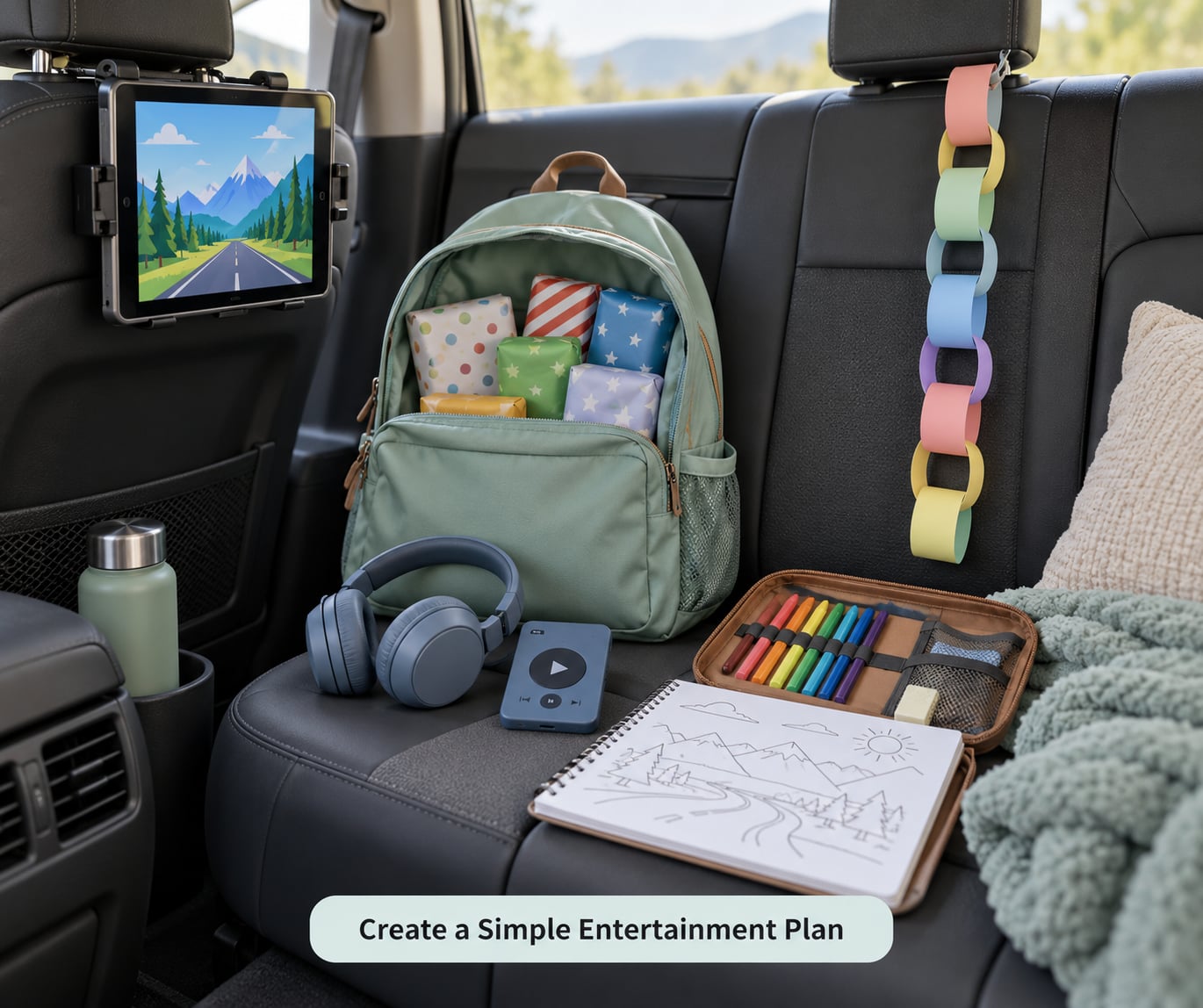
Decide before you leave what gets used when, and hand it out in order. A mix of screen time and something to do with hands works best, because it stops the “I’m bored” argument from having only one possible answer.
For screen options, download everything at home on your own Wi-Fi. Streaming apps buffer badly on weak mobile signal in rural areas, and a buffering screen at hour five is a problem you can avoid for free. Mount the device where an adult can reach it to start and pause without turning around while driving.
For screen-free options, name them ahead of time so you are not inventing games at a traffic light. I Spy works for any age with a decent vocabulary. The alphabet game asks kids to find a letter in order along the roadside. Counting colored cars or state signs works well in towns. Binoculars give kids something to do that does not involve your voice or your hands, and r/Preschoolers parents mention them by name as one of the few cheap things that buys real minutes.
Art supplies beat screens for the middle of the trip. Water Wow books, dry-erase markers for drawing on a window, a magnetic doodle board and plain paper with markers all survive a moving car. A cookie sheet makes a decent lap desk if you need a flat surface for a puzzle.
One trick that works surprisingly well: wrap activities individually and reveal them one at a time. Save the most interesting item for hour three, not hour one. A visual timer helps more than a verbal one, so link a paper chain and remove one link per hour, or use a countdown timer on a tablet.
Pack Comfort and Sleep Essentials
Preserve the routines your children already have rather than trying to invent new ones on the road. A familiar blanket, the same songs and the same snack at the same time do more than any travel-specific gear.
By age band, the needs change quickly. A baby under two wants darkness, motion, feeding on schedule and a safe place to nap, and the rear-facing seat handles all four. A toddler needs a change of clothes, a portable potty or a familiar routine for bathroom stops, and a soft object that stays in the car. A preschooler is at peak “why” age and does best with audiobooks, drawing and short physical stops. Elementary-age kids handle audiobooks, road trip bingo, mad libs and a car game each with an adult, and they can be trusted with a simple job like reading the mile signs. Teens handle a long drive well if they get control over their music, their downloads and their own snack supply.
Clothing matters more than people expect. Pack one change per child per day, pajamas for a car that doubles as a bedroom, and a layer for everyone because car interiors get cold at night even in warm weather. Include sun protection if you are driving west in the afternoon.
Also pack hand wipes or sanitizer, a trash bag within reach, a portable changing station if anyone still needs diapers, and headphones for the child who wants quiet.
Set Rules That Reduce Conflict
Agree the rules before loading the car, out loud, with the children in the room. Rules announced at a rest stop tend to be argued with.
Cover the handful that cause most friction: snacks stay in the snack area, screens stop when we stop, feet stay off the seat, the front seat stays clear, and lost items get looked for at every stop rather than continuously.
Give children limited choices where you can. Would you like the blue cup or the green one? Do we stop at the next rest area or after one more song? Choices about small things reduce the volume of complaints about big things.
Have a plan for explaining delays. When you hit traffic or miss a stop, say what happened in one sentence, say when you expect the new plan to take effect, and do not over-apologize. A calm “we’ll stop at the next exit, about twenty minutes” works better than a long explanation to a bored six-year-old.
Do a Full Car and Paperwork Check
The night before, run a single walk-around of the vehicle and a paper check together.
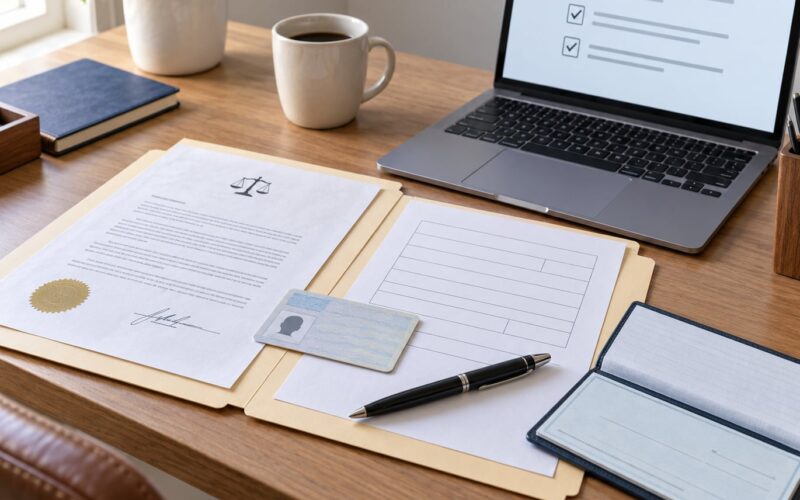
Confirm identification for every traveler, hotel and rental reservations, tickets, insurance details and roadside assistance numbers. Gather emergency contacts on one sheet, including a pediatrician and an out-of-area contact. Pack medication with dosing instructions and a note about any instructions your doctor gave you.
Check that chargers, a power bank and the car adapter are all present, and that cables reach the seats in the back. Download the itinerary for offline use, then print a copy anyway, because phone signal fails in exactly the places where you most need directions.
Verify tire pressure, fluid levels, lights and air conditioning, and confirm the spare or the roadside service coverage. Load the trunk last so the items you need during the drive are the ones you can reach.
Keep the First Two Hours Calm
The opening segment sets the tone for the whole day. Start with a bathroom stop before you leave the driveway, not five minutes after getting on the highway.
Settle the car before you settle into traffic. Buckles on, bags upright, first drink and snack distributed, and the first activity chosen rather than negotiated. Then keep the first stretch easy, with light conversation or music, and save anything that demands effort for later.
Leave a real gap between departure and the first planned stop. Children settle faster when the first break arrives while they are still in a good mood rather than at the exact moment they have run out of patience.
Common Mistakes
Packing too much. The fix is to cut the bag count before departure and keep the extra clothing at home. You can buy socks at any stop; you cannot calm a bored child at mile 300.
Scheduling stops too far apart. Two hours is the working maximum for adults, and children run out of patience sooner. Fix the interval in advance and treat it as a plan rather than a suggestion.
Relying entirely on screens. Tablets solve the first two hours and then stop working. The fix is to put one screen-free option per hour in the rotation, ready in a bag, so it can be handed over without a discussion.
Skipping the vehicle check. A low tire or a dead battery on an empty stretch ruins a trip. Ten minutes with the manual covers tires, fluids and the spare, and you find out at home rather than on the shoulder.
Bringing messy food. Crackers, loose cereal and open cups stain seats permanently. Pre-portion into sealed bags, use lidded cups, and keep a cloth in the same bag.
Not telling children about delays. Surprise stops and slower traffic read as a broken promise. Fix it by explaining the change early and giving them a job in the new plan.
Forgetting car sickness supplies. Empty zip bags, water, wipes and a change of clothes belong in the first-aid kit from the start, not added after someone feels queasy.
Helpful Tips for the Road
Run a practice packing session a few days ahead. Lay out everything on the floor and see what you actually reach for on a normal day, then cut the rest. It also shows children what the trip looks like, which lowers the chance of a morning argument.
Use color-coded bags and keep the same arrangement in the car every trip. Red for snacks, blue for activities, green for first aid. A six-year-old can then find the coloring book without needing you to turn around.
Keep supplies within adult reach, but keep bags low and out of the sight lines of the rear and side mirrors. Entertainment that blocks the driver’s view is a safety problem, not a convenience trade-off.
At any stop longer than fifteen minutes, take a short walk rather than sitting in the car with a snack. Kids who move come back to the seat calmer, and adults get the break they need for alertness.
Give children a visual countdown to the next stop, and keep a small promise within reach: a specific snack at the specific stop. It converts “are we there yet” into something countable.
Frequently Asked Questions
How often should we stop on a long road trip with kids?
Stop about every two hours, even when nobody is asking to. Adults get drowsy and stiff well before two hours of continuous driving, and children who sit longer than that usually need a bathroom anyway. Make one stop per segment count: a playground or open area beats a fast-food parking lot. On a solo drive with young children, tighten that to 90 minutes so the driver gets real breaks.
What snacks should we pack for a long drive with children?
Pack familiar foods your kids already eat at home, pre-portioned into sealed bags or a bento box so nothing spills. Good choices include pretzels, sliced fruit, cheese cubes, dry cereal in a lidded cup, crackers and sandwich triangles cut small. Skip anything that crumbles or needs two hands to eat. Keep one cup and a wet wipe per child, and pack a backup meal in case a stop gets skipped.
How do we keep kids entertained without relying on screens?
Rotate a handful of prepared, screen-free options rather than searching on the go. Name games in advance so you are not inventing them at a traffic light: I Spy, the alphabet game along the roadside, counting state signs, road trip bingo and mad libs for readers. Water Wow books, dry-erase window markers and a magnetic doodle board handle the middle hours. Wrap items separately and reveal one at a time.
Should we let children sleep in the car during a road trip?
Let them sleep, and plan the drive around it. Most families get the smoothest stretch by leaving late enough that a nap or bedtime falls during the drive, then covering them lightly and keeping the cabin dark and cool. Waking a sleeping child to move them into a hotel room at 2 a.m. is harder than most parents expect. Build in the waking time in your arrival estimate, because they will not stay asleep.
What should we do if a child becomes carsick?
Stop as soon as you safely can and open a window for fresh air. Give small sips of water, nothing heavy to eat, and remove dry snacks. Look at a distant point through the window rather than close-up books or screens, since those make symptoms worse. Keep empty zip bags, wipes and a change of clothes in the first-aid kit, and ask your pediatrician about motion sickness medicine before the trip rather than during it.
What to Do First
If you only do one thing tonight, open the map app and pick the two-hour break points. Everything else on this list hangs off that schedule, including snack volume, activity rotation and departure time.
Then pack the within-reach bag, load the trunk, and set the car up the night before. Learning how to prepare for a long road trip with kids is mostly deciding, in advance, which hour of the drive gets which thing.