To stop drinking soda every day, taper it down over about four weeks, swap it for a fizzy drink you actually like, and take soda out of your house. That three-part approach works better than willpower alone, and it costs you less misery than quitting cold turkey.
A daily can feels small. It is not. A 12-ounce can of regular cola carries roughly 39 grams of added sugar, which is more than the American Heart Association’s daily suggested limit for women (25 g) and above it for men (36 g). Regular intake is also linked to weight gain, type 2 diabetes, fatty liver disease, cavities, and enamel erosion.
Here is the honest part. Most people are not hooked on soda the way they might be on nicotine. What they have is a conditioned loop: caffeine and sugar trigger a small dopamine release, your brain links that reward to the meal, the 3pm slump, or the drive-through, and after a few hundred repetitions the cue alone starts pulling you toward the fridge. Call it dependence rather than addiction, but the practical effect is the same. You get headaches, irritability, and cravings when the drink stops.
This guide gives you a week-by-week plan, a withdrawal timeline, and drink swaps matched to what the craving is actually asking for. It takes about a month, and most people find the first week the hardest and everything after that fairly boring.
Table of Contents
- What You Need
- Step-by-Step: How to Stop Drinking Soda Every Day
- Set a Specific Goal for Stopping Drinking Soda Every Day
- Find Your Soda Triggers
- Replace Soda With a Drink You Will Enjoy
- Build a Plan for Cravings
- Change Your Environment and Routine
- Track Your Progress and Adjust
- Common Mistakes
- Frequently Asked Questions
- How long does it take to stop drinking soda every day?
- Is it better to quit soda cold turkey or reduce it gradually?
- Will drinking diet soda help me stop drinking soda every day?
- What can I drink instead of soda when I want something sweet?
- Can stopping soda help with headaches or constipation?
- Why do I still crave soda after trying to stop drinking it?
- Conclusion
What You Need
None of this needs equipment. It needs four things decided before you start, because deciding in the middle of a craving is much harder than deciding on a calm afternoon.
1. A baseline count. For three days, write down every serving you drink, when you drink it, and how big it is. Two 12-ounce cans at lunch and a fountain drink at 4pm looks like three servings, but a 20-ounce bottle drunk across an afternoon is one long slow serving, and it counts differently in your head than it does in your day. Most people are off by one serving in either direction.
2. Your trigger list. Look at the log and mark the pattern, not the drink. Which hours? Which meals? Which mood? A craving attached to boredom is a different problem from a craving attached to stress, and they need different answers.
3. Three replacement drinks chosen in advance. Pick them now, while you are not thirsty. Your best replacement is the one you will actually drink on a bad Tuesday, not the one that sounds healthiest in a blog post.
4. One written goal. A sentence, with a number and a date. “Two cans a day until the 14th” beats “drink less soda” every time, because you can tell at a glance whether you did it.
Step-by-Step: How to Stop Drinking Soda Every Day
Set a Specific Goal for Stopping Drinking Soda Every Day
Pick a measurable starting point from your three-day log and write it down. If you drink four servings a day, week one is three servings. If you drink one soda with every meal, week one is replacing two of those three with something else while keeping one.
Most people do best cutting one serving per week. That sounds slow, and it is the point: a small cut rarely triggers withdrawal, and it lets you replace rather than just remove. Write the goal where you will see it, and give it a date.
Dilution is the underrated middle step. Pour your soda into a glass, add the same amount of sparkling water, and drink it that way for the first week or two. You keep the ritual, the glass, and the carbonation, while halving the sugar. It works because you are editing the habit instead of replacing it.
Find Your Soda Triggers
Triggers are the cue half of the habit loop. They arrive on a schedule more often than people expect: 11am, lunch, the walk back from the bathroom, the last ten minutes of the workday, the drive home.
Write each one down with the drink you reach for. Then pre-load. If noon is the trigger, have your replacement ready at 11:30. If it is the drive-through, decide what you order before you pull into the lane, because a decision made at a menu board under pressure is not really a decision.
The most common version of this is a soda with every meal. People who sip through the day usually find triggers easier to spot, because the pattern is spread out. Meal-linked drinkers often say the drink is about the break as much as the thirst, which is why the replacement needs to be equally quick to make.
Stress and boredom are the harder ones. They do not announce themselves, so a partial fix is keeping the 3pm slot occupied by something with a shape: a ten-minute walk, a phone call, a glass of cold water you actually have to go get.
Replace Soda With a Drink You Will Enjoy
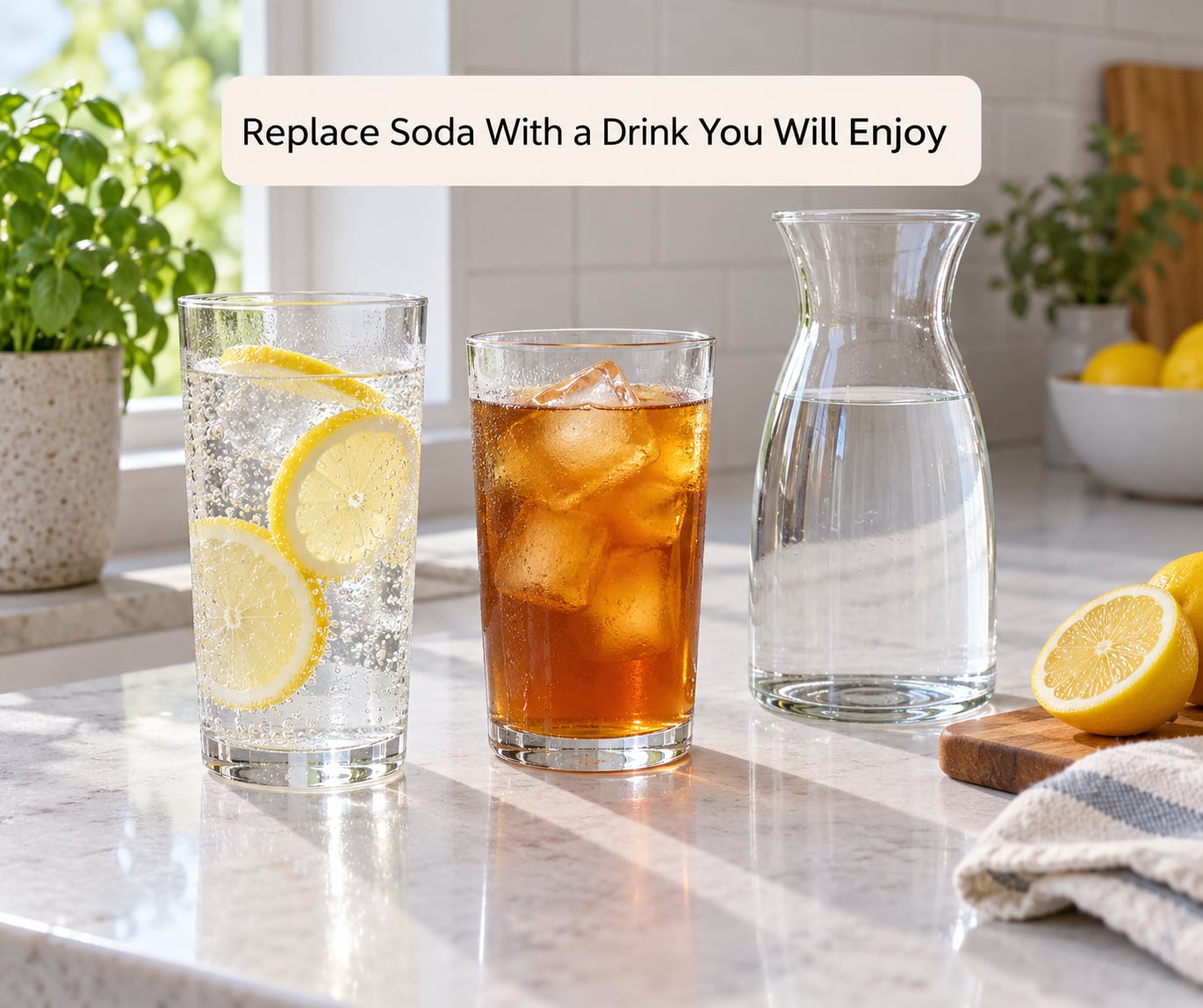
Soda delivers three things: sugar, caffeine, and fizz. Match whichever one you are actually after and the substitution feels less like a sacrifice.
| What you are really after | Try this instead | Why it works |
|---|---|---|
| Fizz and bite | Sparkling water or plain seltzer with a slice of citrus | Same carbonation, zero sugar, no caffeine |
| Sweetness | A small glass of juice cut with sparkling water, or a frozen juice cube in water | You keep the sweet note at a fraction of the amount |
| Caffeine | Coffee, tea, or a small amount of decaf on the taper weeks | Avoids stacking a caffeine withdrawal on top of a sugar withdrawal |
| Something cold and comforting | Water with lemon, or sparkling water with a few mint leaves crushed in | Reported again and again as the survival drink in the first months |
| Habit and ritual | Tea in the same mug, at the same hour, on the same trip | The cue stays intact while the reward changes |
Unsweetened tea and coffee deserve a special note because they handle the caffeine side of withdrawal while you are still working on the sugar side. If you drop soda and caffeine in the same week, you are stacking two headaches and blaming one.
On diet soda: it removes the sugar, not the loop. People who switch to zero sugar often report being at least as attached to the drink as before, because the cue, the timing, and the ritual stayed identical. If you currently drink only diet soda, treat it as a separate quit with the same plan. Many people find the sweetened-to-diet switch leaves them more confused than simply reducing the amount they drink in total.
If you want to keep a sweetener for the transition, that is a reasonable short-term step, and it is worth talking through with a doctor or registered dietitian if you have a condition affected by it. It is not a place to settle permanently.
Build a Plan for Cravings
Cravings are short. The intense part is usually 10 to 15 minutes, which is why the standard move is a timed delay rather than a fight.
- Drink a glass of water first and wait five minutes. Thirst and craving feel identical from the inside.
- Pour half a serving. Half a soda with a full glass of sparkling water still counts as a soda and still counts toward the day.
- Wait ten minutes before deciding. Set a timer so you are not relying on willpower alone.
- Chewing sugar-free gum gives the jaw something to do, which sounds trivial and works for a surprising number of people.
- Change rooms, step outside, or make a phone call. Most cravings pass without being fed.
- Have a real snack if you skipped meals. Hunger reliably presents itself as a drink craving.
Cold turkey and tapering are not moral choices. Cold turkey is faster and it works well for some people; quitters who stuck with it often report the craving disappearing entirely. Tapering takes longer and produces a much smaller withdrawal window. If you have failed cold turkey twice already, that is useful information about which one suits you rather than evidence about your character.
Change Your Environment and Routine
Stimulus control is the least glamorous step and the one most people skip. If soda is visible and reachable, a fraction of your willpower goes to defending it.
Empty the fridge and the pantry door shelf on day one. That includes the 2-liter you bought for the weekend. Check the desk can at work, the cup in the car, and the saved orders in your delivery app, which quietly reorders for you.
Then delay the first serving. Most people drink their first soda well before lunch, often without noticing it. Pushing that first one to after your first meal removes an entire serving without adding any effort. Put the replacement drinks where the soda used to be, at eye level, in the door you open most often.
Track Your Progress and Adjust
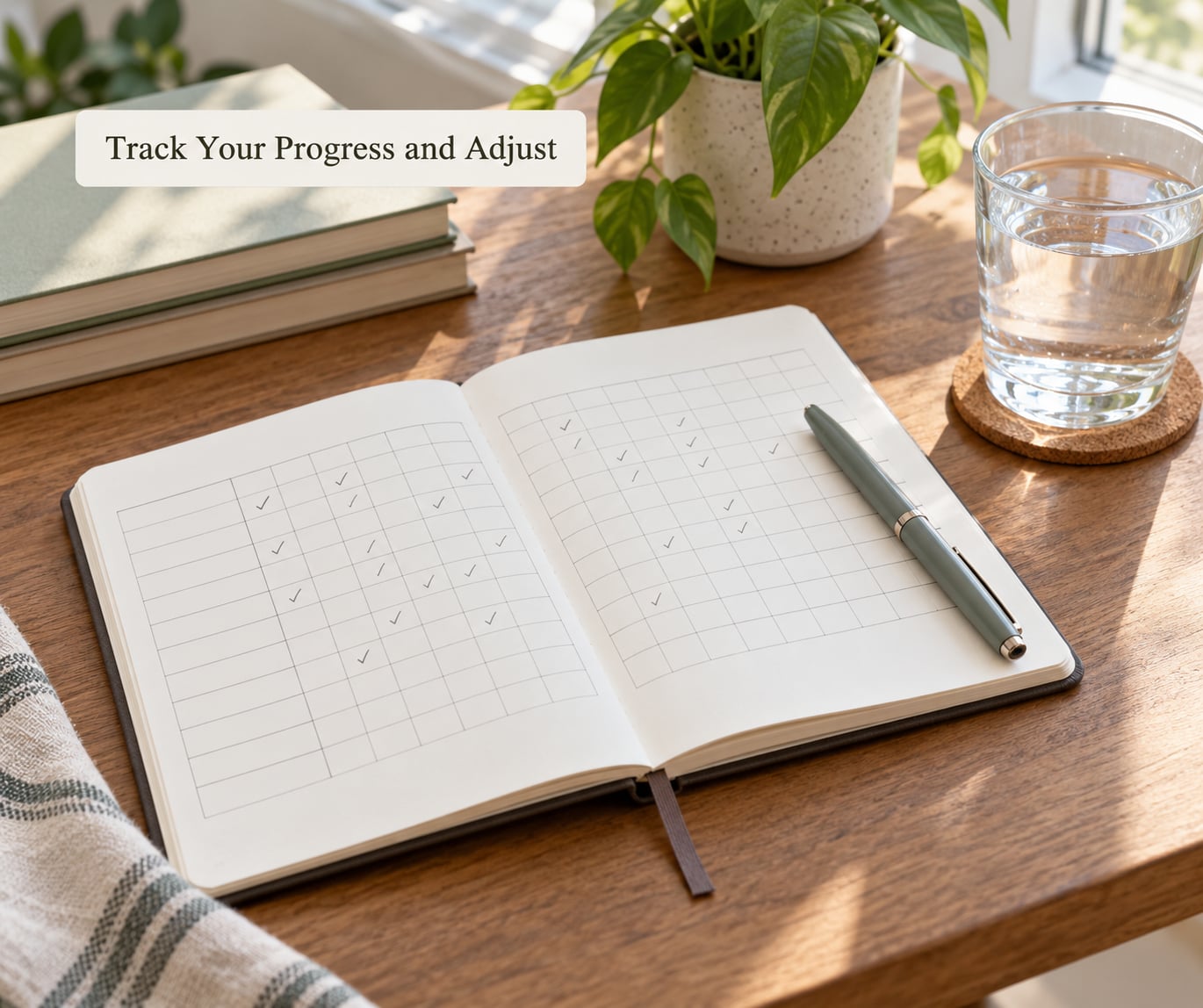
Track for two weeks: servings, the strongest craving time of day, energy, thirst, and mood. That is enough to see the trend and short enough that you will keep doing it.
| Period | What you may notice | What is happening | What helps |
|---|---|---|---|
| Days 1 to 3 | Headache, tiredness, irritability, trouble sleeping | Caffeine clearing your system, blood sugar shifting | Water, caffeine in small amounts, an earlier bedtime |
| Days 4 to 7 | Strongest cravings, restlessness, low mood, cravings in dreams | The conditioned loop is being weakened by being unused | Flavored sparkling water, gum, keeping busy, not going off-plan alone |
| Week 2 | Cravings become occasional rather than daily | Taste preferences start recalibrating | Keeping your routine and your replacement drink in place |
| Weeks 3 and 4 | Most people stop thinking about it; taste preference has shifted | The habit is largely broken | Planning for the situations that brought you back before |
Clinical sources commonly put withdrawal at around 2 to 9 days, mostly driven by caffeine rather than sugar, which is why the headache is the headline symptom and why it fades first.
What improves afterward tends to arrive quietly. Energy steadies as the afternoon sugar stops spiking and dropping. Sleep gets easier for some people. Teeth stop taking the acid twice a day. Several weeks in, many people notice soda tastes cloying, which is a real signal that your preference has shifted and the maintenance problem is mostly solved.
If you lapse, treat it as data. One soda at a barbecue is not a collapsed plan. What matters is whether you wrote down what happened and went back to the next planned number.
Common Mistakes
Quitting all at once when you have a history of failing at it. Nothing about a third failed attempt tells you the fourth is different. If you are someone who has tried cold turkey and relapsed, a taper is not the easy way out, it is the way that matches your history.
Replacing soda with plain water and nothing else. Water alone leaves the carbonation and the sweetness unserved, which is why the replacement section exists. Give the craving something specific to answer it.
Switching straight to diet soda and calling it solved. The sugar goes down; the cue, the timing, and the ritual stay. If you are only drinking diet soda now, the honest read is that the habit is intact, and it needs the same plan.
Confusing thirst or hunger with a craving. These feel the same in the moment. Drink water and eat something before deciding, and see whether the craving is still there in ten minutes.
Dropping soda and coffee in the same week. Two caffeine withdrawals at once is what produces the two-week headaches people describe in forums. Taper one at a time.
Expecting a version of yourself that never wants soda again. You will probably want one again at some point. The goal is a drink you could have and choose not to, not a permanent absence of the thought.
Calling yourself a failure after one bad day. The tone in most of the honest quitting threads is the same: nobody succeeds perfectly, the shame is what ends the attempt. Log the number and move on to the next one.
Frequently Asked Questions
How long does it take to stop drinking soda every day?
With a taper of about one serving per week, most people reach zero in three to four weeks. The physical withdrawal is usually shorter than that, around 2 to 9 days once you stop, because it is mostly caffeine clearing out. The lingering part is the habit loop, which usually needs a few weeks of repeated non-occasions before it fades.
Is it better to quit soda cold turkey or reduce it gradually?
It depends on your history more than on the theory. Cold turkey is faster and some people sail through it, but if you have tried it more than once and relapsed, the pattern is telling you something. A gradual taper of roughly one serving a week produces far less withdrawal and is easier to sustain past the first month, which is where most quit attempts end.
Will drinking diet soda help me stop drinking soda every day?
For most people it stalls the quit instead of finishing it. Zero sugar removes the sugar load, but the cue, the timing, and the ritual of the drink stay exactly the same, so the conditioned loop keeps running. People who drank only diet soda often describe the same cravings as regular soda drinkers. If you are tapering, treat diet soda as its own reduction target.
What can I drink instead of soda when I want something sweet?
Match the craving to a specific quality. For fizz, use sparkling water with citrus. For sweetness, dilute a small glass of juice with sparkling water, or freeze juice into cubes and add them to water so the sweetness lasts longer. For the caffeine part, tea or coffee. For the ritual, the same mug at the same time. Plain water alone rarely satisfies a soda craving.
Can stopping soda help with headaches or constipation?
It can go either way, and it is worth separating the two. Some people get headaches in the first week from caffeine withdrawal, then feel clearer once past it. For constipation, added fiber and water usually help, but sudden diet changes affect everyone differently. Persistent headaches or digestive symptoms are worth raising with your doctor rather than self-diagnosing as withdrawal.
Why do I still crave soda after trying to stop drinking it?
Usually because the craving is tied to a cue rather than to the drink. Your 3pm slump, a particular meal, boredom, or driving home has been paired with this reward hundreds of times, and the cue alone can trigger it. The fix is to identify that moment, arrive at it with a replacement drink already in hand, and let the pairing weaken by being repeated without the soda.
Conclusion
Start with one thing today: count your servings for three days and write down the number. Then cut one serving, decide what replaces it, and put the replacement where the soda used to be.
Gradual beats dramatic for most people, and a flexible plan survives contact with real life in a way an all-or-nothing one does not. If you have diabetes, kidney issues, or a condition that makes sudden diet changes matter, talk to your doctor or a registered dietitian before changing what you drink, and ask for help if quitting feels beyond you on its own.