To negotiate a car price with a dealer, get a written out-the-door price from several dealers before you set foot on a lot, anchor your offer on the lowest one, and keep the price, the trade-in and the financing as three separate conversations. Never negotiate a monthly payment. That single habit is where most of the money hides.
It sounds simpler than it feels in the moment. A dealer has a finance office, a sales manager and a stack of add-ons designed to pull the conversation away from the one number you care about. Buyers who prepare an hour of paperwork walk in with the advantage, and buyers who wing it hand over several thousand dollars without ever noticing.
What follows is the sequence I would follow myself: prepare the numbers, get quotes in writing, make one clean offer, and hold still. It takes most of a day spread across a week, and it works whether you are buying new or used.
Table of Contents
- What You Need
- How to Negotiate a Car Price With a Dealer: Step-by-Step
- Set Your Maximum Price and Walk-Away Number First
- Research the Vehicle and Establish the Market Price
- Open the Conversation and Ask for the Real Price
- Make a Written, Favorable First Offer
- Respond to Counteroffers Without Revealing Your Limit
- Review Fees, Add-Ons, Trade-Ins, and Financing
- Get the Final Agreement in Writing
- Common Mistakes
- Frequently Asked Questions
- How do I ask a dealership to lower the price?
- What is the 3,000-dollar rule for cars?
- How much can you usually negotiate off a car price?
- How much does a car salesman make off a $20,000 car?
- Should I negotiate before or after test driving?
- Is it rude to negotiate a car price?
- Conclusion
What You Need
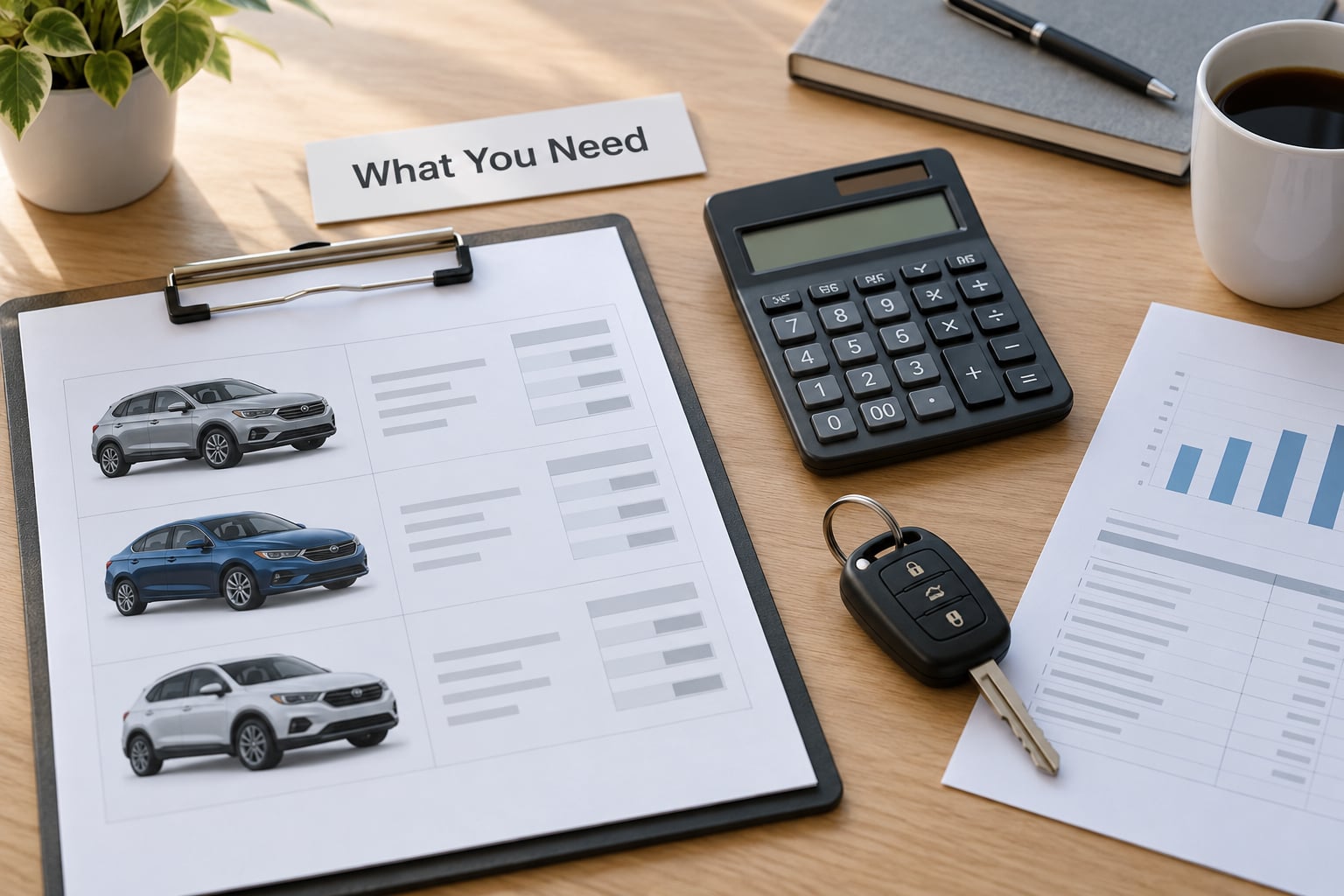
Preparation is the whole game. Here is the packet to assemble before you email or call anyone, and roughly what each piece is for.
- Market numbers for the exact car. The MSRP for a new vehicle, or the listing prices, mileage and trim levels for a used one, from Edmunds, Kelley Blue Book, Carfax and CarEdge. Match the year, trim, drivetrain and options, not just the model name.
- Five to ten written out-the-door quotes. Same vehicle, same trim, same options, asked for by email so there is a record. Three is thin. Ten gives you a real pattern instead of one dealer’s mood.
- Financing pre-approval. A written pre-approval letter from a credit union or your bank, with a rate and term. It gives you a number to compare the dealer’s rate against and stops the finance office from treating your rate as a blank page.
- Independent trade-in offers. Instant cash offers from CarMax and Carvana, taken before the dealer appraises anything. You want the dealer’s number next to a real outside number.
- A ceiling and a walk-away point. Two written numbers, kept off your phone screen where a salesperson can see them.
- Payment method details. Cash amount, or the exact loan amount, term and rate you want approved. How you pay changes the conversation, so you decide it in advance.
- A blank buyer’s order. Ask for the form to write on, or bring your own. You fill in the agreed numbers yourself instead of reading a document after the ink is dry.
Add the vehicle’s condition data. For a used car, pull the Carfax and AutoCheck reports before you talk to anyone, and note anything a dealer will use to justify a lower number.
How to Negotiate a Car Price With a Dealer: Step-by-Step
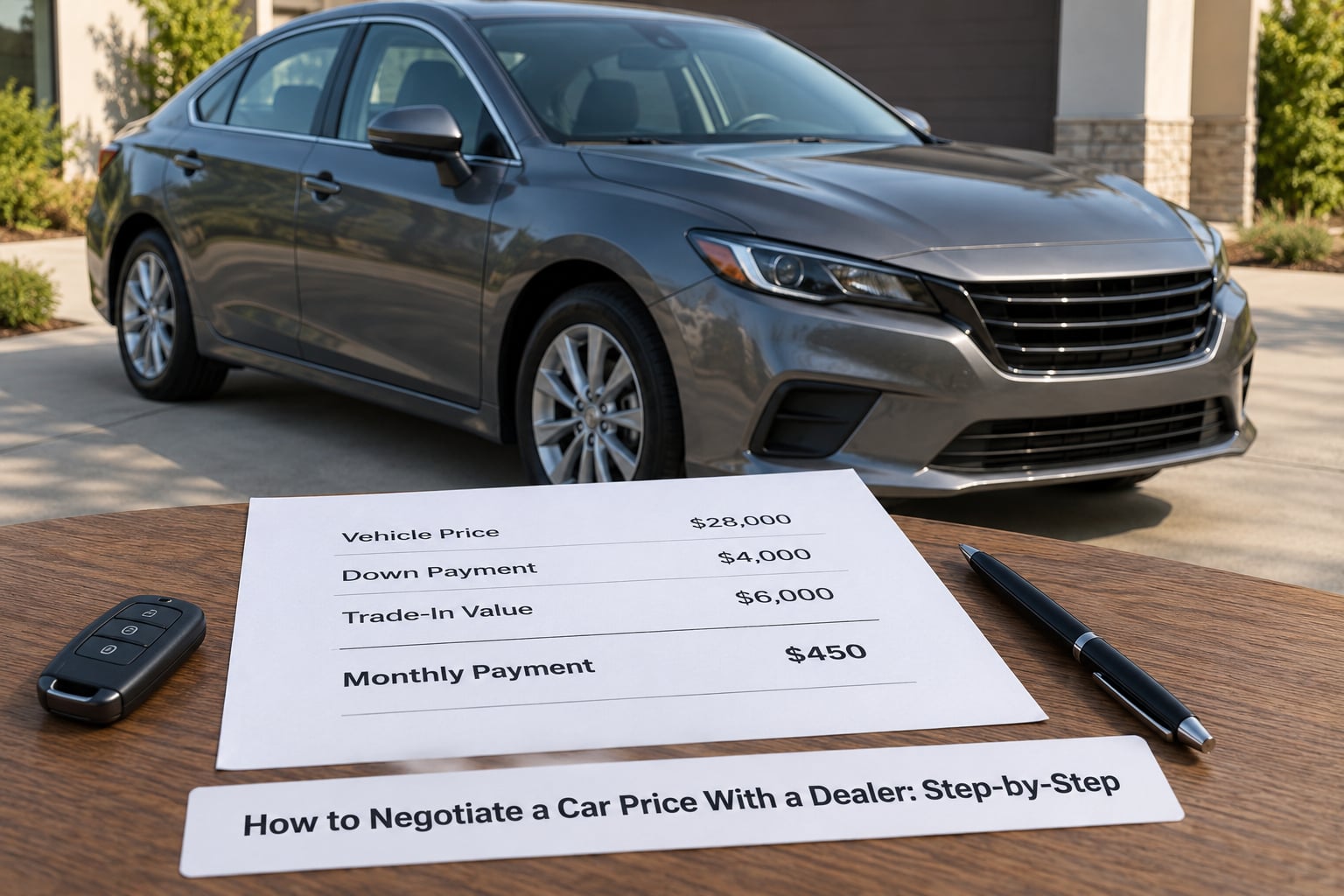
Seven steps, in this order. The sequence matters more than any individual tactic, because each one protects the position you built in the step before it.
Set Your Maximum Price and Walk-Away Number First
Write two numbers on paper before you contact anyone: the most you would pay out the door, and the number at which you turn around and leave. The first is your ceiling. The second is the one that actually protects you, because a ceiling you reveal out loud stops being a ceiling.
Build it from the vehicle price, not the monthly payment. Start with the market price for that car, add the required taxes and fees for your state, then add the manufacturer incentives or rebates you have confirmed are available. Everything above that line is your negotiating room.
Keep the two numbers separate. The ceiling is what you can pay. The walk-away number is usually lower, often by a few hundred dollars or a percentage, and it exists so you have a reason to leave without needing permission from your own optimism.
Research the Vehicle and Establish the Market Price
Three prices matter and they are not the same number. The MSRP is the manufacturer’s suggested sticker, the invoice price is roughly what the dealer paid after incentives, and fair market value is what similar cars are actually transacting for in your area. Only the third one tells you what to pay.
For a new car, check Edmunds and TrueCar for recent transactions, and ask dealers directly for the invoice price on the specific vehicle. Many will tell you, especially in writing, and it anchors the negotiation at the top of the room rather than the bottom.
For a used car, work from comps in your area. Same year, same trim, similar mileage, within a 50-mile radius, listed in the last 30 days. Kelley Blue Book gives ranges, Edmunds and Carfax show actual listings, and a private-party sale or an auction result in the same region is often the most honest number available.
Then call five to ten dealers who have the car. A regular on r/newcardeals who says he has negotiated a couple hundred deals as a corporate fleet manager puts it simply: call, do not just email. A phone conversation produces a number, and the lowest one becomes your opening offer at every other dealership.
Open the Conversation and Ask for the Real Price
Keep the first contact short and specific. Name the year, trim and options, ask for the out-the-door price in writing, and stop talking. The script sounds like this:
“I’m looking at the 2026 Example XLT in that colour, VIN ending 4471. If that one is available, what would you sell it for out the door, including all taxes and fees? I’d like the number in writing, and I’ll decide today.”
The words that matter are out the door and in writing. Without them, you will get a number that excludes documentation, title and registration, and the gap between that number and the real one becomes the negotiation after the negotiation.
A few dealers will not quote by email at all. That is information about the dealership, not about the car. One r/carbuying regular put it plainly: you still need documented examples of the same car selling cheaper somewhere else, so keep collecting and move down the list.
Make a Written, Favorable First Offer
Send one offer, once, and make it easy to accept. Dealers respond to specificity and a short timeline far better than to haggling over email. Copy this, change the numbers, and send it:
Subject: Offer – [Year/Make/Model/Trim], VIN ending 4471
I am prepared to purchase the [year and trim] in [colour], stock #4471, for an out-the-door price of [your number], including documentation, title and registration fees, no add-ons. I have financing arranged elsewhere and can pay by cashier’s cheque. If you can meet that number today, I will be in this afternoon. Please reply with the offer in writing.
One number, no ranges. An offer with a range gives the dealer a floor to aim at. Naming the exact car and the exact payment method signals you are a serious buyer who has done the work, which is exactly the buyer a front office wants to close.
Anchor a little above your walk-away number rather than at your ceiling. If your walk-away point is $28,000, open at $29,200 and let the dealer move toward you. Anchoring at the exact figure you would accept removes your room to negotiate.
Respond to Counteroffers Without Revealing Your Limit
A counteroffer is information, not an insult. Evaluate it, then respond once with a single variable changed. The most common mistake is moving several numbers at the same time, because you cannot tell which concession actually bought the price drop.
Silence is legitimate and underrated. When a manager comes back with a number, saying “I’ll think about it and call you back” and then actually calling back buys you room without costing you anything. Most salespeople have a quota pace to hit, and time pressure runs toward you when you are patient.
Here is the tactic-to-response map buyers ask for most often.
- “Someone else is buying it right now.” Then write them an offer and put a time limit on it. If the vehicle is really spoken for, a written offer with a deadline gets ignored. A real manager declines a fair offer quickly.
- “I need to check with my manager.” Fine, and expected. Ask them to have the manager call you with the number. It moves the decision off the sales floor and slows the rhythm down.
- “What can I do to get you to a decision today?” You already made your best offer. Say the price you will pay, ask for the buyer’s order, and let the order of words tell you who is under pressure.
- A price that changes after you arrive. Ask for the new number in writing, mention the figure you were given by name and date, and give them one chance to honor it. Then leave. Bait-and-switch quotes get reported over and over on buying forums.
- “Let me add protection so the paint lasts.” Decline each add-on individually and by name. Bundled packages are designed to feel unreasonable to remove.
- A handshake before the paperwork. A handshake is not a contract. Nothing is agreed until the numbers are on a buyer’s order you have read.
- “This price is good until tomorrow.” Ask which price, on which document. Urgency with no written number attached is just pressure.
- A no-haggle dealership. Nothing to negotiate, so nothing to lose by declining and trying the next one. Cars are sold to whoever has the next workable number, not to whoever asks first.
Review Fees, Add-Ons, Trade-Ins, and Financing
Ask for the out-the-door number itemized on the buyer’s order. Every line should be one you can identify, and you should know which ones move.
| Line item | Required? | Negotiable? |
|---|---|---|
| Vehicle price | Yes | Yes, this is the main event |
| Sales tax | Yes | No, set by your state |
| Title and registration | Yes | Marginally, varies by dealer |
| Documentation fee | Yes in most states | Yes, and often the biggest add-on |
| Manufacturer incentives and rebates | No | Confirm they are applied, not withheld |
| Dealer-installed accessories, paint protection, nitrogen, wheel locks | No | Decline outright |
| GAP, credit life, service contracts | No | Decline outright, or price-check elsewhere |
| Delivery or freight charges | Yes | Ask what the factory charge was |
The documentation fee is where margin often reappears after a price has been agreed. Ask what other dealers charge for the same fee in your area and say the number out loud. On a used car, also ask for any history fee, and check whether the vehicle carries a balance with the manufacturer before you discuss the price.
Handle the trade-in as its own negotiation, later, with numbers in hand. Ask for the trade value only after the out-the-door price is agreed, compare it against the CarMax and Carvana offers you already pulled, and decide whether the low monthly payment from a lower trade allowance is worth more than the cash in your hand. One caution: selling privately can trigger sales tax that a trade-in avoids in some states, so check your state’s treatment before you split the deals.
Negotiate financing last, with the price locked. The dealer’s rate will usually sit above the pre-approval rate you brought in, and the longer they can add term, the smaller the monthly payment looks. Tell them you already have approval at a specific rate and let them try to beat it. If they cannot, use your own lender. Paying cash does not weaken you, but telling a dealer you are paying cash before you have a firm offer does cost you.
Get the Final Agreement in Writing
Before you sign, read the buyer’s order line by line against what you agreed. Confirm the VIN or stock number, the out-the-door price, the down payment, the trade-in allowance, the tax and fee lines, the APR and loan term if you are financing, and the delivery date.
Check that nothing appeared that you never discussed, and that every number matches the last thing you agreed to out loud. Write corrections on the document and initial them, and take a photo of every page before you hand over anything.
Many states give buyers a short cancellation window on a vehicle purchase, and dealers often have their own policy on contracts signed at the lot. Ask what yours is before you sign, not after. Read anything you sign at the finance office, including add-ons that suddenly appear at the final desk. That is where the last few hundred dollars usually go.
Common Mistakes
These are the errors that cost buyers the most, with the fix for each.
- Talking about monthly payments. It hides the real cost and lets the dealer extend the term to shrink the number. Fix: stay on the out-the-door figure until the price is signed.
- Revealing your budget early. Your ceiling stops working the moment you say it out loud. Fix: keep your ceiling and walk-away numbers written down and private.
- Negotiating in person without written quotes. Without outside numbers you have no floor to point at. Fix: collect five to ten out-the-door quotes by email first.
- Accepting the first trade-in allowance. It is an opening position with room built in. Fix: pull independent offers before you set foot on the lot.
- Telling them how you are paying too early. Financing and cash both weaken your position when disclosed first. Fix: discuss payment method inside your written offer, not in the first five minutes.
- Reacting to pressure in the moment. Urgency, scarcity and manager hand-offs all work on adrenaline. Fix: decide before you arrive that you will leave at a stated number, then do it politely.
- Saying yes to add-ons to be a nice person. Bundled packages make removal feel awkward. Fix: decline each one by name, no commentary.
- Signing before reading. Numbers change between the desk and the final signature. Fix: read the buyer’s order, initial any changes, and photograph every page.
One more worth naming: treating negotiation as a confrontation. It is a transaction between two parties who both know the market. Calm buyers get the same number and keep their Saturday.
Frequently Asked Questions
How do I ask a dealership to lower the price?
Ask in writing, by email, before you visit. Name the year, trim and options, then say you want the out-the-door price including documentation, title and registration, with no add-ons. Offer a specific number with a same-day decision and a cashier’s cheque or your own financing. A written, unconditional, time-limited offer is much easier for a sales manager to approve than a round of haggling.
What is the 3,000-dollar rule for cars?
It is shorthand for the idea that several thousand dollars can come off a new car’s asking price, usually framed as a percentage of the sticker. It is not an entitlement and it does not apply to every car. What actually determines the range is the dealer’s cost after incentives, demand for that exact configuration, inventory age, and how close you are to the month or quarter end.
How much can you usually negotiate off a car price?
On a new car, roughly 5 to 10 percent off the asking price is a reasonable target in a normal market, more at month-end or on an older model year, less on a low-stock, high-demand configuration. On a used car, the market price for that year, trim and mileage is the guide, and the strongest savings usually come from refusing add-ons and negotiating the doc fee rather than from the sticker itself.
How much does a car salesman make off a $20,000 car?
It varies enormously by store. Some dealers pay a flat salary or a small per-unit bonus, while others pay several hundred to a few thousand on a single unit. The bigger and more predictable profit usually sits in the finance and insurance office, where products like GAP coverage, credit life insurance, warranties and service contracts are sold. That is why declining add-ons line by line often matters more than the vehicle price itself.
Should I negotiate before or after test driving?
Get the written out-the-door price before you visit, and do the test drive before you sign. The test drive confirms the condition and options are what you expected, which protects you from buying the wrong car at the right price. Negotiating hard before you have driven the vehicle risks agreeing to a number for a car that turns out not to be the one you want.
Is it rude to negotiate a car price?
No. Salespeople negotiate with every buyer, and the price is simply not fixed. Buyers who expect a hard, adversarial exchange tend to get defensive and concede more. A factual, numbers-based approach works better: state your offer, ask for the same number in return, and leave without a scene if it does not work out.
Conclusion
The negotiation is not one conversation. It is research, written offers, a price conversation, a trade-in conversation, a financing conversation, and a final document review, in that order, with a walk-away point you set before you start. Buyers who keep them separate give away the least and notice the least.
Start with one task today: pull the market numbers for the exact car, then email five dealers asking for the out-the-door price on that specific vehicle in writing. Set your ceiling once, share it with nobody, and let the lowest written quote do the work.
Rules, taxes and fee practices vary by state and change over time, so check your local requirements before you sign. This is general guidance rather than financial advice.