
If you have been searching how to talk to your son about manhood and respect without turning it into a lecture, the answer is simpler than most parents expect. You do not need a perfect speech or the right words. You need one calm moment, a plain definition of what manhood actually means, and enough honesty to let him see you think it through.
Manhood is the daily practice of taking responsibility for your choices, your words and the effect you have on other people. It shows up as self-control, honesty, follow-through and the ability to admit you were wrong. It is not the same as never crying, never needing help or never being afraid.
Most fathers I hear from did not get this conversation themselves. They watched their own fathers nod at the end of a lecture, or say nothing at all, and they assume silence is the traditional. Silence is not tradition. It is just what happened to pass between adults who did not have the words either.
Table of Contents
- What You Need Before the Conversation
- Step-by-Step: How to Talk to Your Son About Manhood and Respect
- 1. Choose the right moment and check in emotionally
- 2. Define manhood in values, not stereotypes
- 3. Explain what respect actually looks like
- 4. Use stories and everyday situations to make it real
- 5. Listen to your son’s perspective
- 6. Set clear expectations and consequences
- 7. Close with encouragement and follow through
- Common Mistakes When You Talk to Your Son About Manhood and Respect
- Frequently Asked Questions
- At what age should I talk to my son about manhood?
- How do I explain respect to a 7 year old?
- What’s the hardest age to raise a boy?
- What if my son refuses to talk about it?
- How do I raise a respectful son without making him soft?
- How do I repair a conversation that turned heated?
- Conclusion: Where to Start
What You Need Before the Conversation
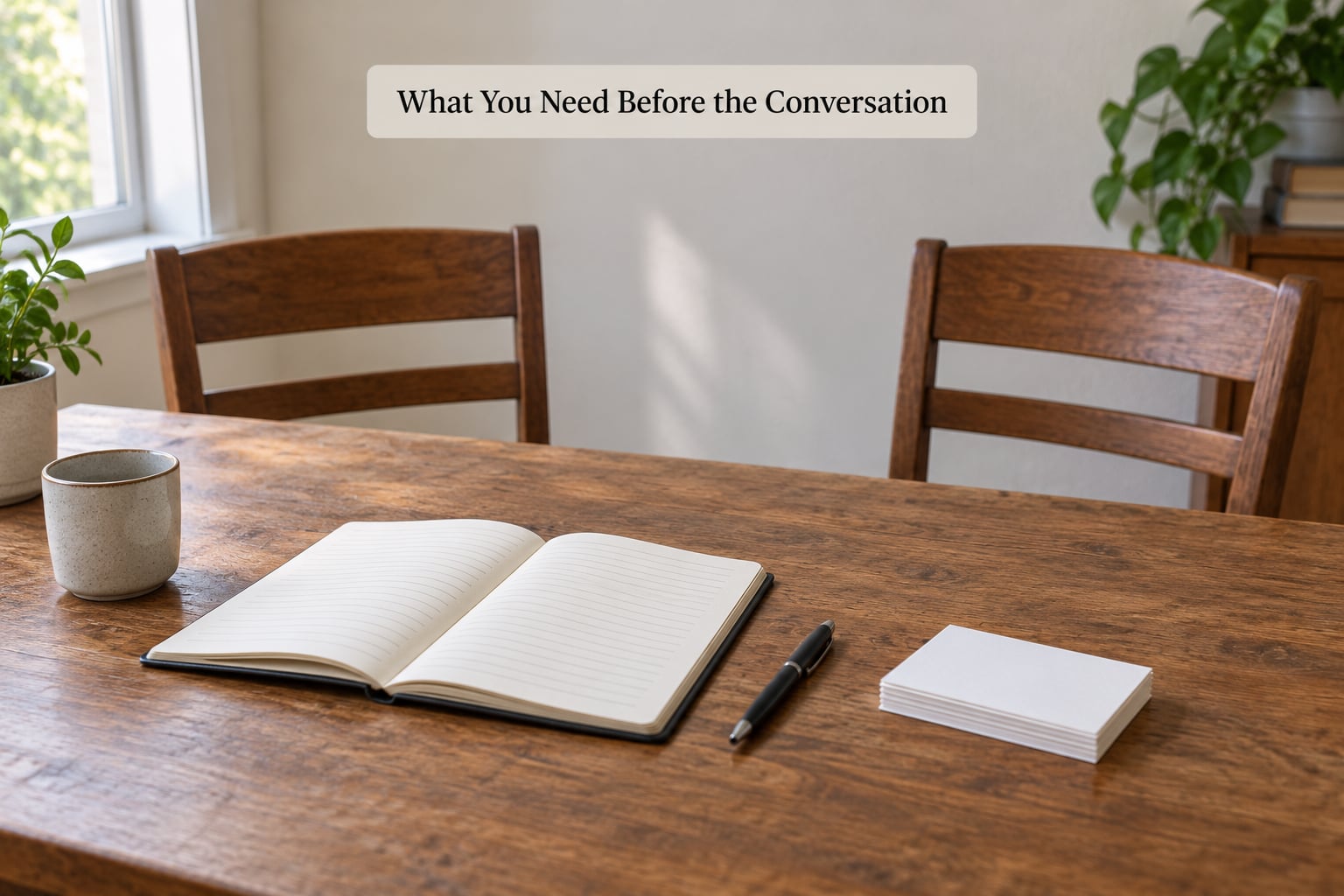
You need about fifteen unhurried minutes and a place nobody is watching. The kitchen after bedtime, the passenger seat on a drive, a walk to the shop. Parents in fatherhood forums say almost the same thing about what works: small rituals beat scheduled talks, because a side-by-side conversation carries less pressure than a face-to-face one.
You also need four things decided before you open your mouth. First, one sentence defining each value you want to name, so you do not wander. Second, two or three real examples drawn from your son’s actual week, not hypotheticals. Third, an honest note of something you got wrong yourself, because that single admission does more work than any principle you could list. Fourth, a shared agreement with anyone else who spends real time with him.
A notebook is useful, but notes are not a script. Bullet words that remind you where to go are fine; a paragraph you recite will sound exactly like a recitation. Keep it to a page.
What you do not need: an audience, a birthday, a football practice, or an answer to every question he might ask. A conversation you both survive honestly beats a performance.
Step-by-Step: How to Talk to Your Son About Manhood and Respect
1. Choose the right moment and check in emotionally
Do not ambush him at the door, in the car with an audience, or right after he gets in trouble. Start with how he is, not with what you want to teach. Ask an open question and let the silence sit for a few seconds before filling it.
At seven, that question can be about his friend or his new teacher. At fifteen, it has to be something that costs him something to answer. Boys who get regular low-stakes check-in time are noticeably easier to talk to when something serious finally comes up, and that is not a coincidence. The hard conversation succeeds or fails on the ordinary conversations you had before it.
2. Define manhood in values, not stereotypes
Skip the version where strength means never asking for help. Build the definition from things a ten-year-old can recognise on a Tuesday: controlling his temper when he is provoked, telling the truth when it costs him, doing what he said he would do, apologising properly after he was wrong, and treating people well when they can do nothing for him.
Say the healthy version out loud so there is no confusion with the dominance version. A short exchange sounds like this: “Being strong enough to walk away from a fight is manhood. Getting into it because your friends are watching is not. Same with raising your voice at your mother. The volume never made anybody more of a man.”
You will get pushback on this, especially from teenagers who have noticed that a lot of men they admire never seem to check themselves. Let them say so. That tension is useful material.
3. Explain what respect actually looks like
Respect is easier to teach as behaviour than as a feeling. So make it concrete: how he speaks to his mother and his grandmother, how he answers when he is annoyed, what he does when he disagrees with an adult, how he treats the person nobody wanted to talk to at the party.
Respect includes other people’s bodies and their no. It includes differences. It includes other people’s property, food, money and time. With a younger son, keep it to three examples he meets every day. With a teenager, bring up how he talks to girls in the group chat, how he shares screenshots, and what he does when someone says no.
One correction parents often need: respect is not obedience. He should still be able to say you are wrong. Raising a son who argues with you respectfully is a better outcome than raising one who goes quiet because the price of disagreement got too high.
4. Use stories and everyday situations to make it real
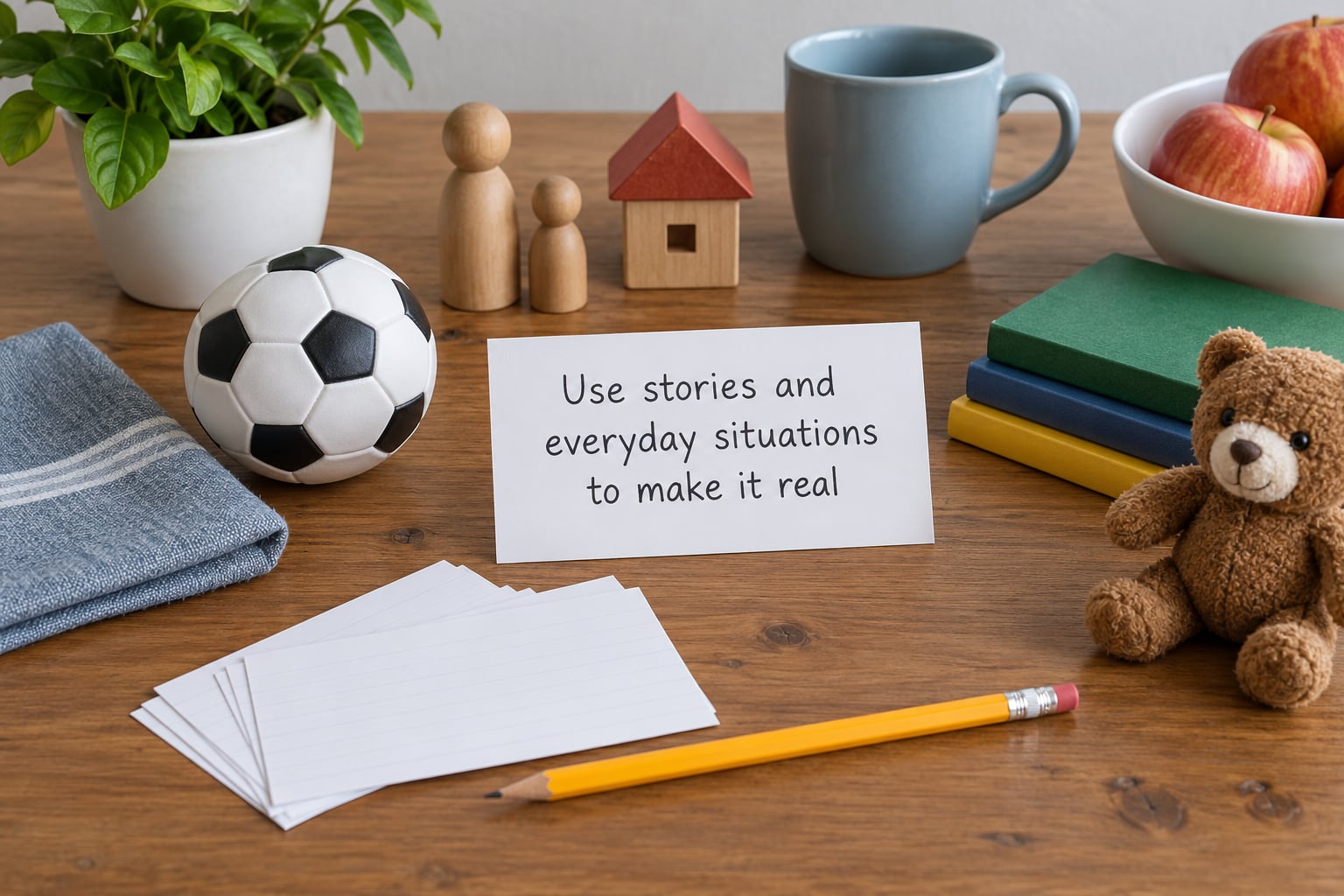
Abstract values land badly with boys. Specific situations stick. Pick three from his week and walk through them together.
Teasing: someone makes a joke at his expense and he has to decide whether laughing along is the price of being easy to sit with. Bullying: what he does when it does not stop, and why reporting it is a decision and not a failure. Peer pressure: the group wants him to fight, insult someone or film something he should not film.
Anger: the moment he felt it building and what his body gave him as a warning. Apologising: the difference between “my bad” and actually saying what he did, why it landed badly, and what he will do differently. Consent and relationships: how to ask, how to hear no, and what to do if he is unsure, which is the moment you say you will help him figure it out and that asking you will not get him in trouble.
Online behaviour counts as real behaviour. What he types into a group chat reaches a real person with a real day. Decide together what he will not send, and let him help write the rule so it feels shared rather than imposed.
5. Listen to your son’s perspective
Then do the part most fathers skip. Ask what he thinks being a grown man looks like, whether anything you have said sounds old-fashioned to him, and where he thinks the line is between standing up for himself and disrespecting someone. Repeat his answer back before you respond to it. That single habit keeps the conversation from turning into a contest about whether you are right.
Do not humiliate him in front of others for saying something naive. If he says something offensive, name the problem with the idea, not his character, and keep going. You will get more honesty next time than you get by making an example of him.
Know the line for a professional. Persistent anger, threats, school discipline that keeps escalating, a sharp drop in grades, isolating from everyone, or any talk of hurting himself needs a family therapist, school counsellor, pastor or doctor, not a parenting conversation with better wording.
6. Set clear expectations and consequences
Values without boundaries are a speech. Name the non-negotiables plainly: no insults aimed at family members, no threats, no harassment, no slurs, no hitting, and nothing discriminatory about anybody’s body, background, gender or sexuality.
Pair each one with a consequence you will actually carry out and a route back. A proportionate consequence fits the behaviour and includes repair: he loses the gaming console for a week and spends that week making amends to the person he insulted. Consequences that only punish teach resentment. Consequences that include repair teach accountability.
Say the consequence once, calmly, and do not relitigate it for three days. Reopening the argument every time he brings it up gives him a way to negotiate the rule instead of living with it.
7. Close with encouragement and follow through
End by saying what you saw, not what you want. “You went ten minutes without putting someone down tonight, and I noticed.” Then say the honest part about yourself: what you are working on, where you got it wrong this week. Young men in forum conversations say over and over that they were never shown how to be a man and wished a father or older man had modelled it out loud.
Then build the team. A mother, a grandfather, an uncle, a coach or a pastor who says the same things makes one message instead of five. If there is no father in the picture, mothers report the missing part is a male example, so pairing your son with an uncle, a grandfather, a coach or a mentor fills a real gap rather than a cosmetic one.
Finally, make it a rhythm. Fifteen minutes a week, in the car or on the walk, where he talks and you listen. One conversation will not install anything. Repetition does.
Common Mistakes When You Talk to Your Son About Manhood and Respect
Treating manhood as silence. If the lesson is that boys do not discuss feelings, the outcome is a man who converts every feeling into anger because he has no other language for it. Replace it with a named range of words for what he feels: disappointed, embarrassed, jealous, tired, proud.
Lecturing instead of talking. A twenty-minute speech produces nods and nothing else. Cut it to five minutes, then ask a question. Silence is not agreement, and boredom is not learning.
Shaming him to get compliance. Calling him a boy, a baby or a punk in front of other people teaches him that dignity is negotiable. Say what the behaviour was and what you expect instead.
Arguing every cultural expectation. You do not need to win on hair, music, clothes or every phrase he picks up online. Pick two or three standards you will hold firmly, let go of the rest, and spend the energy you saved on the things that actually protect him.
Opening with old failures. Listing every past mistake turns a conversation into a prosecution and teaches him to hide. Bring up the present behaviour only, and if you must reference the past, pair it with what you did not like about your own reaction.
Failing to model it yourself. How you speak to his mother, his grandmother, your ex, service staff and people who can do nothing for you is the real lesson. Children read the conduct of the adults they love more carefully than they read their words.
A few habits smooth the next round. Write down one thing he did well while you still remember it. Apologise within the same day when you lose your temper, without conditions, because sons copy repair behaviour long before they copy apologies well. And if a conversation turns heated, stop and resume later. Finishing the sentence later beats winning the round.
Frequently Asked Questions
At what age should I talk to my son about manhood?
Start around four and never stop. At four to seven, keep it concrete and short: feelings have names, people deserve politeness, keep your word. At eight to twelve, add responsibility, teasing, bullying and handling anger. From thirteen to seventeen it becomes consent, online conduct and peer pressure. After eighteen it shifts to a peer relationship built on respect rather than authority.
How do I explain respect to a 7 year old?
Use three rules he meets daily: use people’s names, answer when you are spoken to even if you disagree, and do not touch anyone or their things without permission. When he slips, say what you saw and the rule it broke. Keep corrections under a minute, and name the good thing too, so respect registers as something that gets him noticed rather than something he is scolded about.
What’s the hardest age to raise a boy?
Most parents point to thirteen through seventeen. Puberty, peer approval replacing your approval, and the first real pull toward privacy make that stretch the least forgiving. Expect shorter conversations, more silence, and more of your tone being copied back at you. Do not read the withdrawal as rejection. Keep showing up, keep asking, and let him set the pace on the deep stuff.
What if my son refuses to talk about it?
Stop pushing and keep the door open. One-word answers usually mean he is testing whether the conversation is safe, not that he has no opinion. Try again later, in a car or on a walk, and lead with your own story instead of a question about him. Tell him what you were told at his age and what you got wrong. That gives him something to react to without being put on trial.
How do I raise a respectful son without making him soft?
Frame it as range rather than softness. He can be strong and still apologise, still cry at a funeral, still ask for help, and still refuse to raise a hand. Tell him explicitly that those are signs of character, not weakness, because most of what passes for toughness in his world is simply the absence of a better option. Set a high bar for how he treats people and a low bar for how he looks doing it.
How do I repair a conversation that turned heated?
Take the break first, then go back and own your half. Say that you raised your voice and that it was on you, then confirm you still want to talk and will not punish him for disagreeing. Apologising for your tone without reversing the boundary teaches both halves at once. Then finish the original point in two sentences. One repaired conversation is worth more than a week of winning arguments.
Conclusion: Where to Start
You cannot deliver this in one sitting, and you do not have to. Pick a calm moment this week, say one sentence about what manhood actually is, then ask a single open question and let him answer it. From there, repeat it: fifteen unhurried minutes, small examples from his own week, honest admission when you get something wrong. That is how respect becomes something he does rather than something he was told.