To start walking for weight loss, work toward 150 to 250 minutes of moderate activity a week, spread across five or six days, at a pace where you can talk in short sentences but not sing. Walking works because it burns calories steadily and keeps you moving between workouts, and pairing it with an eating pattern you can sustain matters more than any single hard session.
This guide is built for someone starting from a low activity level, including people who have been told to lose weight and have no idea where to begin. It covers what to gather, a progressive plan you can start this week, the pace question that trips most beginners up, and how to fit walking into a schedule that already includes work shifts, caregiving and weather.
Everything here is general information, not medical advice. If you have a health condition, an injury, are pregnant, or have symptoms that concern you, talk with a doctor or a physical therapist before increasing your activity.
Table of Contents
- What You Need
- Step-by-Step: How to Start Walking for Weight Loss
- How to Start Walking for Weight Loss Safely
- Set a Realistic Weekly Starting Goal
- What the 3-3-3 walking rule actually means
- Increase Duration Before Intensity
- Use a Brisk but Sustainable Pace
- Keep Your Walking Routine Consistent
- Know When to Add More Activity
- Create a Walking Schedule That Fits Your Life
- Track Progress Beyond the Scale
- Common Mistakes
- Tips for Staying Consistent
- Frequently Asked Questions
- What is the 3-3-3 rule for walking?
- How much should I walk to start losing weight?
- Can you lose 20 pounds in a month by walking?
- How many steps should I walk a day to start losing weight?
- Is walking before or after meals better for weight loss?
- Conclusion
What You Need
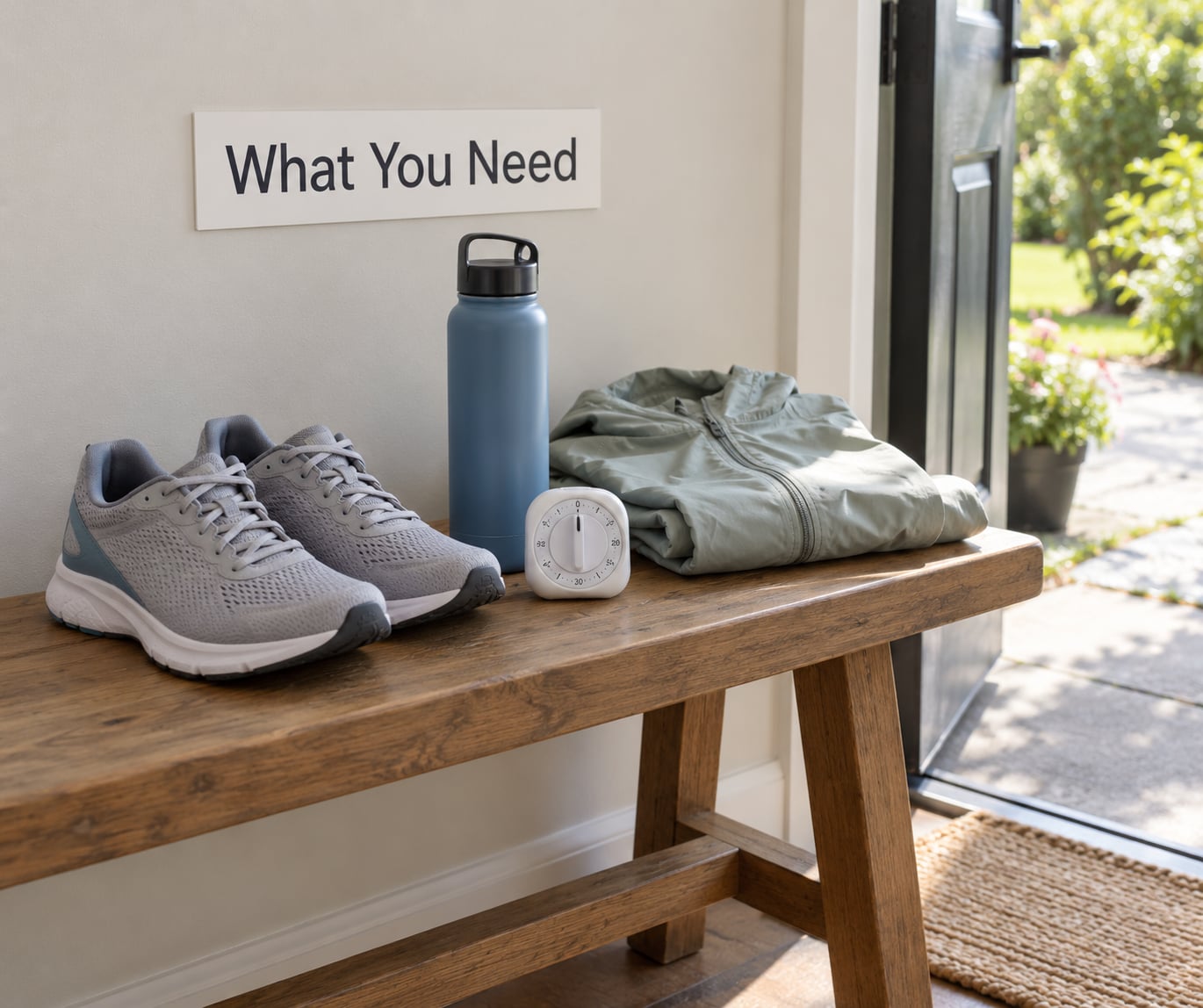
You need very little, and most beginners own most of it already. Spending money is not the barrier here, and gear will not make the plan work faster.
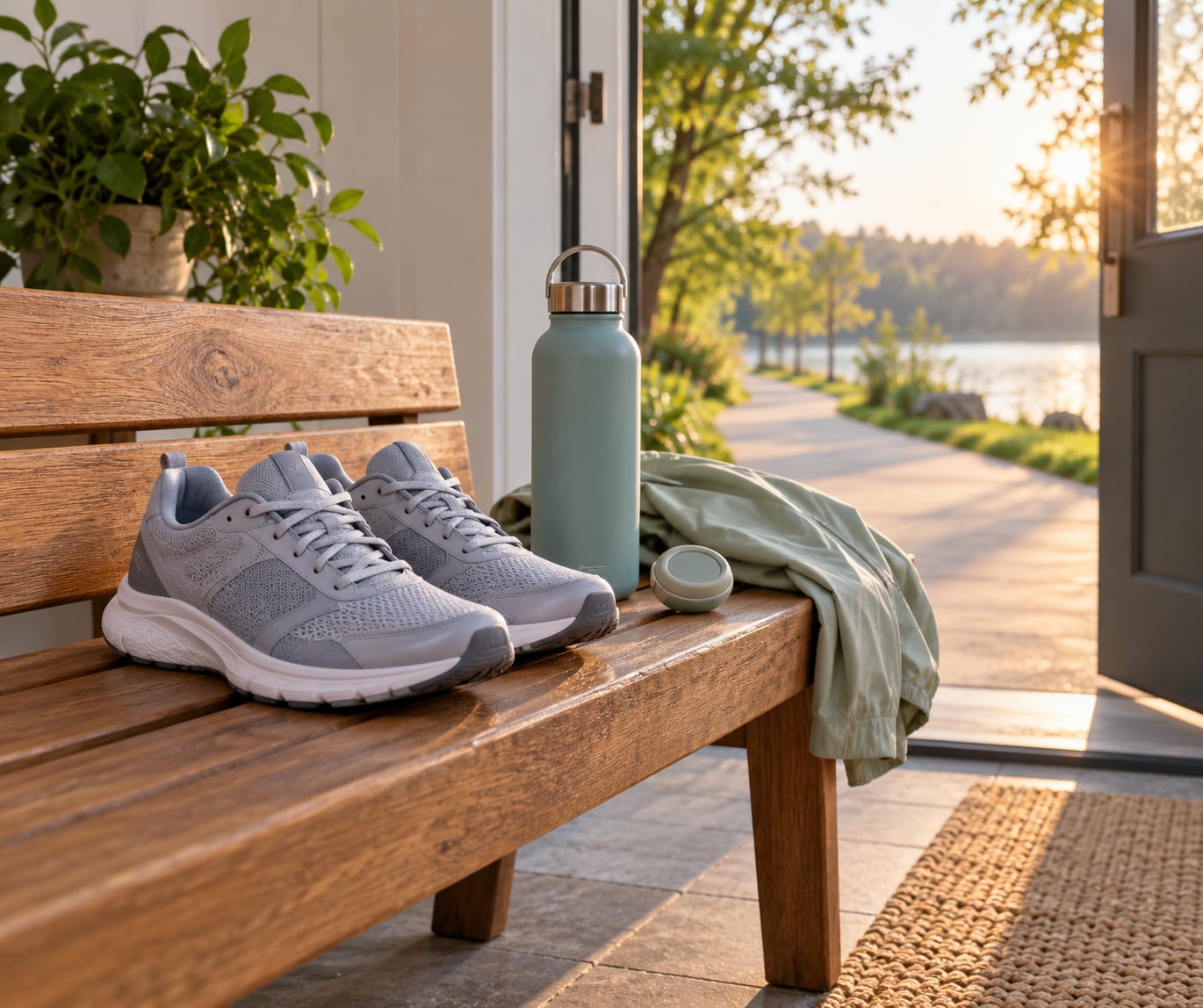
- Supportive walking shoes. Shoes with a stable heel, room in the toe box and enough cushioning for your body weight. If you walk on pavement, running shoes from a pair you already own are fine.
- Comfortable clothing. Loose layers you can remove as you warm up. Cotton holds sweat in the heat; a synthetic or wool blend feels better for a long walk.
- A safe route or an indoor space. A familiar sidewalk loop, a school track during off hours, a mall corridor, or a treadmill. Choose the option that will still be available on a rainy Tuesday.
- Water. A bottle, especially in warm weather. If your walk is short, you will usually be fine, but dehydration in the heat ends walks early.
- A phone or timer. Useful for timing intervals, checking a walking pace app, or calling someone if you take a route without other people on it.
- Clearance from a clinician when it applies. A doctor, physical therapist or qualified clinician can tell you whether your joints, heart, or pregnancy status handles a walking program well. Ask first if you have a history of heart disease, chest pain when active, uncontrolled blood pressure, significant joint damage, or an ongoing injury.
One more piece of preparation matters more than any of it: pick the time of day that already exists in your week. People who pick the “best” time and then never get to it end up with the same result as people who picked a boring one.
Step-by-Step: How to Start Walking for Weight Loss
The plan below runs in order. Each step answers a question beginners usually get stuck on, and each one feeds the next. Skip to the section you need, but do not skip ahead to the harder versions of the plan.
How to Start Walking for Weight Loss Safely
Start slower than you think you should. The first two weeks are for teaching your body that walking is something you do regularly, not for burning a maximum number of calories.
- Open easy. Walk the first five minutes at a pace that feels almost too slow. Your breathing should be comfortable and talking should be effortless. Then build to your normal pace for the middle of the walk and slow again for the last five minutes. That is your warm-up and cool-down, and it matters more than most beginners assume.
- Use the talk test. At your working pace you should be able to speak a few words but not sing a song. Singing comfortably means you have eased off; gasping between words means you have gone too far.
- Pick a route with an exit. Familiar, well-lit, with places to sit along the way. That way you always have a bail-out option, which makes you far more willing to go out at all.
- Watch the ground, not your phone. Downward glances at a screen while moving are a common cause of trips and ankle rolls.
Stop walking and rest if you feel chest pain, dizziness, faintness, unusual shortness of breath, or a feeling that is not right. Do not push through joint pain to finish a session. Muscle soreness the day after a new activity is common and settles; sharp pain in a joint, pain that changes how you walk, or numbness that persists is a reason to stop and get it looked at by a professional.
Set a Realistic Weekly Starting Goal
Your week one goal is simple enough to keep on a bad week: three to five walks of 10 to 15 minutes each, on an easy pace. That is about 40 to 60 minutes, and it is a genuine starting point, not a warm-up week before the real work begins.
Write down three things after each walk: how long you went, how hard it felt on a 1 to 10 scale, and how you felt afterward. Those three notes tell you far more early on than a scale weight, which can swing several pounds between days for reasons that have nothing to do with walking.
What the 3-3-3 walking rule actually means
You will see a “3-3-3 rule” for walking and weight loss in a lot of places, and it does not mean one consistent thing. One common version is three walks of 30 minutes each, where you can still talk but not sing. Another version is three walks a day of at least 30 minutes each, with a pace of 3 miles per hour or faster. A third is 30 minutes of walking three times a day, right after meals.
All three are reasonable shapes. None of them is a rule you have to follow to lose weight, and treating any of them as a starting target is how beginners hurt their knees in week two. If you want a clean anchor for how to start walking for weight loss, use your own week one number, then use the 3-3-3 idea as a later milestone, not day one.
Increase Duration Before Intensity
Add minutes first. Most failed walking programs fail because someone jumps from 15 minutes to an hour in the same week, gets sore for five days, and never goes back.
- Add time, not speed. Once you can finish a walk and feel fine the next day, add five minutes to the end of it. A 20-minute easy walk to 25 minutes is real progress.
- Use the 10 to 20 percent rule. Increase total weekly minutes by no more than about 10 to 20 percent in a week. Going from 60 minutes to 75 is fine; going to 100 in the same week usually costs you two days of recovery.
- Keep one easy day. Leave a day between harder walks. Most walking is easy enough that consecutive easy days are fine, but two brisk days back to back often brings soreness to the knees and hips.
- Progress in stages. Spend two to four weeks at an easy pace before moving to brisk. Speed is the easiest thing to add later and the easiest thing to regret adding early.
A simple eight-week ladder looks like this: weeks 1 and 2 at 10 to 15 minutes, easy. Weeks 3 and 4 at 20 to 25 minutes. Weeks 5 and 6 at 25 to 30 minutes, still easy to moderate. Weeks 7 and 8 at 30 to 35 minutes, with most of them at a brisk pace. That is 40 to 200 minutes a week, a believable climb for someone starting from a sedentary baseline.
Use a Brisk but Sustainable Pace
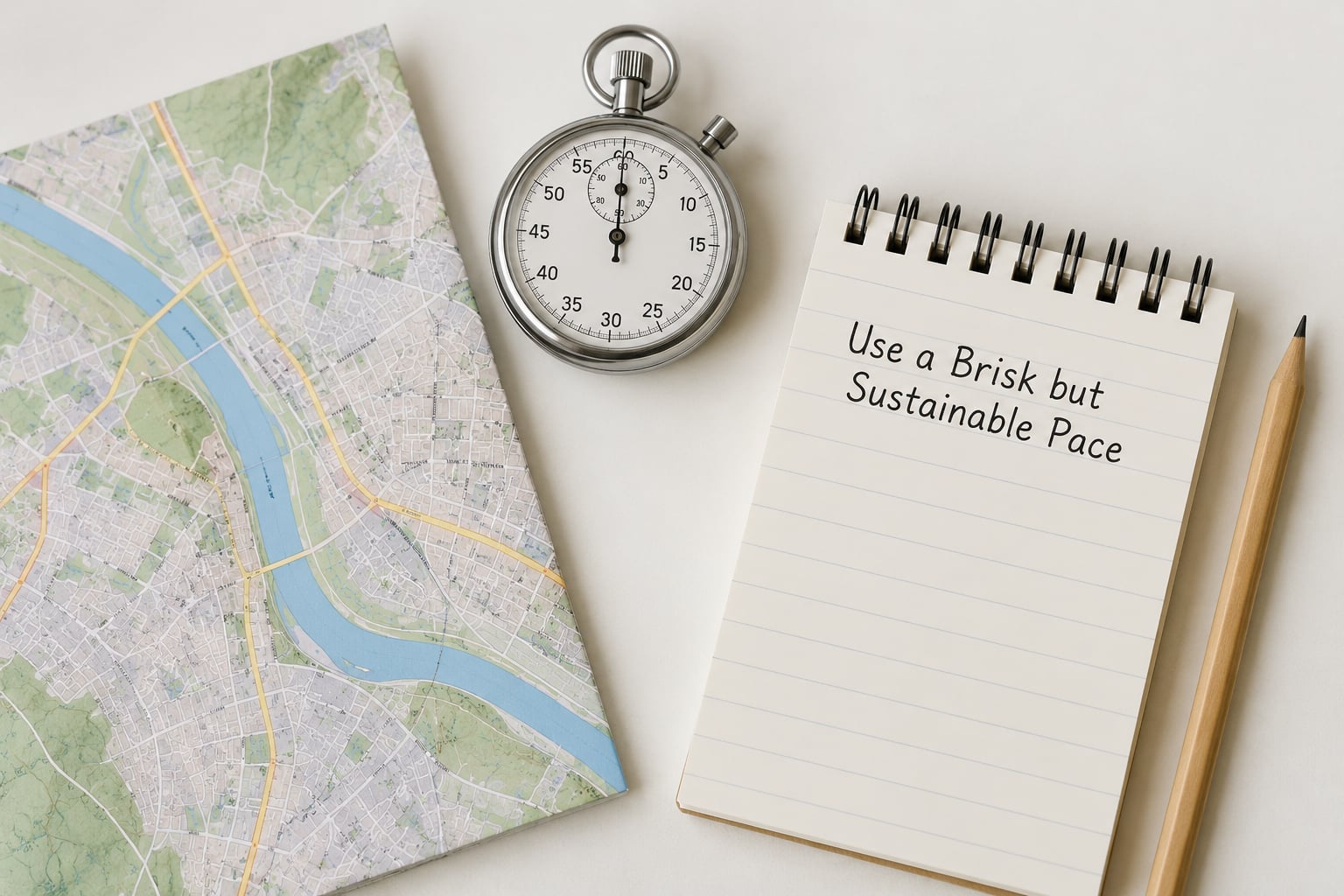
Brisk walking usually sits around 3 to 4 miles per hour, or 5 to 6.5 kilometres per hour. You do not need a watch to find it. The talk test and how the effort feels on a 1 to 10 scale are more useful than a number on a watch face.
- Easy pace, roughly 2 to 3 out of 10. Full sentences, no breathing changes. This is where most of your weekly minutes should live, especially in the first month.
- Moderate or brisk, roughly 5 to 6 out of 10. Short sentences, breathing noticeably faster, but still recoverable. On a 30-minute walk, this is the pace most weight-loss plans are built around.
- Strenuous, 7 to 8 out of 10. Only a few minutes at a time, and only after weeks of steady walking. This is not where your weight-loss minutes come from.
- Maximum, 9 to 10. Not a walking intensity. If you are here, something is wrong with the plan.
A pace that makes you sore two days later is not a fast pace, it is a wrong pace. The goal is a pace you could hold for 30 to 45 minutes and still be able to walk normally the next morning. For most beginners, walking with one hand free and no music, so you can hear your own breathing, is a quick self-check.
Where you walk changes how brisk it feels. The same effort on a treadmill at a flat setting is easier than outside, because there is no wind, no slope and no stopping. If you plan to switch locations, give yourself a few walks to recalibrate.
Keep Your Walking Routine Consistent
Consistency beats intensity for beginners, and it beats intensity for almost everyone long term. The plan that works is the one you still do in week six.
- Anchor the walk. Attach it to something you already do without deciding each day. After the first coffee, before the evening shower, during a break at a fixed hour. A walk that requires a fresh decision every single day is a walk that gets skipped.
- Split it if your day is full. Three 10-minute walks on the same day are easier to keep than one 30-minute block for a lot of beginners, and the total is what matters most.
- Prepare for the weather the night before. Shoes by the door, jacket hung up, route decided. Half of missed walks are logistics, not motivation.
- Have a floor, not a target. On a bad day, do your minimum of five minutes. It keeps the habit alive, and most five-minute walks turn into twenty.
- Never miss twice. One skipped walk is a scheduling error. Two in a row is how people quit. Resume at half your previous duration, not where you left off.
Know When to Add More Activity
Add difficulty only when the current level feels routine. Most people need six to eight weeks at one level before progressing.
- You can add incline. On a treadmill, raise the incline to 1 to 3 percent. Outside, look for gentle hills or a park route with some slope. Incline increases effort without raising impact on the joints.
- You can add short intervals. Two minutes at a brisk pace, one minute at easy, repeated for 20 to 30 minutes. Intervals are useful but they are a step up, not a starting point.
- You can add time. Forty-five comfortable minutes beats thirty hard ones almost every time.
- You can add two strength sessions a week. On days you are not walking, do 20 to 30 minutes of bodyweight or resistance band work. Walking burns calories; resistance work helps you keep the muscle you already have.
One honest note: walking supports weight loss, but it does not guarantee it. Energy balance decides results, and how you respond to a plateau is a bigger predictor of long-term change than how much you walk in a given week. Walking makes a diet pattern easier to keep because it lowers stress, improves sleep and takes the edge off appetite for many people. If your weight stops moving for two to three weeks while your walking and eating habits are steady, the answer is usually to review portions, sleep and stress rather than to walk six hours a day.
Create a Walking Schedule That Fits Your Life
Take your weekly minute target and spread it across the days you are most reliable. Four templates cover most beginners:
- 4-day template: 25 to 35 minutes on four days, one rest day between two of them, plus two shorter 10-minute walks on the off days if you want daily movement.
- 5-day template: 20 to 30 minutes on five days. This is the most common pattern and the easiest to keep during a busy week.
- 6-day template: 20 minutes a day on six days, one full rest day. Daily movement like this suits people who like routine and want weight loss to be part of a normal day.
- Shift-work or split template: Three 10-minute blocks, or two blocks of 12 to 15 minutes. Short and scattered beats one long walk you never get to.
Adjust the template rather than abandoning it. Caregiving, a hospital shift, a bad week at work and bad weather all shrink the plan. What you protect is the pattern of walking most days, not a specific number of minutes on a specific day.
Track Progress Beyond the Scale
Weight is one noisy measure among several, and for beginners it is often the most discouraging one. Track a small set of things instead.
- Minutes walked per week. The most reliable number in the whole plan, and the one that directly reflects whether you are progressing.
- Pace. Whether a walk that was easy is now moderate, or whether the same route is faster than it was a month ago.
- Consistency. Walked days out of seven, tracked as a streak. Missing a day is a data point, not a failure.
- Energy and sleep. Many people notice better sleep and steadier afternoon energy in the first month, before they see any change on the scale.
- How clothes fit. Waistbands and jeans are often the first place people notice change, and they do not move with daily water weight.
- Blood pressure and lab values. If you have been tracking them, your clinician can talk you through what changed and what it means.
If you do weigh yourself, weigh on the same day of the week, in the morning, and look at the trend across a month rather than any single number. Daily shifts of two to four pounds are normal and usually have nothing to do with fat. Fixing all of how to start walking for weight loss to the scale is how people quit a plan that was working.
Common Mistakes
Almost every walking beginner mistake has a short fix. Here are the ones that come up most.
Starting with 60 minutes. The fix: pick a first week you could do on your worst day. Ten minutes, five days, easy pace. Volume later, always after the body has adapted to the time of day and the surface.
Going too fast too early. If you cannot finish a sentence, slow down. Brisk pace and hard effort are different things, and beginners can get brisk pace without straining.
Skipping the warm-up. Five easy minutes at the start and five slower minutes at the end costs you ten minutes and saves you a lot of shin, calf and knee complaints.
One long session, five quiet days. A 90-minute walk on Sunday and nothing else is not the same thing as 30 minutes on five days. Frequency wins for both adherence and results.
Ignoring pain. Muscle tiredness is fine. Sharp joint pain, pain that alters your gait, or pain that lasts more than two days deserves a professional look. Lowering the duration or the pace is a legitimate response, not a failure.
Expecting fast results. Progress in the first month is often a better mood, better sleep and slightly more stamina, not a large drop on the scale. Weekly weight changes of a pound or two, when they come, come from energy balance across the whole day, not from one walk.
Eating back the calories. A 45-minute brisk walk might burn a few hundred calories for many people. Offsetting that with a large snack or a drink makes the walk feel pointless. Walking works best when it fits inside a normal way of eating rather than replacing it.
Only walking downhill, literally. If the route is flat and easy forever, the habit survives but the challenge disappears. Once easy walking feels routine, a gentle hill or a few brisk intervals is a reasonable next step.
Tips for Staying Consistent
Motivation gets you started. Systems keep you going, and the systems that work are usually boring.
- Put the shoes on first. Starting is the hard part. Walking ten minutes is easy once you are outside.
- Use the same route for two weeks. Familiarity removes decisions and makes the effort feel smaller. Vary it once it stops feeling interesting.
- Watch something. A podcast, an audiobook or a playlist gives a walk a purpose. People who do this consistently report that the time stops feeling wasted.
- Keep the minimum low. Ten minutes is the floor for a bad day. A low floor means you almost never break the habit.
- Walk with someone. A friend, a family member or a regular group turns an individual task into a social one. Missing out on the walk means missing the person.
- Track it somewhere you will see. A calendar, a habit tracker on your phone, a note on the fridge. Seeing a row of checked days is its own kind of motivation.
- Do not chase a number. Trying to beat a step count every single day leads to a lot of slow, miserable walking. Hit your weekly minutes and call it done.
Have a rule for bad weeks in advance. Deciding now that a bad week means five-minute walks rather than zero removes the decision from the week where you have no energy left to make it.
Frequently Asked Questions
What is the 3-3-3 rule for walking?
It is not one official guideline. Common versions mean three 30-minute walks on days when you can talk but not sing, three 30-minute walks spread through the day, or a pace of at least 3 mph. Any of them is a useful milestone for a beginner, but none is a rule for losing weight. Start with three 10 to 15 minute easy walks, then work toward longer walks.
How much should I walk to start losing weight?
Most adults are advised to aim for 150 minutes of moderate activity a week, and 150 to 250 minutes is a common range for weight loss. Walking works because it raises daily energy use and it is easy to keep doing. If you are starting from a sedentary baseline, three to five short walks in week one is a realistic way in, not a failure to hit the target immediately.
Can you lose 20 pounds in a month by walking?
That would require an unusually large energy deficit that most people cannot sustain safely, and walking alone rarely produces it. Results depend on your starting weight, your eating pattern, your sleep and your overall energy use. Steady moderate loss over months tends to hold far better than a fast drop, and any program this aggressive deserves a conversation with a doctor.
How many steps should I walk a day to start losing weight?
10,000 steps is a popular target, not a requirement. Many people see benefits from a lower daily count plus a couple of longer brisk walks, because the total weekly minutes and the pace matter more than the number on a screen. If you are starting now, tracking time instead of steps is often easier and more honest, and 6,000 to 8,000 steps is a realistic early goal for many adults.
Is walking before or after meals better for weight loss?
Walking after a meal, even for 10 to 15 minutes, is often easier to fit into a day than a dedicated workout and may help with blood sugar control and cravings. The difference in total calories burned between before and after meals is small compared with weekly minutes. Pick the timing you can repeat most days and keep the walk easy enough that it never feels punishing.
Conclusion
Start tomorrow with one walk. Fifteen minutes, easy pace, shoes you are comfortable in, on a route you already know, with a five-minute slow finish built in. Write down how long it was and how it felt.
From there, how to start walking for weight loss is a matter of adding a few minutes most days, moving up to a brisk pace once easy walking feels routine, and keeping the kind of eating pattern you can live with. Progress you can repeat beats intensity you can hold for eleven days.
If you have a medical condition, an injury, are pregnant, or are recovering from illness, get individual advice from a doctor or physical therapist before raising your activity level. For everything else, the best plan is the one you will still be doing next month.